
Policy and Advocacy
Science-Based Policy for Cheetah Conservation
Fewer than 7,500 cheetahs remain in the wild. Since 1991, the Cheetah Conservation Fund has used its scientific research to shape cheetah protection laws and conservation policy on a local, national, and global scale. Specifically, CCF collaborates with multiple governments and participates in international bodies. This ensures that legislation is grounded in biological reality and that cheetahs receive the dedicated attention their declining populations require.
CCF’s policy work is cooperative and evidence-based. It is focused on partnership with governments, regional bodies, and international organizations. CCF does not conduct enforcement activities; all enforcement actions are government-led. Instead, CCF supports enforcement through training, technical assistance, forensic evidence, and care for confiscated animals.
International Policy
CCF maintains long-standing relationships with the three principal international bodies that govern species conservation and wildlife trade:
IUCN — CCF is an IUCN member. CCF’s scientific staff hold leadership roles within the IUCN SSC Cat Specialist Group and contribute population data for the IUCN Red List. In 2023, CCF’s genetic research provided the basis for the IUCN to uplist the Horn of Africa cheetah population to Endangered status. In addition, CCF has made a formal pledge under IUCN’s Reverse the Red campaign. This commits CCF to minimize cheetah population declines by 2030 and reverse them through integrated research, community engagement, and policy action.
CITES — CCF has been a consistent voice at CITES since 1992. The organization has driven adoption of the Cheetah Trade Resource Kit (2016), defended species-specific enforcement actions, and engaged with CITES member states and participants. As a result, CCF helps ensure that CITES prioritizes cheetahs in international enforcement strategies.
In January 2024, CCF co-organized the Global Cheetah Summit in Addis Ababa, Ethiopia. The Addis Ababa Declaration for Global Cheetah Conservation was ratified by delegates from 23 cheetah-range countries and submitted to CITES. It establishes shared priorities for enforcement, habitat restoration, and range-wide coordination.
CMS — CCF works with the Convention on Migratory Species to protect cheetah populations across national borders. This includes work through the CMS African Carnivores Initiative and efforts to expand CMS Appendix I protections to additional cheetah populations.
National Partnerships
Government of Namibia
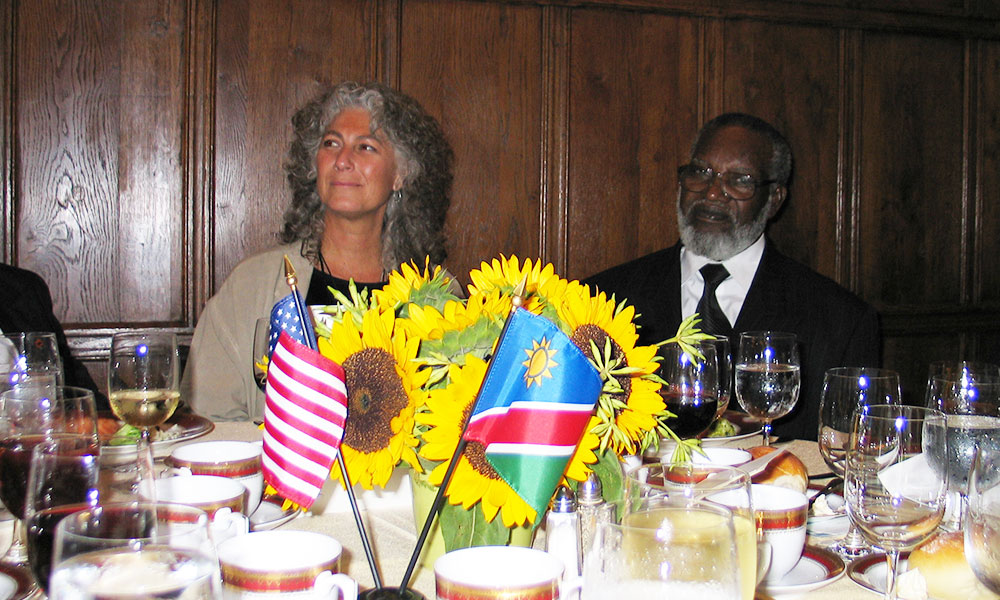
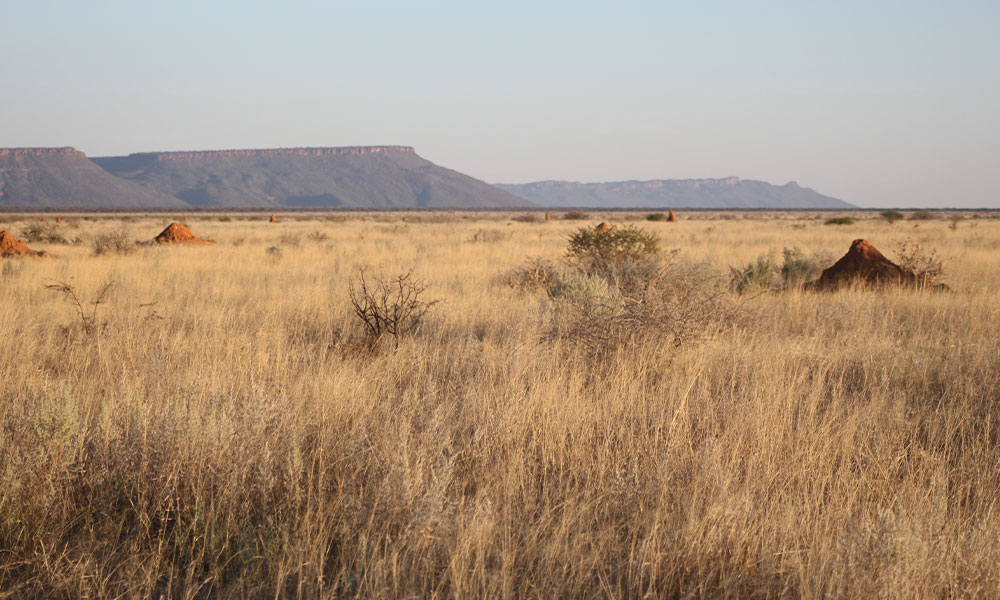
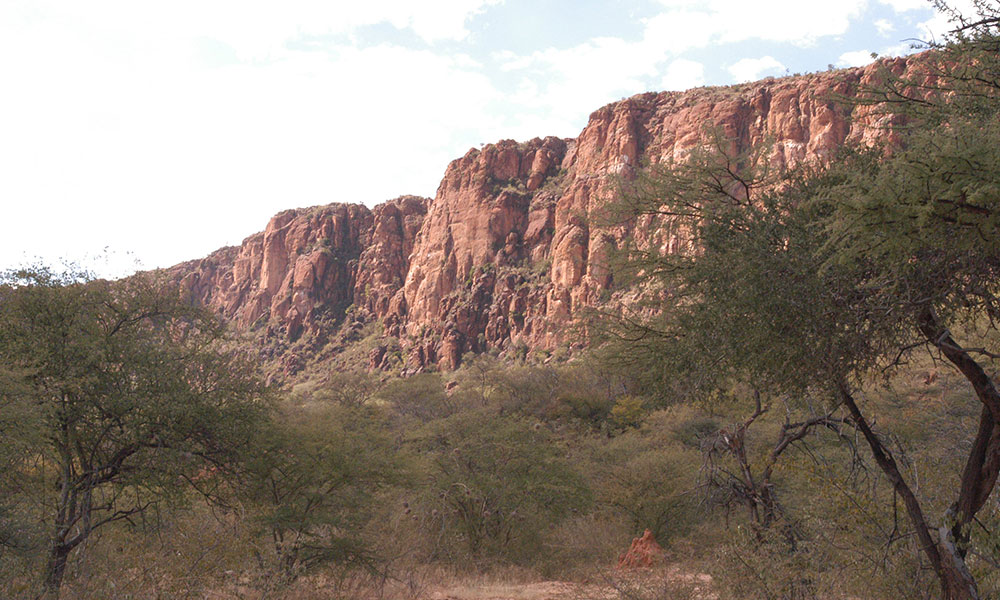
CCF has served as a primary conservation partner to the Namibian Ministry of Environment, Forestry and Tourism (MEFT) for over three decades.
Large Carnivore Management — As a founding member and long-term Chair of the Namibian Large Carnivore Management Association (LCMAN), CCF provides expert guidance that informs national policy on predator management.
Namibian Carnivore Red Data Book — In 2022, CCF finalized and launched the Namibian Carnivore Red Data Book in partnership with MEFT and the Namibian Chamber of Environment. This provides a scientific status update for all 34 carnivore species in the country.
Human-Wildlife Coexistence — In 2024, CCF partnered with MEFT on a UK-funded project to develop a coexistence toolkit. This toolkit integrates social science and genetics to reduce conflict on communal farmlands.
Parliamentary Caucuses — CCF facilitates exchanges between the Namibian and Kenyan Conservation Parliamentary Caucuses. The goal is to share Namibia’s successful conservancy model with other range states. This includes Somaliland, where CCF has piloted a conservancy model based on examples from Namibia and Kenya.
Potential UNESCO Designation — CCF has investigated designating the Greater Waterberg Landscape as a UNESCO Man and Biosphere Reserve. This would gain international recognition for Namibian conservation practices.
Government of Somaliland
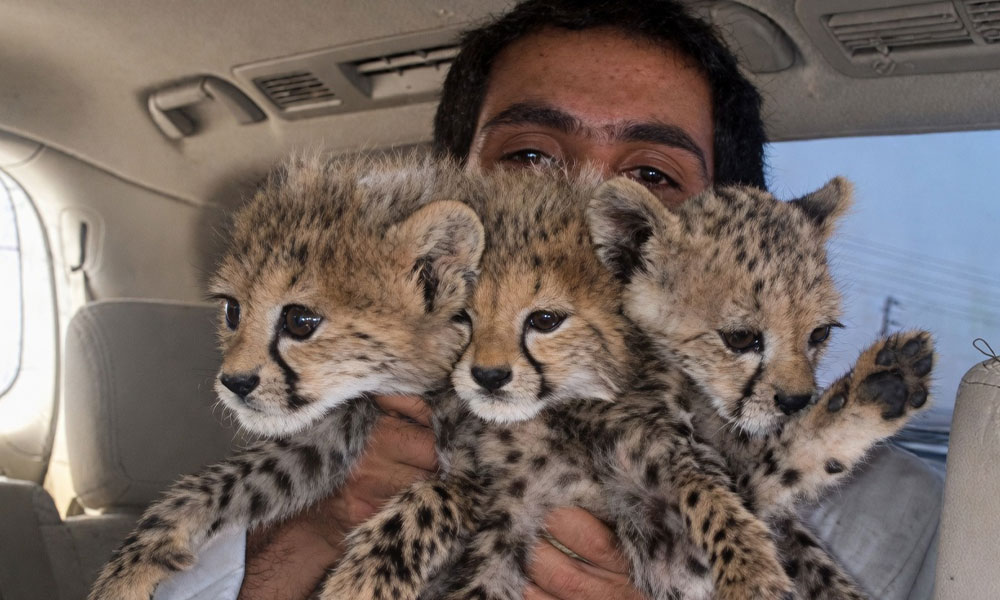
CCF’s partnership with Somaliland is defined by an urgent operational and legal response to the persistent illegal wildlife trade in live cheetah cubs. Estimates are that fewer than 500 cheetahs remain in the wild across the Horn of Africa.
Legal Framework — Using funds from a UK-supported project, CCF assisted the Ministry of Environment and Climate Change (MoECC) in drafting a new wildlife protection law and several implementing regulations. The new law awaits action by Somaliland’s Parliament. Once enacted, it will strengthen biodiversity protections, modernize enforcement, and increase penalties for traffickers.
Geed-Deeble and the CRCC — In 2021, CCF signed a 30-year Memorandum of Understanding with the MoECC to develop the Cheetah Rescue and Conservation Centre (CRCC). The site covers 800 hectares at Geed-Deeble, about an hour’s drive from Hargeisa. The CRCC became fully operational in 2023 and now houses over 120 cheetahs recovered from illegal trade by Somaliland authorities. In addition, CCF opened an Education Centre at the CRCC in 2025 to provide a focal point for community training programs.
Judiciary and Law Enforcement Training — CCF has provided training to the Somaliland judiciary, law enforcement officers, customs agents, and prosecutors. This training was delivered through multiple programs funded by the UK (DEFRA).
Environmental Crime Unit — CCF provided technical support, including a national wildlife crime database, and training to build the framework for a Somaliland Environmental Crime Unit (ECU). The ECU is a multi-agency body to coordinate national responses to the illegal wildlife trade and other wildlife crimes. It will become operational upon passage of a new wildlife law by the Somaliland Parliament.
Knowledge Transfer — In 2022, CCF coordinated visits by a Somaliland government delegation to Namibia and Kenya. The purpose was to transfer institutional knowledge on Community-Based Natural Resource Management (CBNRM) and eco-tourism.
Regional Coordination
CCF participates in regional enforcement and intelligence networks that strengthen cross-border responses to wildlife crime:
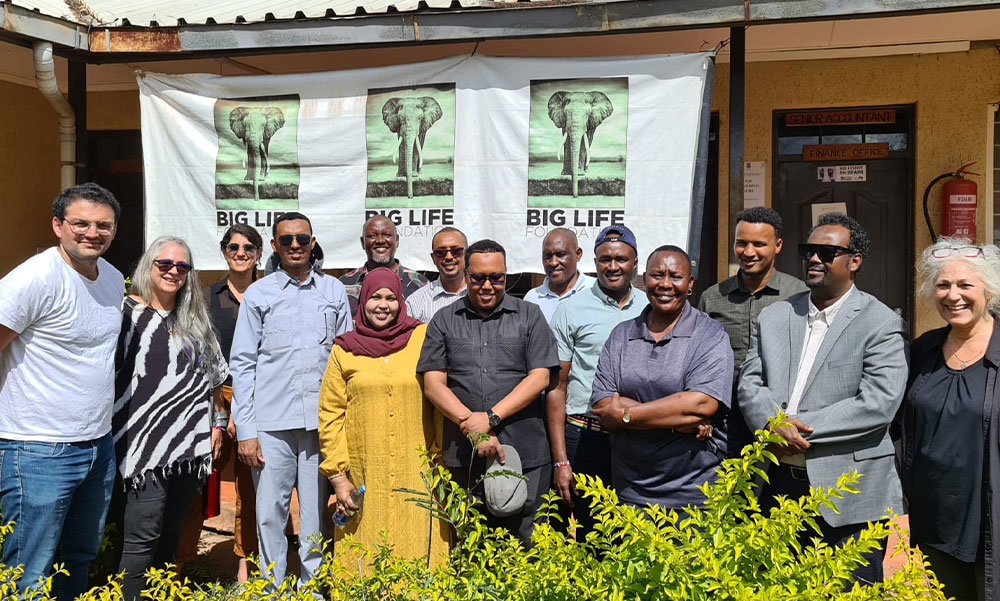
IGAD — CCF collaborates with the Intergovernmental Authority on Development (IGAD) Secretariat to support the Horn of Africa Wildlife Enforcement Network (HAWEN). This is an IGAD initiative to strengthen regional coordination against illegal wildlife trade. In addition, CCF has partnered with IGAD and the CMS Secretariat in an ongoing effort to promote harmonization of wildlife laws among the IGAD member states. This includes creating an IGAD region network of Trans-Frontier Conservation Areas (TFCAs).
TWIX — CCF helped establish a Trade in Wildlife Information eXchange (TWIX) platform for Ethiopia. This enables cross-border information sharing for wildlife crime intelligence with other countries participating in the East Africa TWIX network.
LICIT Projects — CCF used resources from two projects funded by the UK’s Department for Environment, Food and Rural Affairs (DEFRA). These were the Legal Intelligence for Cheetah Illicit Trade (LICIT) project and its successor (LICIT II). Through these projects, CCF established networks between wildlife law enforcement officials from Ethiopia, Somalia, Somaliland, and Yemen. The goal was to promote direct cross-border collaboration on anti-trafficking strategies and enforcement along trafficking routes in the Horn of Africa.
TRAFFIC and GoInsight — CCF partners with TRAFFIC and GoInsight’s CatByte platform on intelligence gathering, incident reporting, and regional coordination. This improves detection and response to illegal cheetah trade.
Demand Reduction
CCF works with governments in the Middle East to reduce demand for illegally traded cheetahs. In 2017, CCF provided input including data during the implementation of the United Arab Emirates’ ban on exotic pets, including cheetahs. CCF continues to support Gulf States in strengthening laws and enforcement related to exotic pet ownership, framing these partnerships around shared solutions and international cooperation.
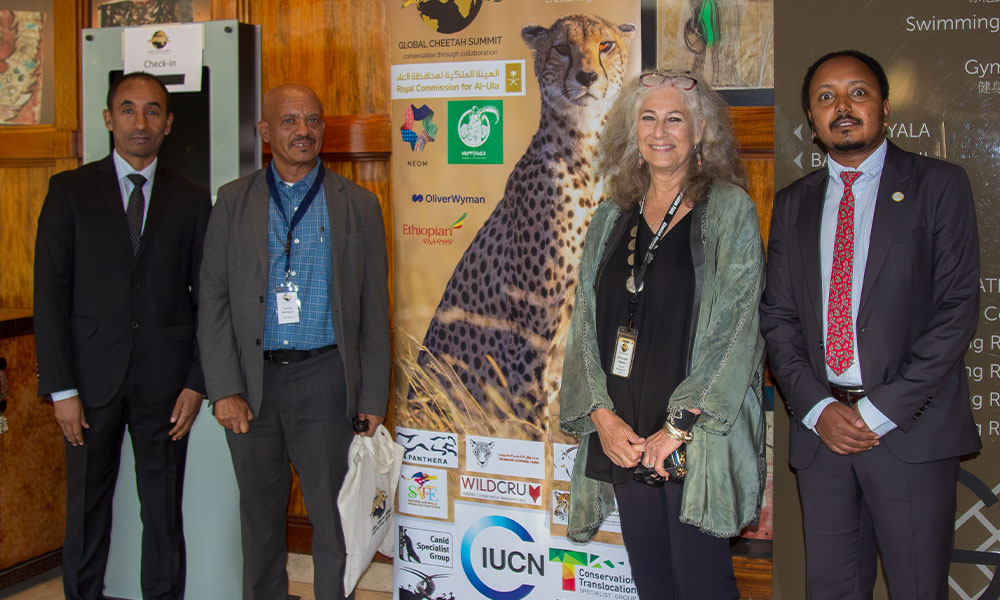
The 2024 Global Cheetah Summit
In January 2024, CCF co-organized the first Global Cheetah Summit in Addis Ababa, Ethiopia, together with the Ethiopian Wildlife Conservation Authority (EWCA). Funded by the Saudi Royal Commission for Al Ula (RCU), with additional sponsorship from NEOM, the Summit convened delegates from 23 cheetah-range countries, research institutions, NGOs, and global conservation partners.
The Summit:
- Adopted the Addis Ababa Declaration for Global Cheetah Conservation, which was submitted to CITES
- Agreed that approximately USD 165 million per year is needed to sustain range-wide cheetah conservation
- Established a consensus that viable wild cheetah populations in many regions may have fewer than five years before reaching ecological collapse if current trends continue
The Summit was the first coordinated global platform in more than a decade focused specifically on range-wide cheetah conservation, and it strengthened international coordination on research, policy, enforcement, and habitat restoration.
Forensic Science as a Policy Tool
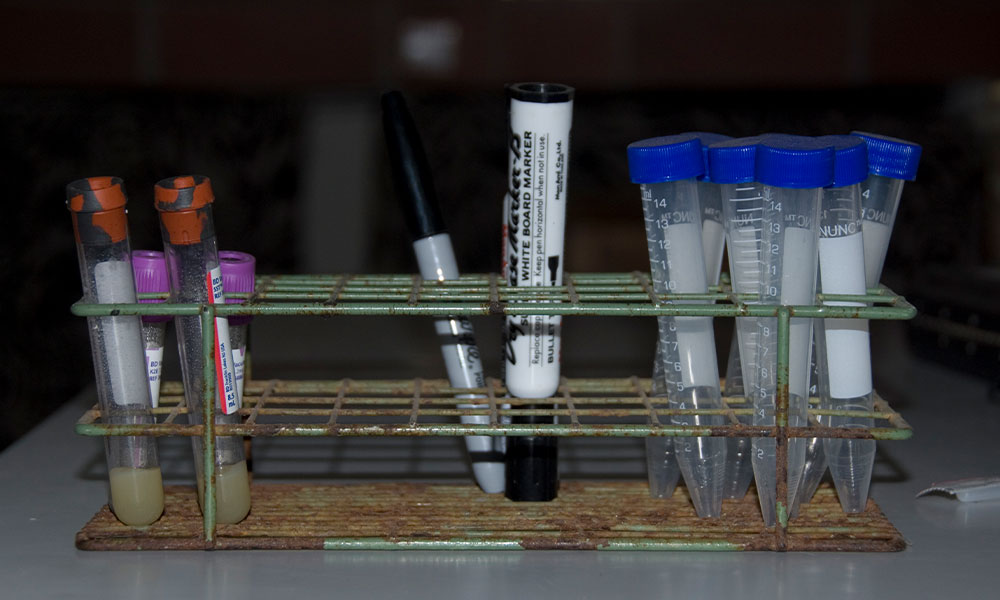
CCF’s conservation genetics laboratory supports policy and enforcement through forensic science. The lab analyzes and banks DNA samples from cheetah cubs rescued from illegal trade, linking cubs to their geographic regions of origin and providing evidence that strengthens criminal investigations and prosecutions. The laboratory also supports population health studies and genetic diversity assessments that inform national and international conservation planning.
Support CCF’s Policy and Advocacy Work
CCF’s policy work depends on donors like you. Your gift funds the research, forensic science, and government partnerships that protect cheetahs from trafficking and extinction.