
IUCN and Reverse the Red
CCF and the IUCN: Protecting Cheetahs Through Science
The cheetah is the most endangered big cat in Africa, with fewer than 7,500 remaining in the wild. Since its founding in 1990, the Cheetah Conservation Fund has been one of the world’s leading wildlife conservation organizations. It has worked within the International Union for Conservation of Nature (IUCN) to protect cheetahs and advance their conservation status worldwide. In addition, CCF’s scientific staff hold leadership roles within the IUCN Species Survival Commission (SSC) Cat Specialist Group. This is the body responsible for coordinating global recovery plans for wild cat species.
Leadership Within the Cat Specialist Group
Dr. Laurie Marker, CCF’s Founder and Executive Director, was named Vice-Chair of the IUCN Cat Specialist Group in 1996. Through this role and CCF’s broader scientific contributions, the organization helps shape the standards and strategies used to assess and protect cheetah populations across their range.
Contributing to the IUCN Red List
CCF provides critical population data for the IUCN Red List of Threatened Species. This is the most comprehensive global assessment of species conservation status. Specifically, CCF’s field research in Namibia and the Horn of Africa contributes to the assessments that document the global decline of adult cheetahs. Fewer than 7,500 remain in the wild.
At the national level, CCF co-authored the Namibian Carnivore Red Data Book (2022). This publication applies IUCN Red List methodology to assess all 34 carnivore species in the country. As a result, it serves as a foundational reference for Namibian conservation policy and for CCF’s Reverse the Red commitments.
Uplisting the Horn of Africa Cheetah Population
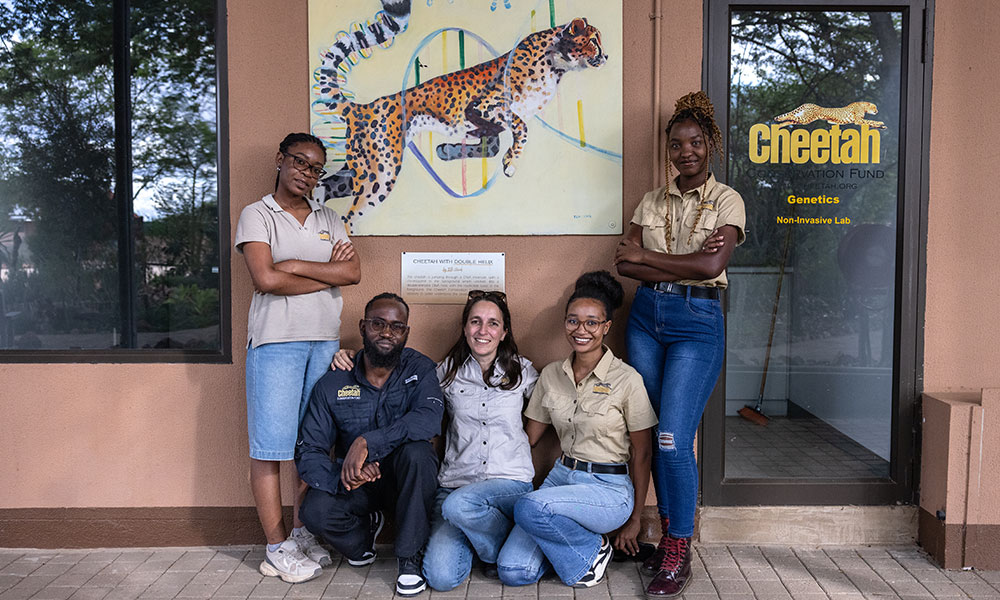
In 2023, CCF’s genetic research provided the scientific basis for the IUCN decision to recognize the Horn of Africa cheetah population (Acinonyx jubatus soemmeringii) as a distinct population. It was then uplisted to Endangered status. This recognition was the direct result of years of genetic sampling and analysis conducted at CCF’s conservation genetics laboratory. Notably, this is the only in-situ genetics facility at a cheetah conservation center in Africa.
CCF’s Genetics team helps provide species population data to inform the IUCN Red Data List
The Cheetah Conservation Compendium
CCF co-sponsored the Cheetah Conservation Compendium with the IUCN Cat Specialist Group. Together, they created a digital library of all known cheetah research and policy documents. This resource serves as a reference tool for researchers, governments, and conservation practitioners worldwide.
IUCN World Conservation Congress
CCF representatives have participated in IUCN regional forums and World Conservation Congresses to advance science-based recovery strategies for cheetahs. For example, in 2019, CCF attended the regional forum in South Africa. Then in 2021, CCF participated in the World Conservation Congress in France. There, the organization contributed to discussions on nature-based recovery and human-wildlife coexistence.
More recently, at the 2025 IUCN World Conservation Congress in Abu Dhabi, Dr. Marker made a side event presentation on Human-Cheetah Coexistence through Conservancies. She also held a press conference entitled Towards a New Model to Combat Wildlife Crime in the Horn of Africa. This promoted the concept for community-based conservation that CCF has piloted in Somaliland.
Save Our Species Fund
CCF received a grant in 2021 from the IUCN Save Our Species Fund. The purpose was to assess Community Based Natural Resource Management (CBNRM) as a viable wildlife management strategy in Somaliland. Over two years, this project educated national and local government officials on conservancy concepts. It also identified potential sites for establishing CBNRM-based community conservancies.
CCF’s Reverse the Red Pledge
Reverse the Red is a global movement co-chaired by the IUCN Species Survival Commission and the World Association of Zoos and Aquariums (WAZA). Its goal is to halt extinctions, reverse the declines of threatened species included on the IUCN Red List, and restore wild populations through strategic, science-based action. Specifically, Reverse the Red actions include “Species Pledges” by organisations committed to specific actions aligned with larger strategies for species recovery in the wild.
CCF has made a formal Reverse the Red Pledge dedicated to securing the long-term survival of the cheetah. CCF’s primary commitment is to minimize cheetah population declines by 2030. Ultimately, the goal is reversing these declines through integrated research, community engagement, and policy action.
Strategic Actions
CCF aligns its work with the IUCN Global Species Action Plan (GSAP) to halt biodiversity loss through several strategic pillars:
- Species Assessment — CCF conducts long-term population monitoring, contributes to Red List assessments, and performs threat pathway analyses across cheetah range states. In 2022, CCF finalized and launched the Namibian Carnivore Red Data Book. This was done in partnership with the Ministry of Environment, Forestry and Tourism (MEFT) and the Namibian Chamber of Environment. It provides a scientific status update for all 34 carnivore species in the country. Furthermore, the Red Data Book applies IUCN Red List methodology at the national level. As a result, it directly feeds into the global species assessment framework that underpins Reverse the Red.
- Recovery and Reintroduction — CCF helps governments develop national conservation strategies and site-based plans in Namibia, the Horn of Africa, and other range regions.
- Prevention of Extinction — CCF focuses on the rescue, rehabilitation, and release (when possible) of captured cheetahs. It also focuses on strengthening wildlife law enforcement through government partnerships. In Namibia, CCF has rehabilitated and released approximately 600 cheetahs since its founding. Meanwhile, in Somaliland, CCF’s Cheetah Rescue and Conservation Centre provides lifelong care for cheetahs rescued from illegal trade. It also supports government-led enforcement.
- Human-Wildlife Conflict Mitigation — In Namibia, CCF implements the Livestock Guarding Dog (LGD) Program, improves kraals, and provides coexistence education through the Future Farmers of Africa (FFA) program. As a result, LGD placements reduce livestock predation by 80–100%. This prevents the retaliatory killing of approximately 458 cheetahs per year. Similarly, in Somaliland, CCF provides FFA training to farmers and herders. This has led to significant reductions in livestock losses due to predation.
- Genetic and Health Safeguards — CCF maintains a global cheetah genetic reference database. It also works to preserve genetic diversity through its Genome Resource Bank. In addition, CCF conducts research into species health issues faced by cheetahs due to low genetic diversity and other causes.
Measuring Progress
To track the impact of the pledge, CCF monitors indicators across four areas:
- Population Trends — Distribution, density, and home range size of wild cheetahs across range states..
- Threat Reduction — Documented trafficking incidents, cheetahs rescued from the illegal trade, and livestock losses to cheetahs.
- Community Impact — Changes in local attitudes toward cheetahs, the number and impact of FFA trainings, and the number of schoolchildren reached through the Future Conservationists of Africa program.
- Recovery Metrics — Success rates of rehabilitated and released individual cheetahs and total area of habitat restored through the Bushblok and Biomass Technology Demonstration Centre programs.
Geographic Scope
CCF’s Reverse the Red actions span the cheetah’s African range. In addition to its primary field centers in Namibia and Somaliland, CCF is also active in Ethiopia, Kenya, and the southern Africa region. These efforts are supported by partnerships with national wildlife authorities, international bodies including the IUCN SSC Cat Specialist Group, and local NGOs and community associations.
Overarching Objectives
The ultimate objectives of CCF’s involvement in Reverse the Red are to stabilize and increase wild cheetah populations. Additionally, CCF aims to eliminate the illegal trade through demand reduction and enforcement. Finally, the goal is to safeguard the species’ long-term genetic viability.
How These Efforts Connect
CCF’s IUCN leadership and Reverse the Red pledge reinforce each other. And with your help, CCF will continue its work with the IUCN, governments, and enforcement agencies to save the cheetah from extinction.
The scientific data CCF contributes to the Red List and Cat Specialist Group informs the conservation strategies that drive CCF’s Reverse the Red commitments. The 2023 uplisting of the Horn of Africa cheetah population to Endangered status demonstrates how CCF’s research directly shapes global conservation priorities — and how global frameworks in turn strengthen the case for CCF’s on-the-ground programs.
In January 2024, CCF co-organized the Global Cheetah Summit in Addis Ababa, Ethiopia, convening delegates from 23 cheetah-range countries. The Addis Ababa Declaration for Global Cheetah Conservation was adopted by attendees and submitted to CITES. The Summit identified that approximately USD 165 million per year is needed to sustain range-wide cheetah conservation, and established a consensus that viable wild cheetah populations in many regions may have fewer than five years before reaching ecological collapse if current trends continue.
How You Can Help Save Cheetahs from Extinction
CCF’s science-based conservation work — from Red List assessments to the Reverse the Red pledge — depends on the support of people who believe cheetahs deserve a future in the wild. Your donation funds the research, genetic analysis, and policy advocacy that protect cheetahs at the international level.