
Exploring signs of Cheetahs across the Northwest of Namibia
-

- by Ruusa Uugwanga August 3, 2026
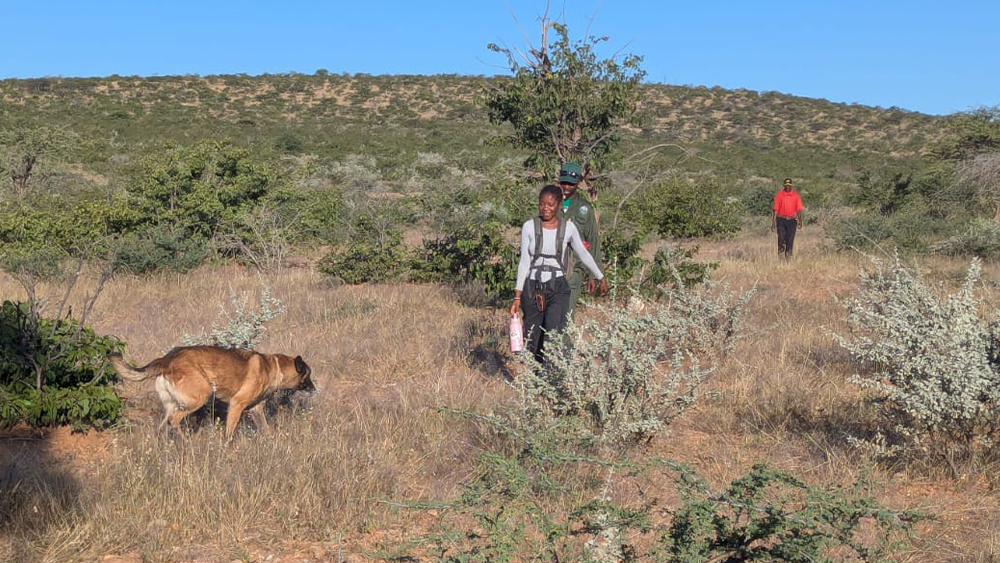
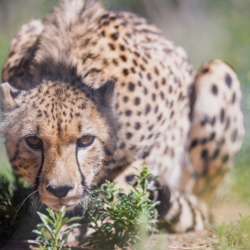
Conservation fieldwork is often a journey of uncertainty. Some days reward you with exciting discoveries, while others test your patience, and ability to adapt when things do not go as planned. Travelling through Otjikondavirongo, Anabeb, Sesfontein, and Ozondundu communal conservancies, our goal was to locate cheetah marking sites and collect scat samples for genetic research. While the journey began with high expectations and a few challenges, it ended with valuable discoveries, new partnerships, and lessons that will shape future surveys.
Our arrival at the first conservancy was memorable in itself. After a long day on the road, we reached the area much later than expected. Finding our destination was a little difficult, as we were navigating unfamiliar roads with directions provided over the phone, while Google Maps was not so reliable in such a remote area and network coverage was limited, making it impossible to call back and confirm our location when we became uncertain of the route. Despite these challenges, we eventually found our way. By the time we arrived, darkness had already fallen but we received a warm welcome from the conservancy chairperson before setting up camp under rugged field environments.
The team consisted of Dr. Tim Hofmann, and myself, accompanied by our detection dog, Gamena. Along the way, we navigated some of Namibia’s most remarkable landscapes. Rough mountains, dry riverbeds, and huge open plains stretched as far as the eye could see, creating a landscape that felt both harsh and beautiful. Despite the arid conditions, the region supported an abundance of wildlife, and throughout the trip we encountered tracks of, brown hyenas, jackals, leopards, and even lions along with numerous other species that call this unique environment home.
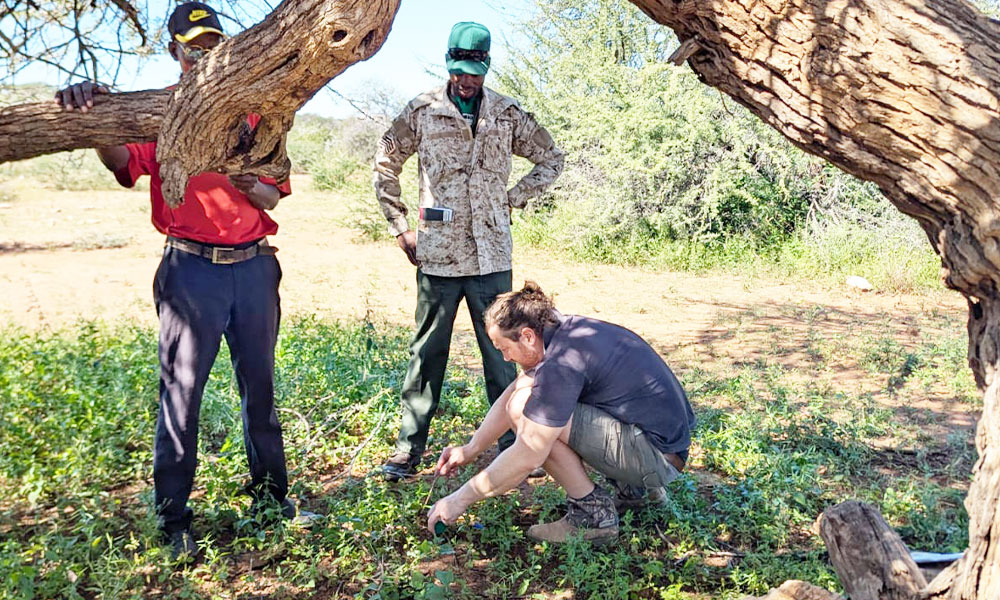
Our surveys focused on locating potential cheetah marking sites, prominent landscape features such as large trees and elevated viewpoints that cheetahs use to communicate with other individuals through scent marking. Together with conservancy game guards, whose extensive knowledge of the area proved invaluable, we carefully searched these locations for spoor, scat, and other signs of cheetah activity. After spending hours searching with little success, it brought some uncertainty because we had travelled with high expectations, only to leave with very little evidence of cheetah activity. Although frustrating at the time, the experience highlighted the importance of clear communication and careful confirmation when planning future surveys.
As the trip progressed, the challenges continued. During one journey between survey areas, we stopped to let Gamena out of the vehicle after she had been persistently whining. What seemed like a routine stop quickly revealed a problem we had a flat tyre. In hindsight, her timing may have saved us from a much bigger issue further down the road. After replacing the tyre, we continued to Palmwag fuel station, only to arrive and discover it had already closed for the day. After the inconvenience of the tyre, this felt like yet another setback. With fieldwork scheduled for the following morning, we desperately needed fuel.
Fortunately, a kind police officer stationed at a nearby veterinary roadblock came to our assistance. Constable Limbo spoke with the fuel station attendant on our behalf, and after some discussion, provisions were made for us to purchase diesel. What had started as a frustrating evening ended with renewed optimism as we returned to camp, knowing we will be able to continue our surveys the next day.
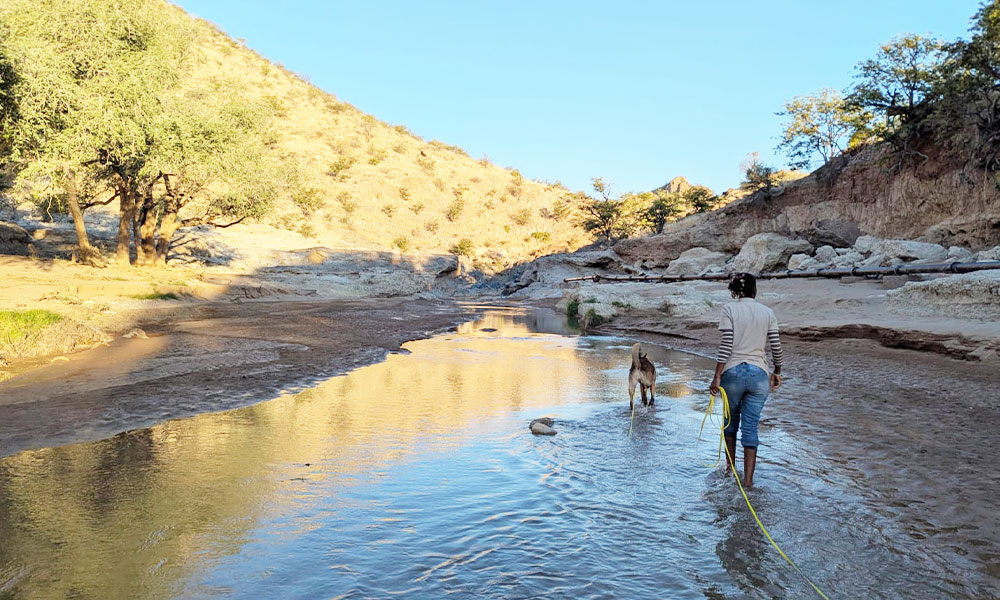
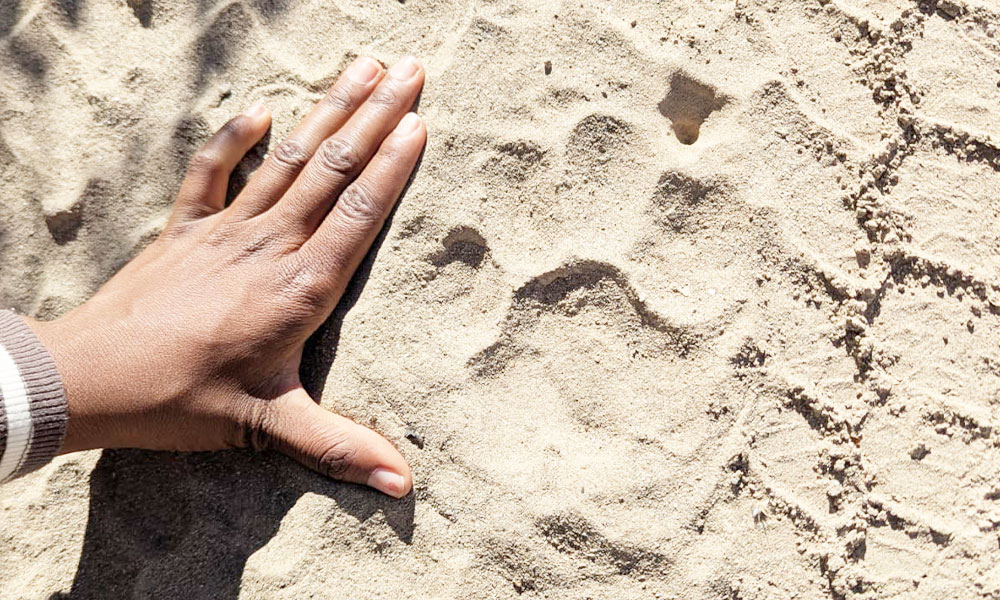
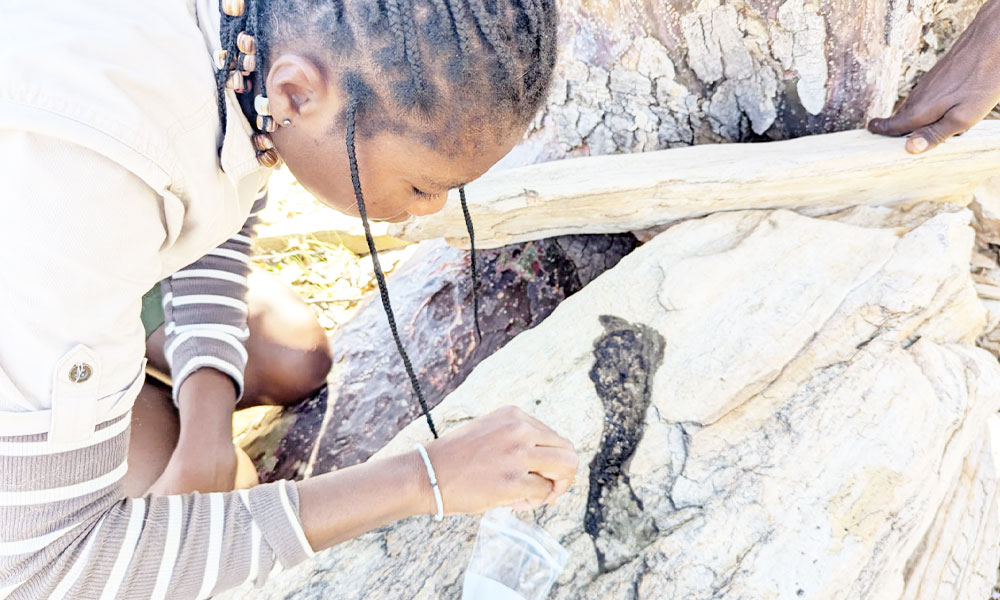
The most memorable and rewarding part of the trip was in Ozondundu Conservancy, were we identified 6 confirmed marking trees, 1 potential marking trees, and collected 22 suspected cheetah scat samples. The excitement of finally finding active marking sites made every challenge worthwhile. Even a 3 km walk through rocky terrain and dense vegetation felt effortless. The same terrain that would have seemed exhausting on a day without findings suddenly felt easy because every step held the possibility of another discovery.
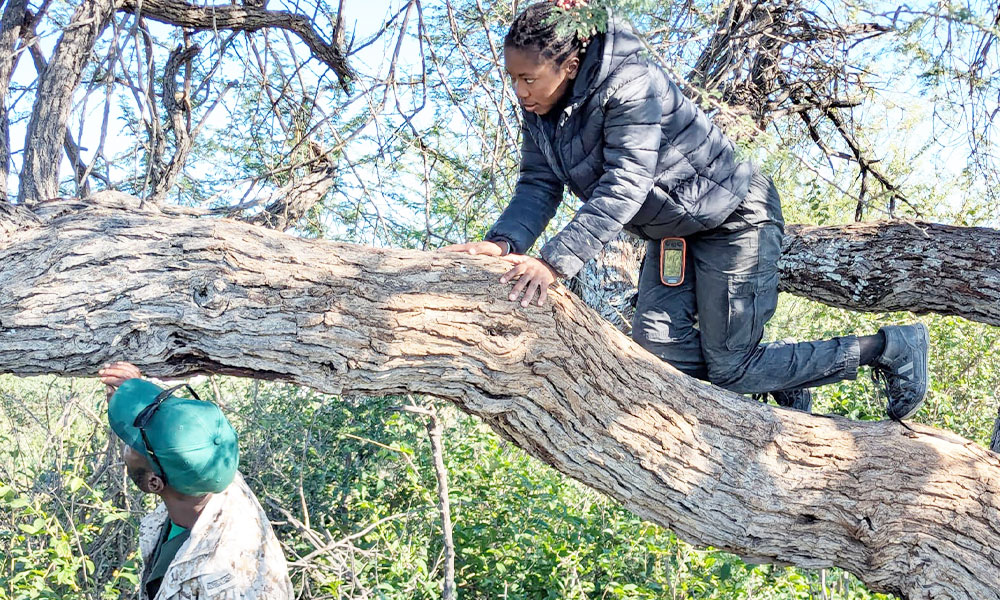
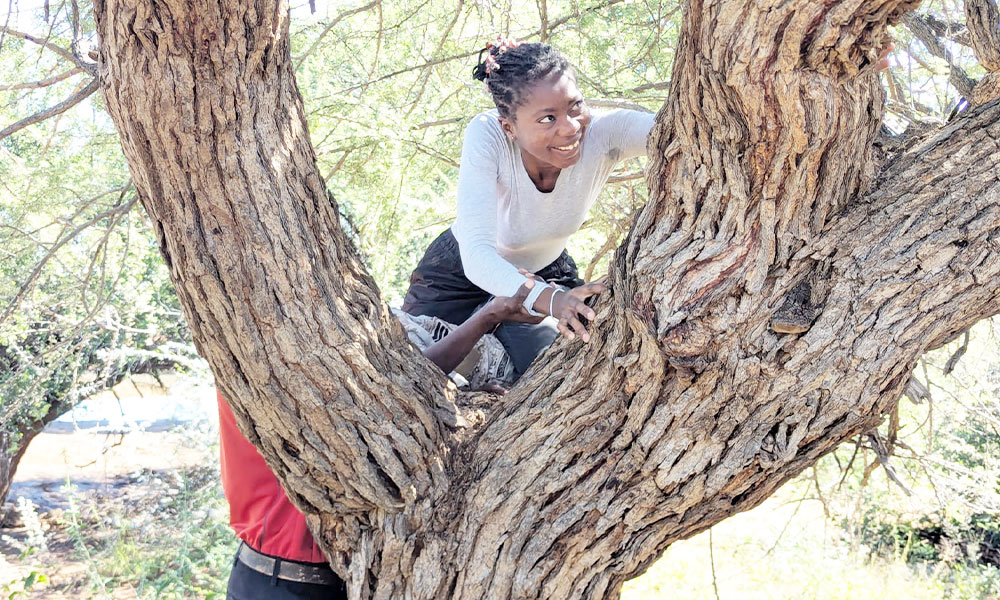
One of the greatest lessons from the trip was seeing how quickly determination change in the field. Searching for hours without finding sign of cheetahs can be discouraging, but discovering a single marking site always bring excitement to the team. Energy levels rise, motivation returns, and the search becomes exciting once again. The success in Ozondundu reminded us why patience and persistence are such important parts of conservation work. The trip didn’t just reward us with scat, but improved field skills, including climbing trees to collect scat samples lodged on the tree. In the process, I discovered that my fear of heights was not quite as limiting as I had once believed. Long days in the field improved my fitness, and despite the heat and demanding conditions, I continued pushing myself. As the only woman on the team, I was determined to keep pace with the team and contribute equally to the work. Looking back, I am proud of what I achieved and grateful for the opportunity to grow both professionally and personally.
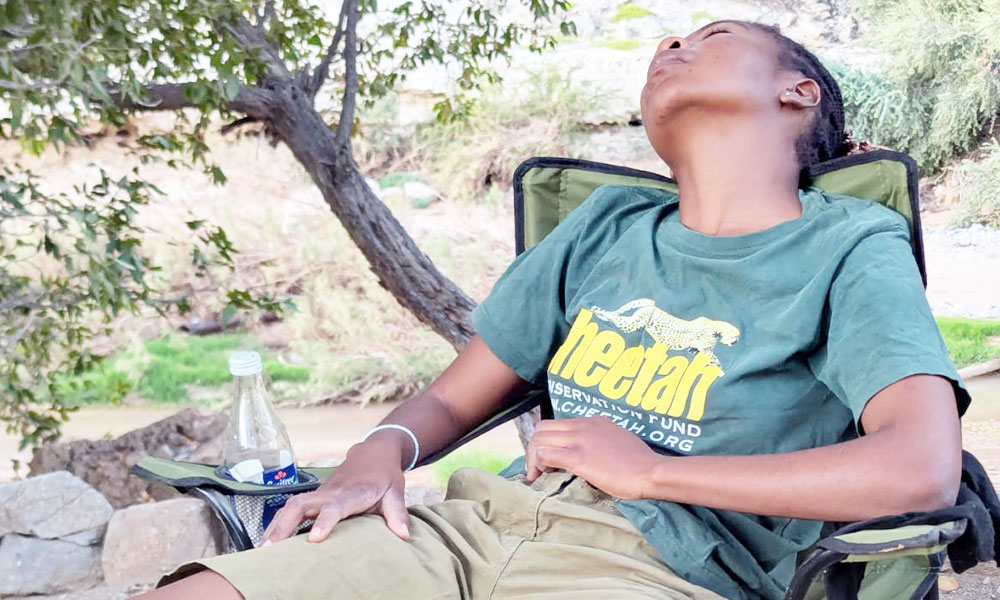
Beyond the surveys, what stood out most was the teamwork. Every task was shared, from setting up tents and preparing meals to navigating difficult terrain and solving unexpected problems. After long days in the field, we returned to camp tired and dusty, yet still worked together to prepare dinner and get ready for the next day’s activities. These shared experiences strengthened our teamwork and made the challenges easier to overcome. The conservancy game guards also played a vital role in the success of the surveys. Their knowledge of the landscape, wildlife movements, and local conditions helped guide our searches and improved our chances of locating potential marking sites. The relationships established during this trip will definitely support future conservation and research efforts in the region.
As my first field trip with the team, the experience exceeded my expectations. I learned not only about scat collection techniques, but also about communication, planning, problem-solving, and the value of perseverance. Most importantly, I gained a deeper appreciation for the remarkable landscapes of northwest Namibia and the people dedicated to conserving them. By the end of the six days, we returned home tired but fulfilled. What began with disappointment ultimately became a story of discovery, resilience, and teamwork. Along with valuable samples and understanding, we returned with memories that will remain long after the dust of the journey has settled.
Photos taken by: Tim Hofmann
Project supported by
Visit websiteRelated Reading
-
October 13, 2026
The Fall and Rise of the Cheetah