
What Do Jackals Really Eat? New CCF Research Puts Wild Ungulates on Top
-
- by Emma Munyandi October 2, 2026
Article Summary: Mesocarnivore diet in a human-dominated landscape with abundant livestock and low large carnivore occurrence.
Research Authors: Emma Munyandi, Bogdan Cristescu, Stijn Verschueren, Meed Mbidzo, Nadja le Roux, Laurie Marker, Anne Schmidt-Küntzel
Published in: Wildlife Research (2026)
Read the full paper: https://doi.org/10.1071/WR26008
In Namibia’s communal conservancies, black-backed jackals are widely perceived as the primary threat to smallstock. Farmers in the Okakarara District Communal Area (ODCA) of central-eastern Namibia attribute up to 73% of their sheep and goat losses to jackals. But this new study led by CCF researchers reveals that the jackal’s actual diet tells a more nuanced account.
The research, adapted from the master’s thesis of Emma Munyandi, who worked at CCF from 2019 to 2023, analyzed 86 genetically confirmed black-backed jackal scat samples collected across four communal conservancies. The findings challenge the assumption that jackals depend heavily on livestock: wild ungulates contributed the largest share of biomass to the jackal diet at nearly 49%, while smallstock (sheep and goats) made up only about 16%. Nevertheless, even limited livestock predation can negatively affect local farmers, particularly where livestock losses are compounded by drought, disease and low productivity.
The study stands out not only for its findings but for the breadth of collaboration behind it. The project brought together CCF’s ecology team, genetics department, human-wildlife conflict responders who monitor the region’s African wild dog population, scat detection dog team, and even the veterinary team, who collected scat samples while conducting rabies vaccination campaigns in the study area. It is a clear example of how CCF’s integrated approach to conservation, spanning research, community engagement, and animal health, can produce science with real-world impact.
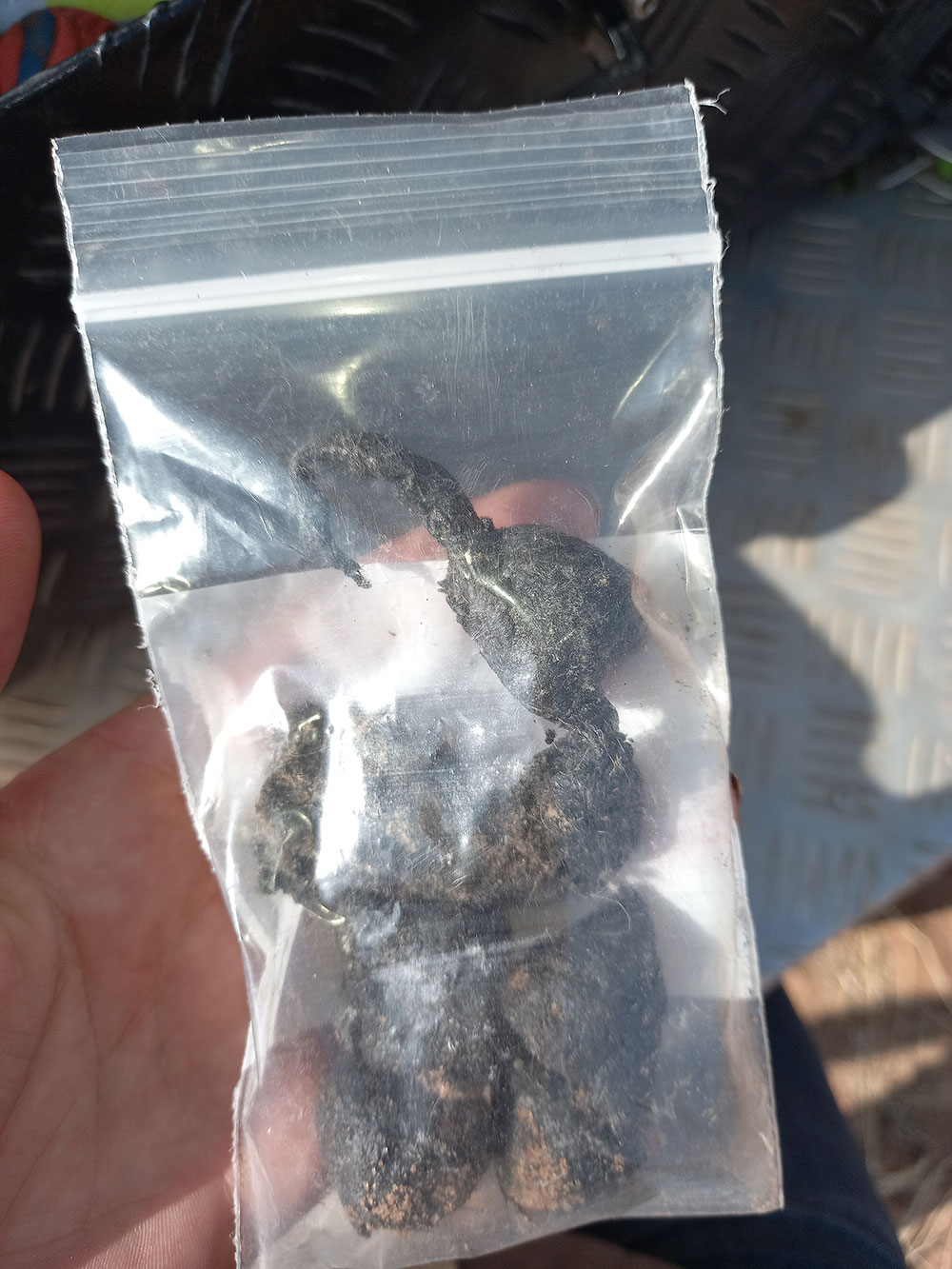

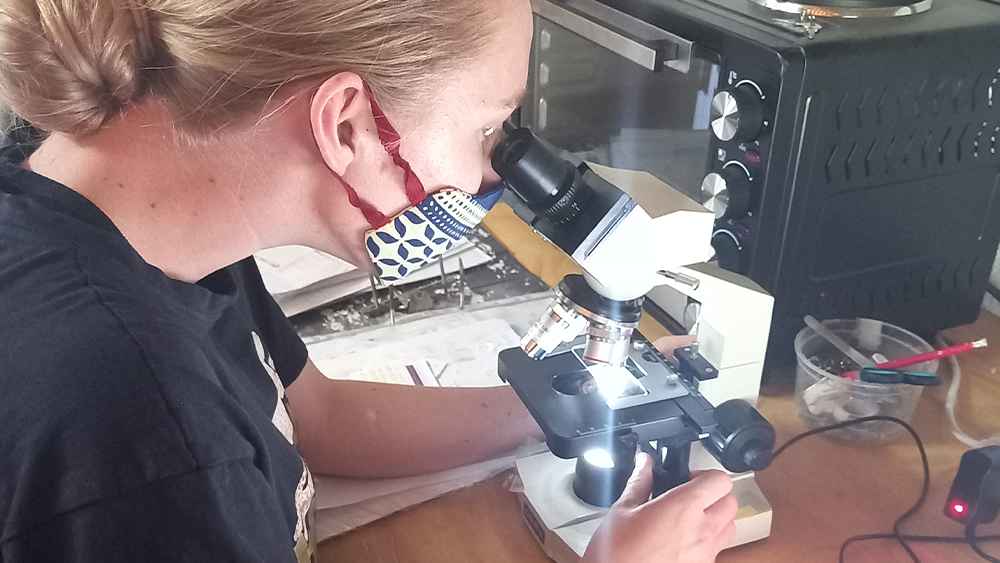
One of the study’s most important contributions is its emphasis on genetic verification. Identifying carnivore species from scat in the field is notoriously difficult, and this research proved the point: nearly 19% of samples that had been field-identified as jackal were actually from other species, and about 28% of the genetically confirmed jackal samples had originally been misidentified as something else. Without genetic confirmation, the dietary analysis would have included data from the wrong species entirely. Once species identity was confirmed, the team used a technique called hair reading to identify the prey species present in each scat sample. This involves examining individual hairs under a microscope, where the cuticular scale pattern, unique to each species, reveals what the jackal had consumed.
What Jackals Prefer to Eat
The study identified 20 different food items in the jackal diet, reflecting the species’ remarkably adaptable, omnivorous nature. By biomass, the breakdown revealed clear preferences:
- Wild ungulates (duiker, steenbok, kudu, warthog) contributed the most biomass at nearly 49% of the total diet, with kudu and warthog consumed more than expected given their low abundance on the landscape.
- Grewia flava berries appeared in over two-thirds of scat samples, making them a key seasonal food source during the dry months.
- Small mammals (rodents) were the most frequently occurring mammal item and contributed about 9% of total biomass.
- Insects (beetles) were among the most frequently consumed items overall.
- Smallstock (sheep and goats) made up only about 16% of biomass.
- Birds, lizards, and invertebrates contributed less than 5% of total biomass, serving as supplemental rather than primary food sources.
Larger wild ungulates like kudu and warthog are most likely consumed through scavenging rather than direct predation. The dry season, when drought-related mortalities increase, may provide jackals with additional scavenging opportunities.
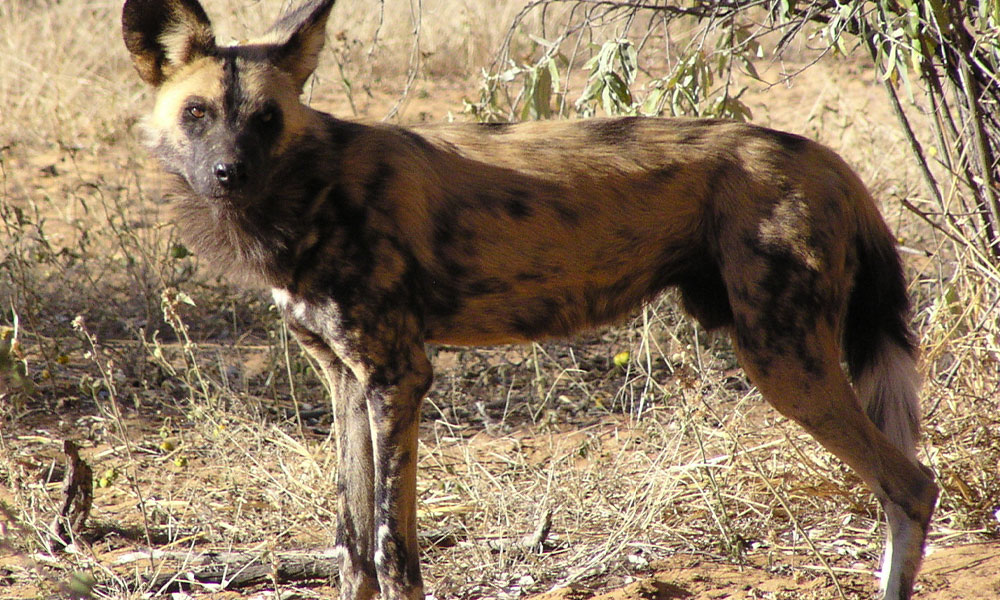
The researchers also investigated whether the presence of African wild dogs, a larger predator that could provide scavenging opportunities through their kills, influenced jackal diet. Comparing jackal scat collected within 10 km of known African wild dog dens to scat collected farther away, they found no significant difference. This suggests that the small, heavily persecuted wild dog population in the ODCA may no longer be fulfilling its ecological role as a top predator, a finding with implications far beyond jackal diet.
Why This Matters for Cheetahs
This is where the study connects directly to CCF’s core mission. The research demonstrates that jackals preferentially consume wild prey when it is available. This means that efforts to enhance wild ungulate populations, through reduced bushmeat hunting and habitat management, could further decrease livestock depredation by providing jackals with more of the food they naturally prefer. At the same time, a more robust wild prey base would support the recovery of endangered large carnivores, including African wild dogs and cheetahs, which depend on many of the same prey species.
The study also reinforces the value of improved livestock husbandry practices. If mitigation methods such as kraaling, livestock guarding, and calving management are strengthened, particularly during the dry season when young smallstock are most abundant and jackals are raising pups, the potential for conflict between farmers and predators decreases further.
For communal conservancy farmers, who bear disproportionate losses and often have fewer predator prevention resources than freehold farmers, these findings offer practical, evidence-based pathways toward coexistence. A landscape where jackals can thrive on wild prey, wild dogs can fulfill their ecological role, and cheetahs have access to abundant game is one where conservation and community livelihoods can move forward together.
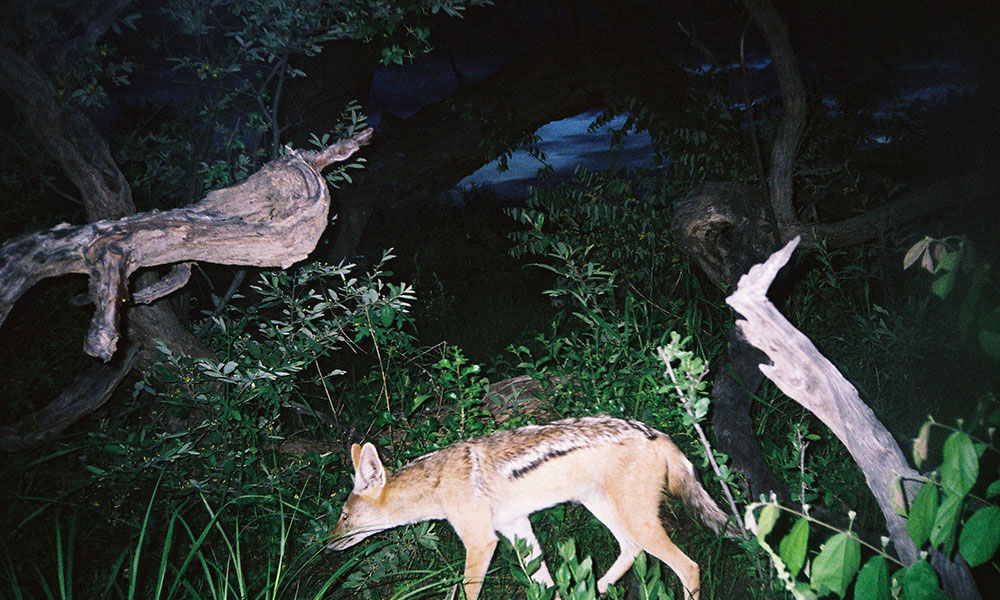
Photo: Black-backed jackal captured on a CCF camera trap in the Okakarara District Communal Area. Photo credit: CCF/Cheetah Conservation Fund
Related Reading
-
October 13, 2026
The Fall and Rise of the Cheetah