
Cheetahs and Beyond: How Birding at CCF Deepened My Connection with Namibia’s Landscape
-
- by Bliss Bonner August 17, 2026
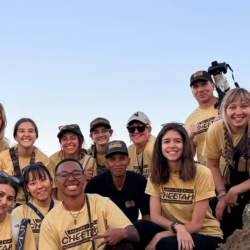
The Cheetah Conservation Fund is, of course, known for its cheetahs. Every day, many people visit for the opportunity to see and learn about the most endangered big cats in Africa. That’s one reason why I chose to come as part of a class with the University of Wyoming. During the nine days we spent with CCF, I gained a better understanding of cheetahs, their role in an ecosystem, the threats they face, and all the efforts to save the species.
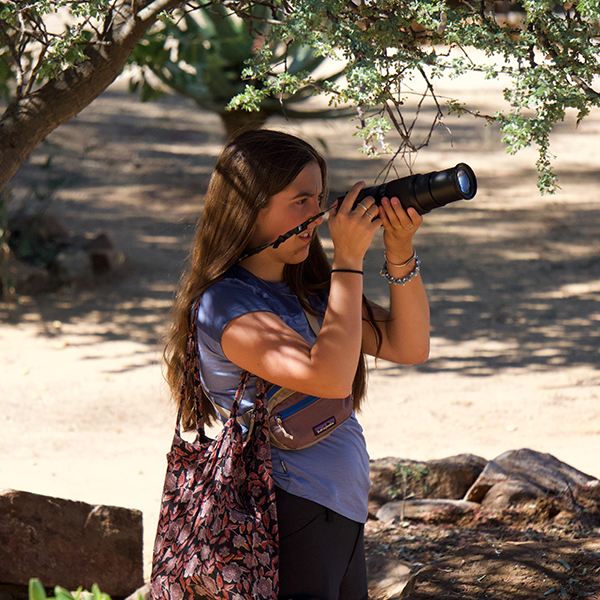
In that time, I also added about 40 bird species to my “life list.” That term is familiar to anyone who is entrenched in the culture of birding, referring to the way birders keep track of every species they have ever observed, by either sight or sound. As I quickly discovered, the CCF headquarters is a great place to find a variety of Namibian birds.
Even for those who don’t keep a life list, don’t own binoculars or can’t tell a hawk from a hornbill, learning a bit about the local birds is a fantastic way to connect with the landscape. Namibia has many unique species and several of them benefit their ecosystems in ways that extend to other wildlife, including cheetahs.
Common and Charismatic Species
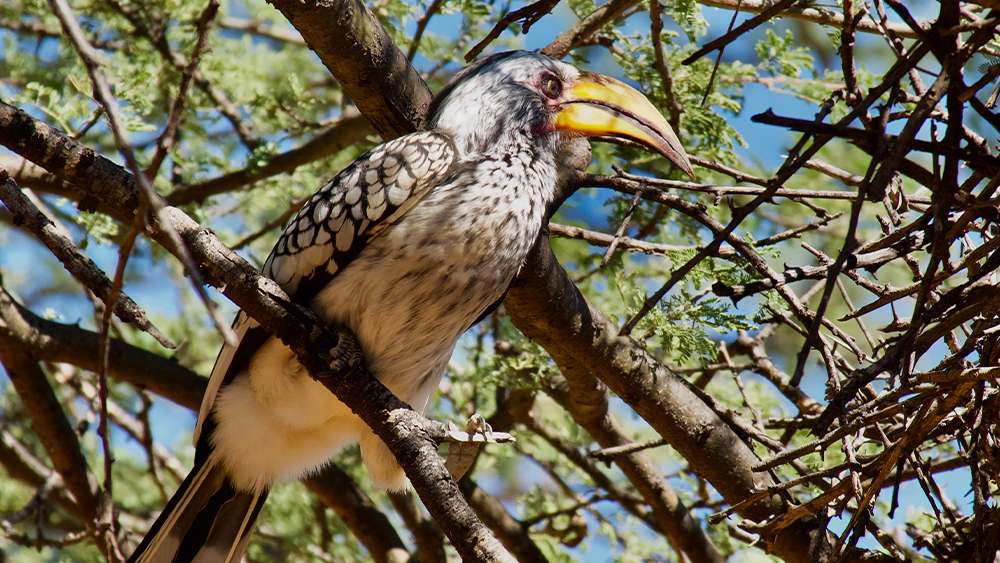
As soon as our long drive from Windhoek ended, the birding began. Some of the first birds I noticed were hornbills. They are mostly black and white and of medium size. They’d be completely inconspicuous if it weren’t for their giant, curved, bright yellow bills. At CCF, the most common species is the southern yellow-billed hornbill.
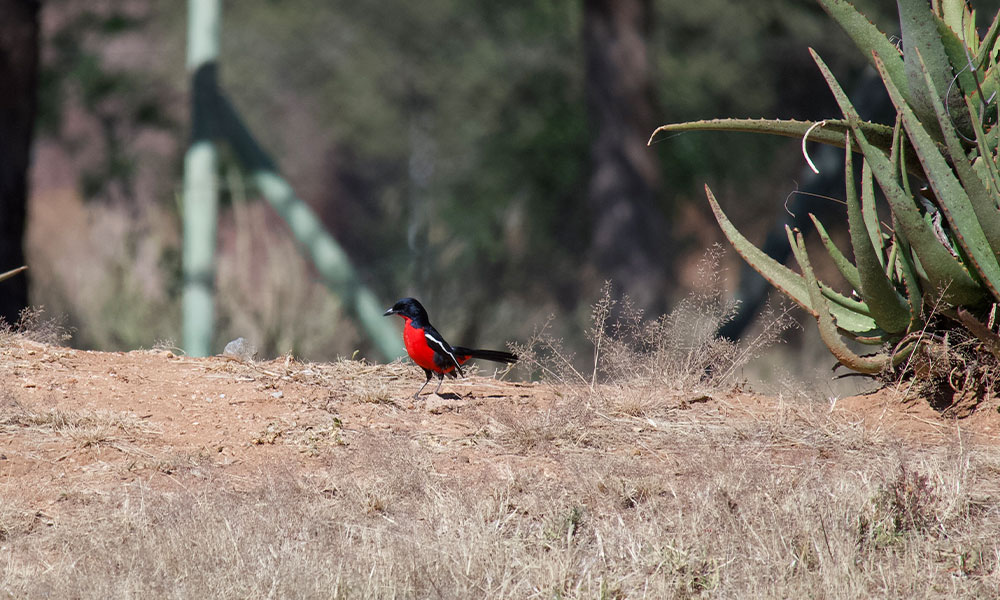
Another species with a particularly defining characteristic is the crimson-breasted gonolek. The name is a perfect description; while these birds are smaller and mostly black and white, the entire front of their body is a vivid red that seems to glow from among the shady trees.
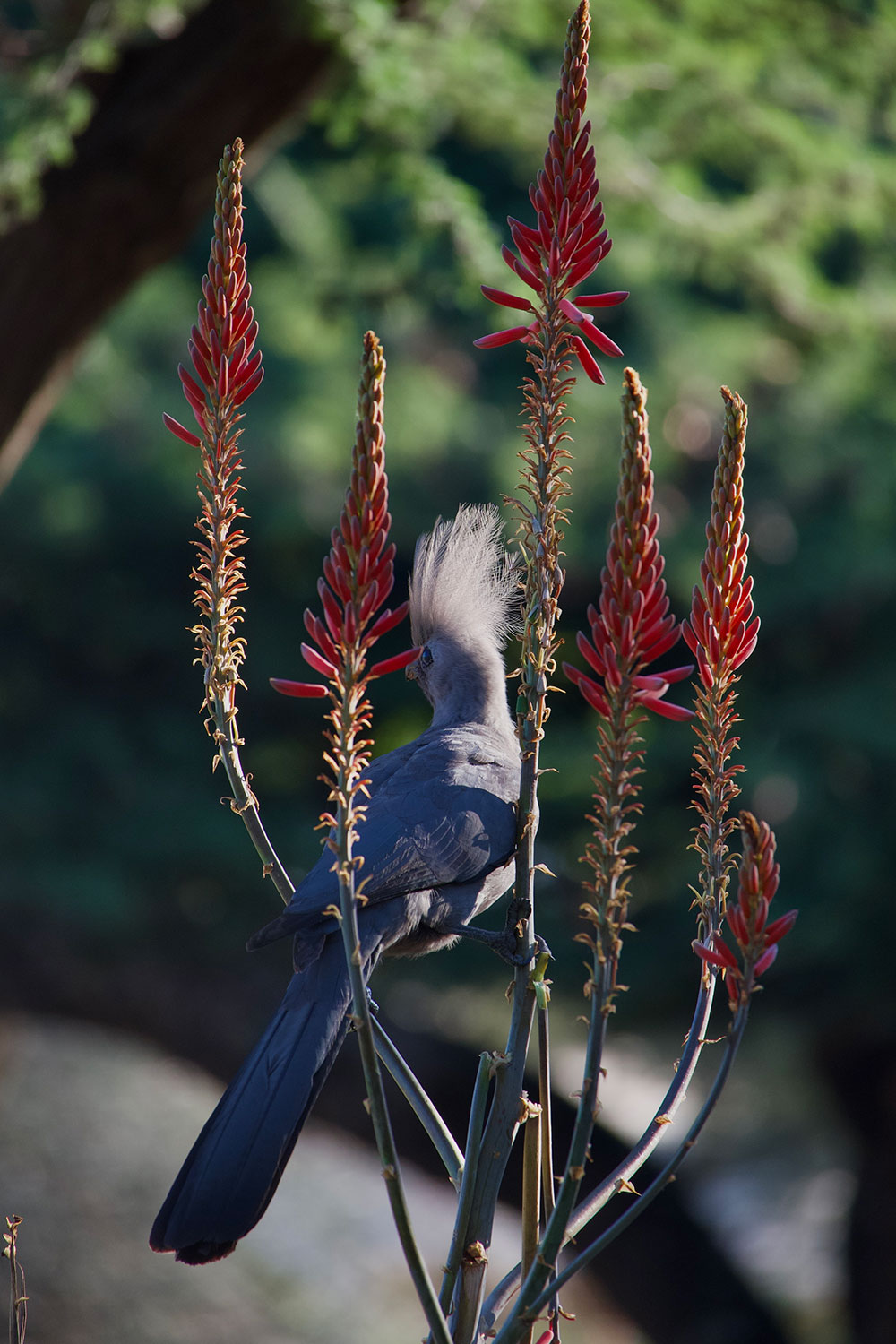
One of the birds I was most excited to see was the gray go-away-bird, partly just because of the funny name, which they get from their call that resembles the words “go away.” These medium-sized birds are entirely gray with a fluffy crest of tall feathers on their heads. I often heard them calling in the gardens at CCF, where they came to feed on the red flowers of aloe plants. They are quite fun to watch, especially because they can be very clumsy, snapping branches and tipping out of trees.
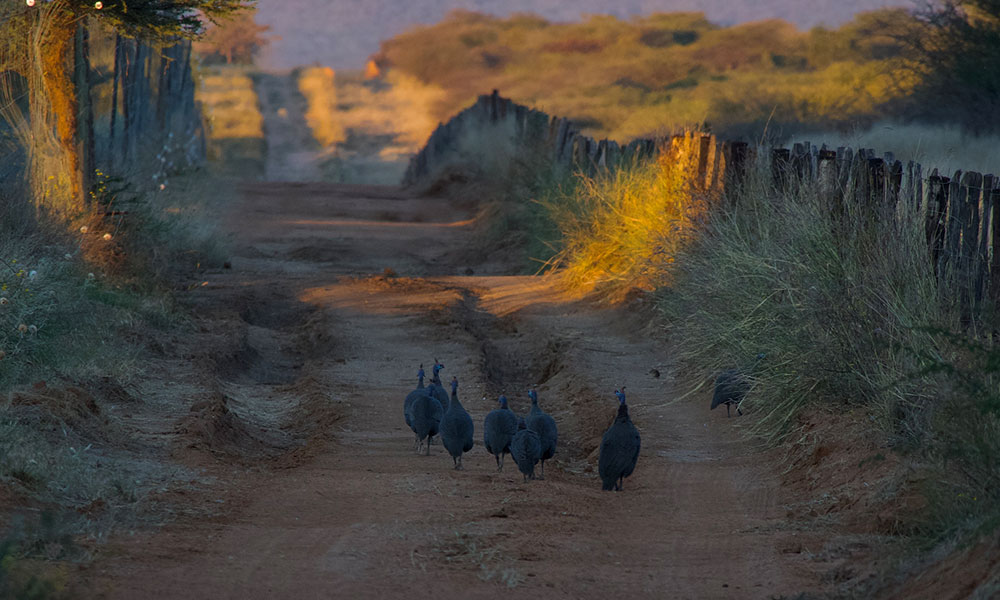
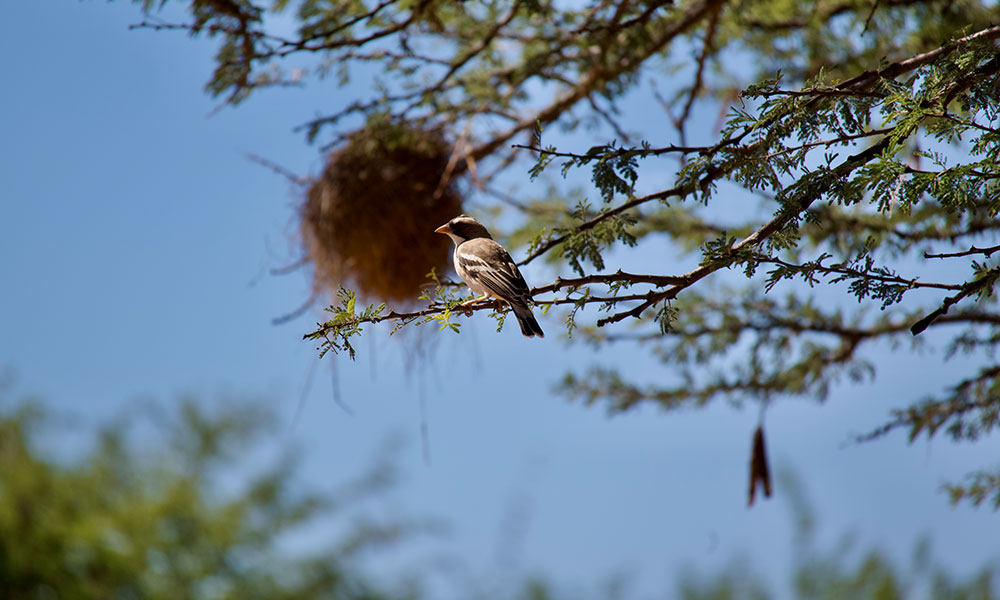
On a visit to CCF, you are also likely to see white-browed sparrow-weavers with their woven nests dangling from tree branches. There are many cape starlings with iridescent blue with yellow-orange eyes. Large groups of helmeted guineafowl often cross the roads, where you can see their spotted feathers and blue heads.
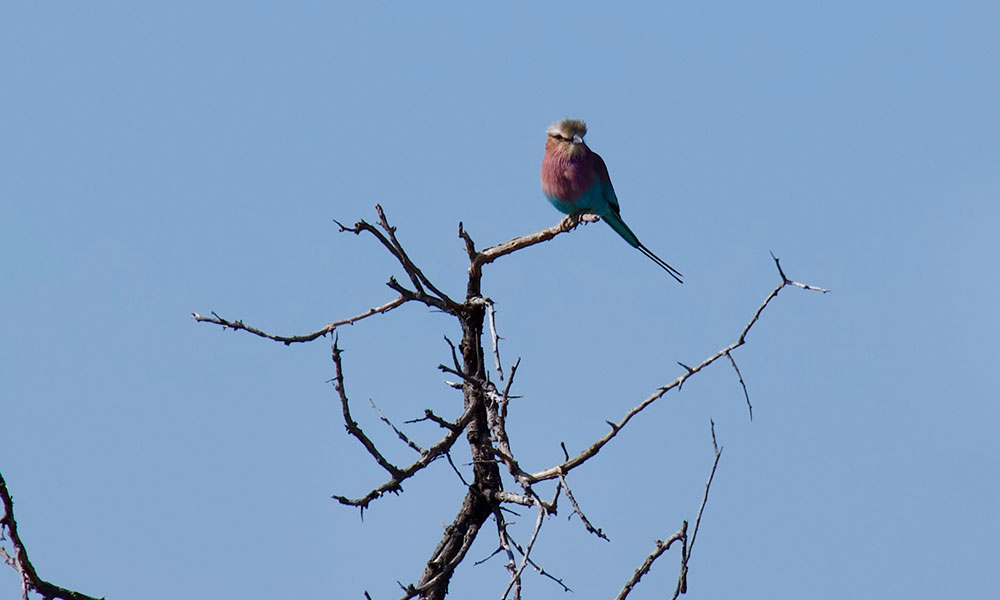
Yet another species I was excited to see was the lilac-breasted roller, an indigo and turquoise bird with bright purple coloring from its face to belly. When I got my first phone years ago, I had a photo of this bird set as my wallpaper. I don’t think I expected then that I would eventually get a chance to see one up close!
Highlights from CCF
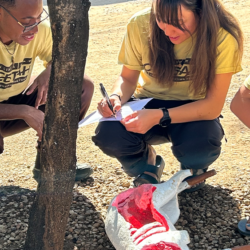
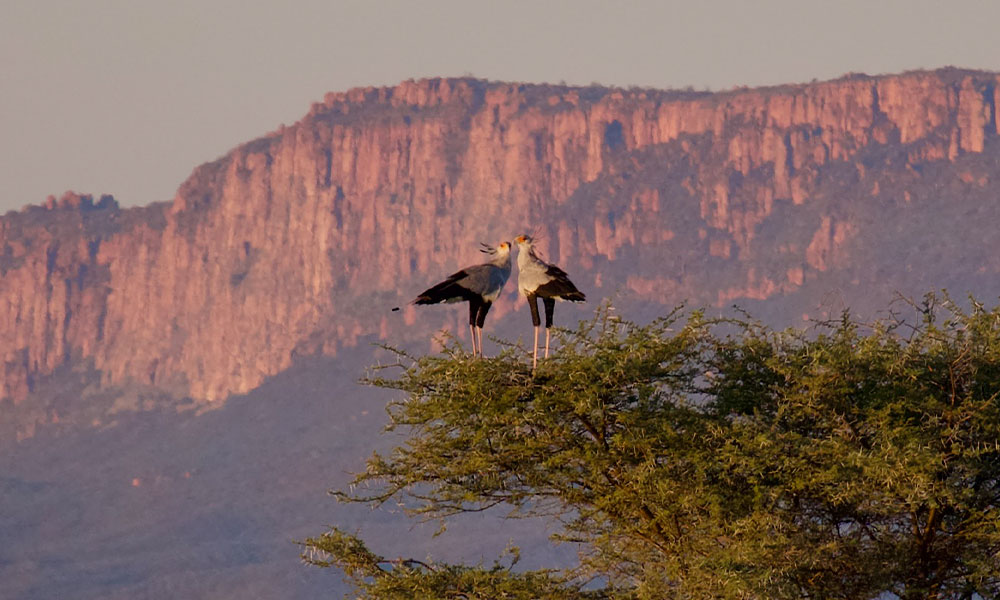
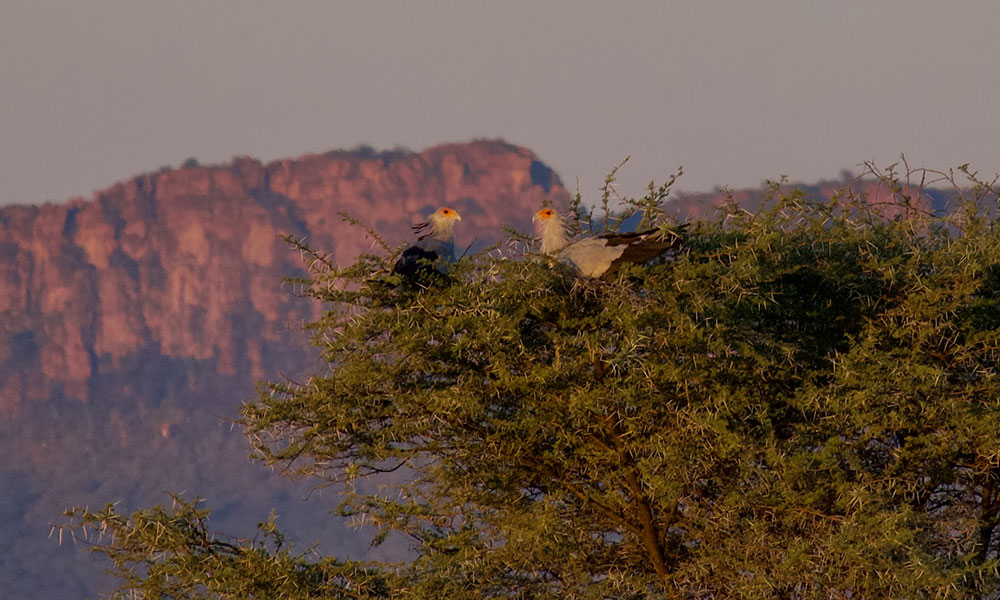
Having spent a lot of time birding around the world for the last six years, I was especially excited about a few unique experiences I had at CCF. The first was when our group joined CCF’s ecology team for a monthly game count. Toward the end of our transect, we spotted two secretarybirds in a tree. Secretarybirds are an iconic endangered species, with long legs and tall head feathers, that often hunt large snakes. The pair we saw were likely nesting, which is a rare sight and something that got us all quite excited.
Later on a hike, our group passed a thorny bush where something caught our attention. A small bird called a pririt batis had been impaled on a thorn, a telltale sign of a hungry shrike. Shrikes are a type of carnivorous songbird known for saving their prey for later by hanging it on fences and thorny trees, like acacias. There are a few types of shrikes likely near CCF, including the white-crowned shrike and the southern fiscal.
Namibia also is home to several endemic bird species, or those that exist in an extremely limited range and nowhere else. There are 15 species of which 90% of individuals live only in Namibia. At CCF, I saw a rockrunner and two endemic hornbills: Monteiro’s and Damara red-billed. At least four other endemics are possible there and their limited range makes them even more fun to find.
Benefits from Birds
Birds of all species play important roles in the ecosystems they inhabit. The services they provide benefit many other plants and animals, both directly and indirectly. In Namibia, that includes cheetahs.
Vultures, for example, consume rotting meat before any disease spreads. They are able to safely eat many things that would make other animals sick. Near CCF, it’s possible to see lappet-faced vultures and white-backed vultures.
Birds can also help plants spread by aiding in seed dispersal. Birds that eat fruit or seeds transport them away from the plant they grew on, allowing more plants to grow in new places. The gray go-away-bird I saw eating aloe flowers, which function as seed capsules, may be helping to grow new aloe plants.
Another important benefit from the presence of birds is their role in ecotourism. Many people are willing to travel exclusively for the purpose of seeing birds, especially in places with endemic or unique species. In this way, they support tourist-oriented businesses and help local economies, all while becoming more familiar with the surrounding ecosystem. Guests at CCF can go on game drives, like our group did, and have a good chance to see a variety of interesting species.
Cheetahs and Beyond
When I visited the Cheetah Conservation Fund, I certainly expected to learn a lot about cheetahs. What I didn’t expect was that I could form such a strong connection to the surrounding landscape in only nine days. A big part of that, I think, was choosing to notice all of the plants, animals, and other features that make up the ecosystem, including the birds.
When you have the chance to see cheetahs, giraffes, leopards, and so many other types of interesting mammals, birds are easy to overlook. Despite that, there is so much to learn from them due to their intriguing looks and behaviors, and so much to gain by including them in your experience at CCF. Someday, I hope to go back to learn more about cheetahs and their environment and, of course, to see more birds.
Related Reading
-
August 18, 2026
Fish Out of Water -
August 17, 2026
Conservation Starts with People: Lessons from CCF Namibia