
Conservation Starts with People: Lessons from CCF Namibia
-
- by Sera Glass August 17, 2026
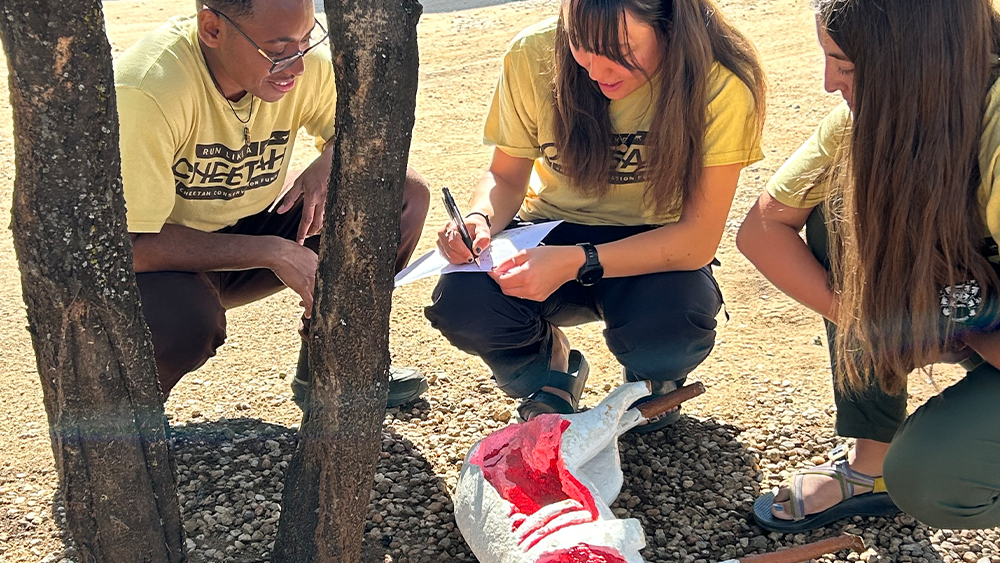
This May, I finished my first year towards my master’s degree in environment, natural resources and society at the University of Wyoming, a part of a larger goal to work in the science communication field. I love to tell stories across different mediums, creatively and accessibly conveying important messages around environmental and sustainable causes. Having the opportunity to learn about CCF and how we might be able to improve its communication practices about cheetah conservation was directly up my alley. It was exactly the type of work I hope to get into after graduate school.
I was even more excited when we arrived and learned of the extensive community-focused, practitioner-centered processes CCF uses in its conservation approach. My home organization in Wyoming, the Ruckelshaus Institute, is similarly engaged in community-centric projects that aim to connect research with the people who benefit from it. I was excited to see how the work coming out of CCF would relate to my work back home. From the start, it was obvious there were multiple ongoing projects that fit this bill.
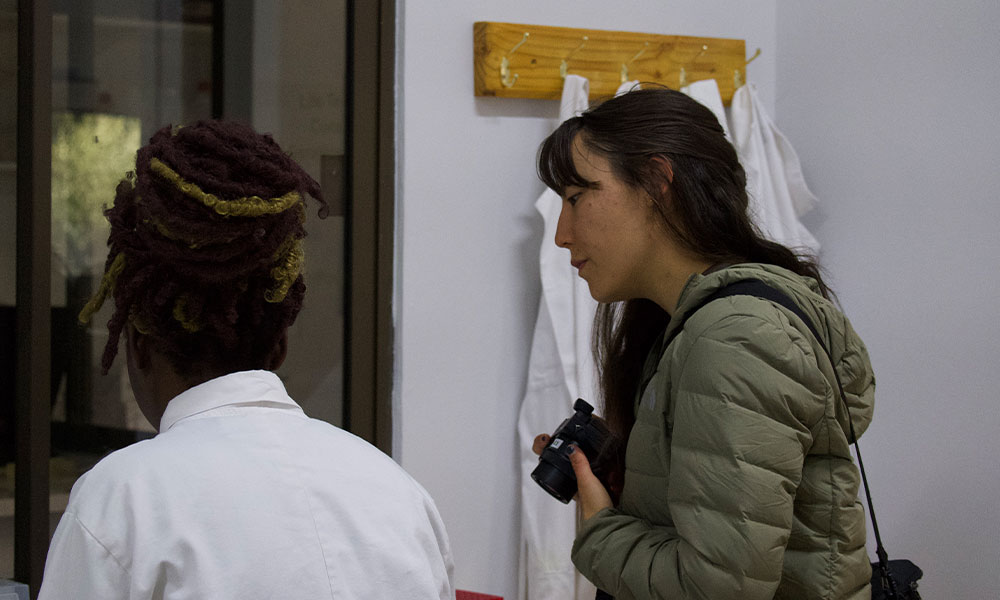
One example of this type of community-oriented project was the genetics research by Lapaka Petrus, a master’s student at the University of Namibia studying animal science. We became friends during our short visit, bonding over mutual graduate-student struggles that transcended international borders.
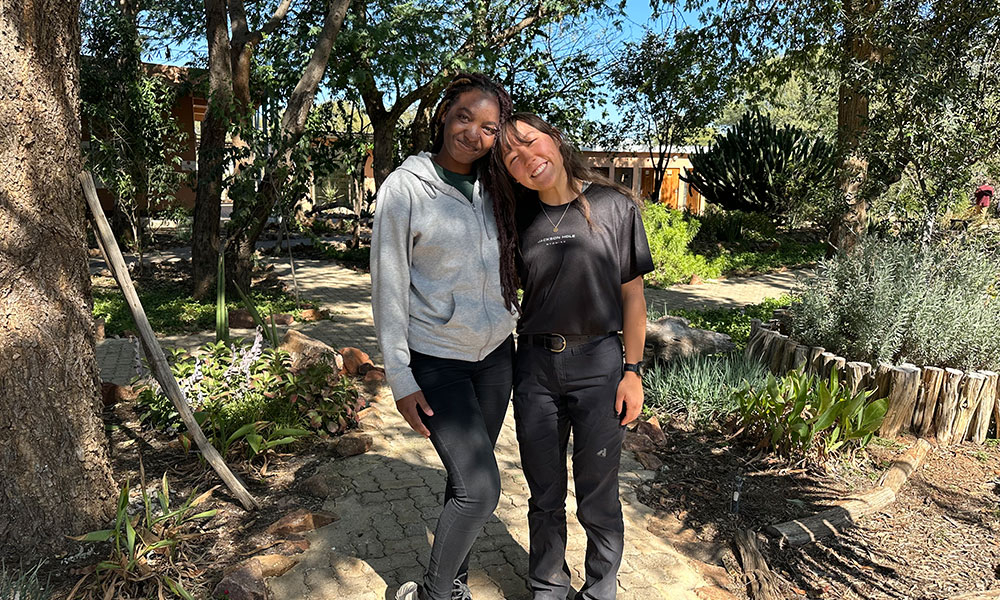
As a social scientist, the details of her genetics-specific research flew way over my head. But the catalyst that initiated her research piqued my interest. A dominant perspective among local Namibian farmers is that cheetahs are to blame for livestock depredation, which increases rates of retaliation including poisoning and other acts harmful not only to cheetahs but to entire food chains and habitats. CCF surmised that farmers’ villainization of cheetahs likely stems from the fact that cheetahs are some of the more visible predators during the daytime. It had never crossed my mind that the visibility of cheetahs compared to other predators would be a detriment to their reputation amongst farmers.
Lapaka’s research was an example of how CCF identified a community-oriented approach the organization uses to affect cheetah conservation. Through examining carnivore scat, CCF provides evidence disproving that cheetahs are the primary predators of livestock. Thus, CCF also addressed practitioner-based concerns/misconceptions and improved tolerance for cheetahs among Namibian farmers. Who knew poop could be the cause for so much positive change?
An underlying theme driven home throughout our time at CCF was that livestock predation and its impact on farmers is a big challenge to improving cheetah tolerance in Namibia. In environmental and wildlife spaces, this is referred to as “human-wildlife conflict.”
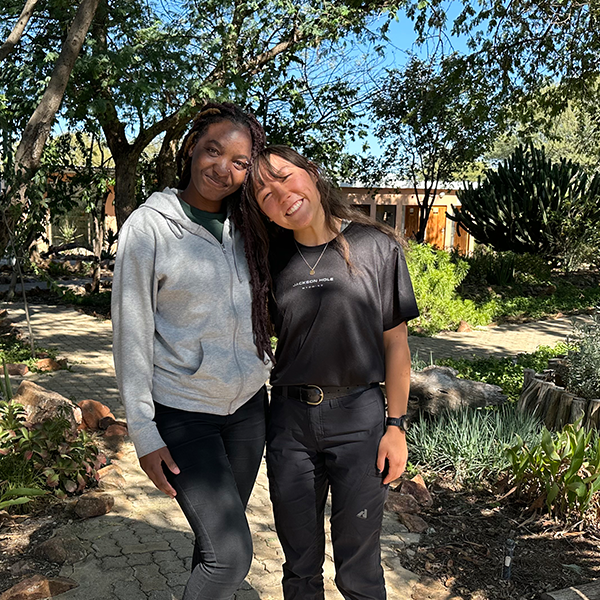
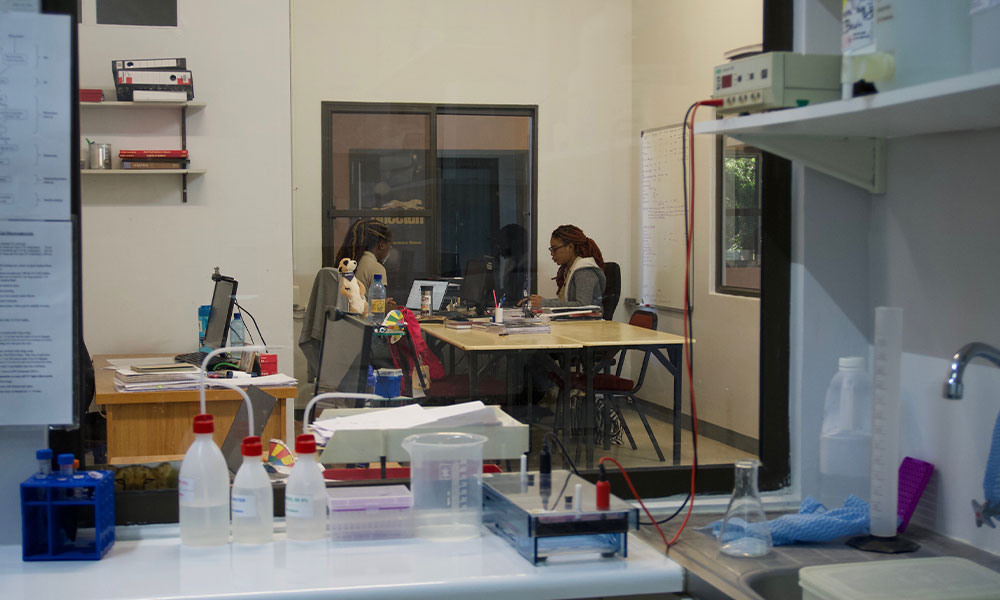
During our trip, a good chunk of the CCF programs we witnessed were related to addressing human-wildlife conflict amongst farmers and cheetahs. On top of Lapaka’s research, the kill identification workshops offered to farmers, and the “dogs saving cats” livestock guarding program, graduate student Valencia Shipapo’s research supported CCF’s effort to address human-wildlife conflict. Like Lapaka’s research, Valencia’s work centered on the farmers who have potential to affect the most change for cheetah conservation. Her research presentation was one of my favorite from the whole trip.
Valencia’s research honed in on one factor of addressing human-wildlife conflict: providing farmers with compensation when their livestock is killed by predators. Identifying what animal killed their livestock is necessary for Namibian farmers to receive compensation from the government for their loss. Speaking from firsthand experience participating in the CCF Kill ID workshop, this is no easy process. With so many potential predators (including domestic dogs! I had no idea pet dogs could cause such damage) on the landscape, farmers often rely on DNA for identification.
Traditionally, farmers have had to rely on swabbing, a technical and difficult process that often requires a professional’s expertise, to identify the animal that killed their livestock. The difficulty of kill identification through this swabbing process caused many to forego receiving compensation for their losses. This challenge prompted CCF to investigate alternative DNA-based kill identification measures. The premise of Valencia’s research was to investigate whether gathering hair clippings near bite marks were a suitable and accurate enough alternative to swabbing. I was impressed by the potential of the research to create a simpler, easier, and more accessible process for farmers to complete kill identification on their own.
CCF identified a sticking point for farmers – the ease of identifying predator DNA – and initiated research that would address said point. In fact, Valencia’s preliminary research found that using hair clippings may be superior to swabbing. Not only did this research provide valuable data for scientists, but it also made the kill identification process easier for farmers, ultimately increasing their likelihood of being compensated for livestock losses.
Since leaving CCF, I’ve been reflecting on how powerful conservation can be when it uses research to address place-specific, community-centered concerns. The typical research that comes out of conservation organizations and research institutions (universities, I’m looking at you!) often falls short of this standard.
What struck me most about both Lapaka and Valencia’s projects was that neither began with a research question in isolation. Instead, they began with a community/practitioner-based challenge. The science followed from there. As someone looking to work in conservation communication, that lesson may be the most valuable thing I brought home from Namibia: effective conservation is not just about producing knowledge, but ensuring that knowledge serves the people who live alongside wildlife every day.
Related Reading
-
August 18, 2026
Fish Out of Water