
1998 and 2026: Seeing the Cheetah Conservation Fund Through Camille’s Eyes
-
- by Molly Walters August 17, 2026
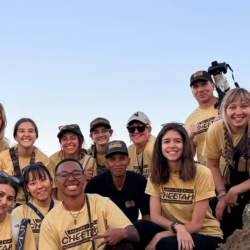
When I left Laramie, Wyoming, for the Cheetah Conservation Fund, I did not know what to expect. All at once, I felt excited, nervous and curious. This was the farthest I have ever traveled and, while our professors gave all of us tons of pictures and information, I still had plenty of questions and plenty of nerves.
A book I was reading on the plane ride over gave me some good advice. Whatever You Do, Don’t Run: True Tales of a Botswanan Safari Guide by Peter Alison explained that if you want to travel to see sights, go to Europe. If you want to travel for an experience, go to Africa.
After spending eight days at CCF, I could not agree more.
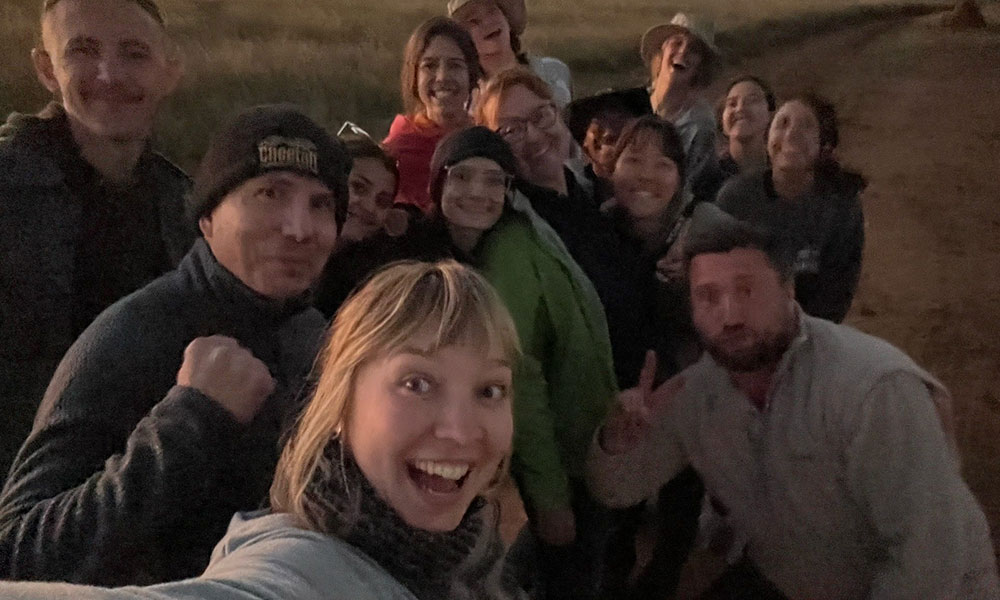
Upon arriving at the CCF, I was blown away. It was hot, dusty and very much cheetah. What I did not expect was that one of the most memorable parts of my experience would come from the perspective of a working guest at CCF.
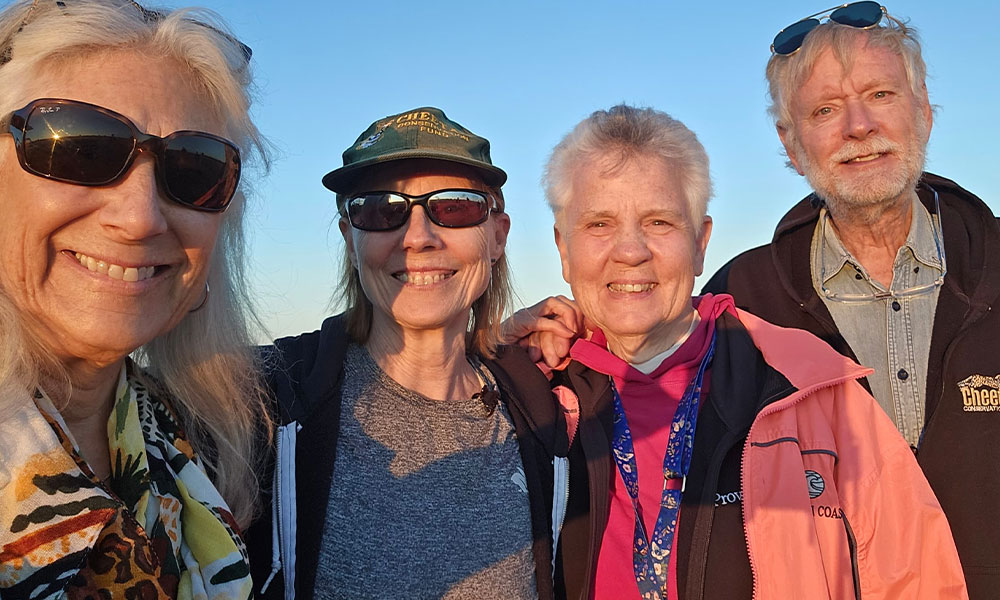
I first met Camille Guigliano in a 1995 Toyota Hilux during an evening game count. Right off the bat, I could tell this lady was a firecracker. She was so bubbly and could turn a simple drive into a fun conversation. She did not hesitate to share her previous stories about Africa.
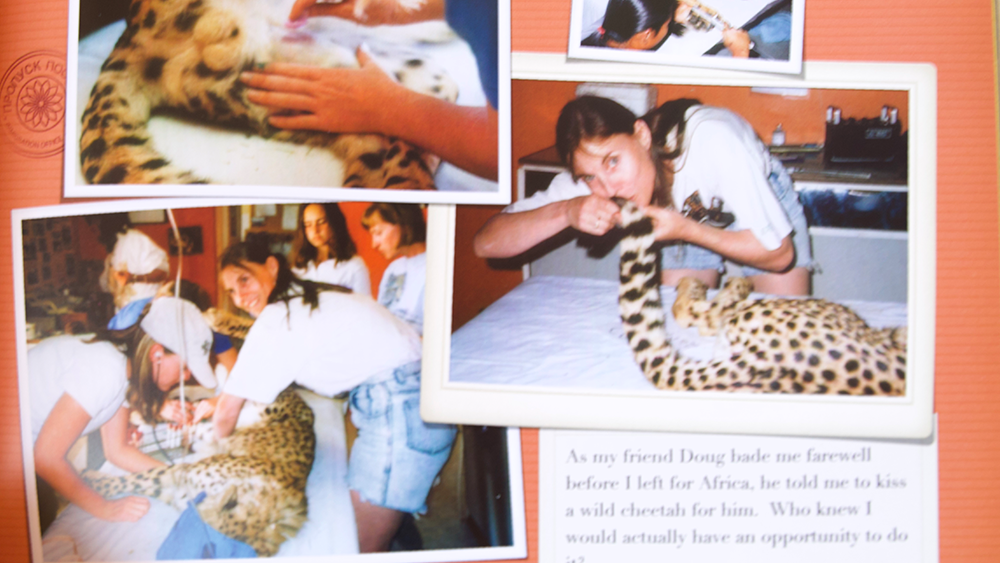
Camille is from New York City and was on her fourth trip to Africa. Her first connection to CCF started with Earthwatch in 1998 where she spent a whole month working and learning alongside all the staff members.
Twenty-eight years later, she came back to CCF, revisiting some nostalgia all while experiencing brand new adventures.
“There was something about Africa and something about the experience that really drew me to CCF,” Camille said. “The savannah is very much a part of my soul.”
For me, everything at CCF felt new, but for Camille almost everything felt different.
“I was a little surprised and disoriented,” she said. “It didn’t have the intimate atmosphere it did back in 1998.”
Nearly three decades earlier, CCF consisted of only a handful of structures and a small team of staff and volunteers.
“There were just four or five buildings, and it was very primitive. There was electricity only from 7 a.m. to 10 p.m. and then it went off. There was only internet in one main room that had a computer,” Camille said. “So, we could go in and check our email in the afternoon in that one place and so that kind of thing is very different now.”
Today, the organization operates on an entirely different scale.
The facilities support over 200 staff members, various working guests and tour groups from all around the world. The campus itself has almost tripled in size with new buildings, research facilities, educational programs and conservation initiatives.
Camille’s working experience from 1998 was just as different as the campus is today.
“We did physicals on cheetahs. Of course, always under the guidance of the medical people, but they would say, ‘Okay, measure their incisors,’” Camille said. “The cheetahs were always lightly anesthetized. It’s called twilight sleep, so that they can’t move their muscles, but they are still awake.”
Camille recognized how terrified the cheetahs would have been, but chuckled as she recalled the running joke amongst the Earthwatchers about the experience from the cheetah’s point of view. How once they were released in the wild, they would explain to their fellow cheetahs that they were abducted by aliens and subjected to tests, risking being mocked and shunned by the other cheetahs for their crazy stories.
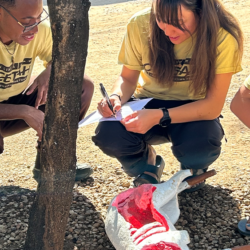
While working guests today still get a very hands-on experience, conservation practices have evolved. Guests are not allowed to touch cheetahs, which keeps them as wild as they can be. This shift also reflects the broader understanding of wildlife conservation.
“It is unfortunate that they are in captivity having to live their lives at CCF and not in the wild,” Camille said.
Despite the geographical and routine differences, one of the biggest differences at CCF now is technology. Those changes became even clearer when Camille recalled preparing for her first Africa trip.
“I told my boyfriend (now husband) I was going to be out of touch for a month,” she said. “He said, ‘Yeah, that’s no problem.’ And I said, ‘No, that means I’m not going to be able to call you.’”
At the time, disappearing for a month without or little communication was part of the experience. But now because of social media, constant connectivity has allowed people all over the world to get a glimpse into CCF.
Camille observed one thing that has stayed consistent after all these years – the people. Much of this can be traced back to CCF’s founder, Dr. Laurie Marker.
“Everybody cooperates. She obviously hired a lot of really terrific people whom I’ve had the pleasure of forming friendships with,” she said.
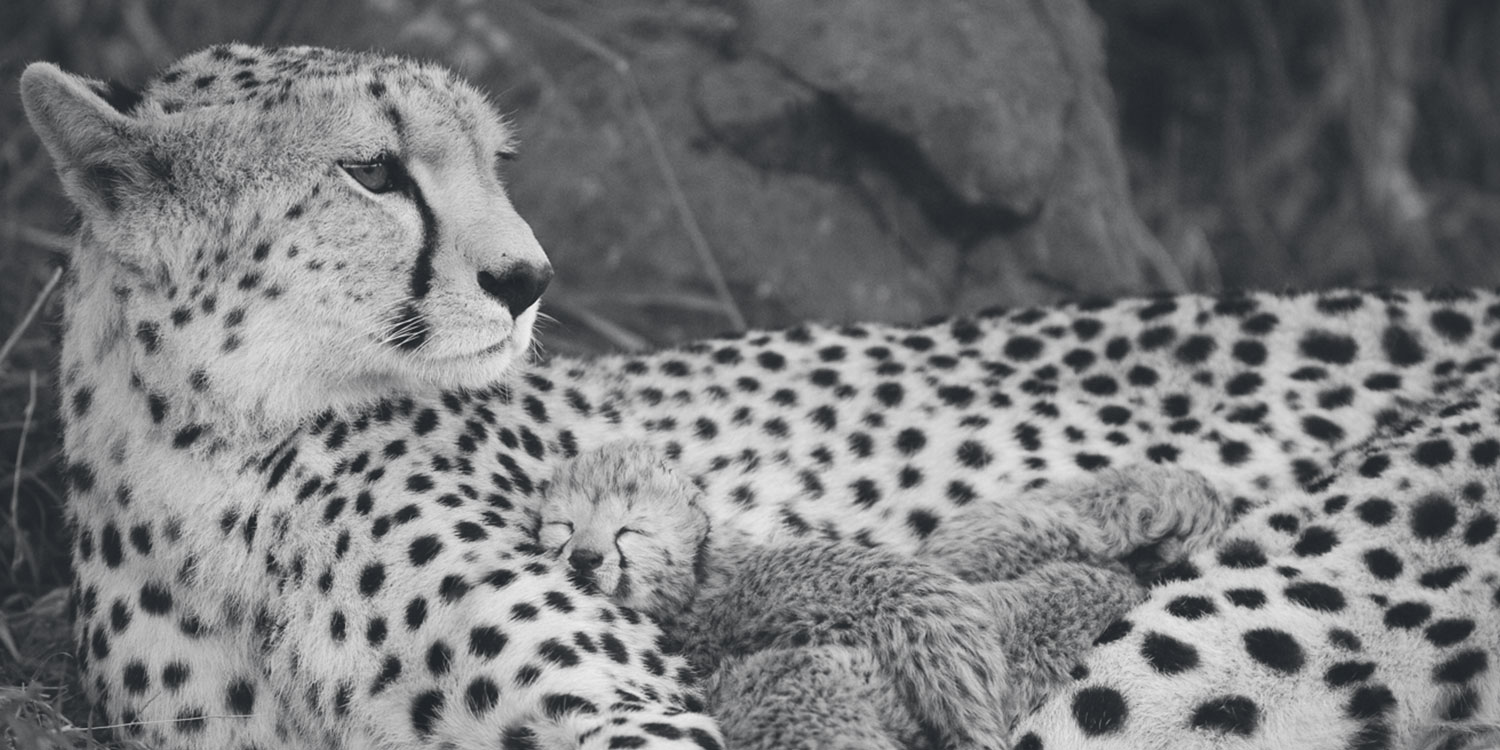
Because of these people, CCF is a highly functioning non-profit that focuses on saving the cheetah and changing the world.
“The other piece of it is the expansion has brought a lot of benefits to the larger community. So, it’s not just cheetahs that Laurie is saving,” Camille said. “She’s saving a whole ecosystem. And that has made me have much greater appreciation for what she and the team have accomplished.”
CCF has accomplished so much in the many years since Camille has been back. While saving the cheetah is the heart of CCF’s mission, it goes way beyond that.
After four weeks working at CCF, Camille returned to New York City and brought new memories alongside remembering old ones.
“It was busy; it was challenging. It was truly extraordinary!” she said. “And that was transformative – just to realize how you can really simplify life and get it down to its bare bones.”
Camille came back to a place she had not seen in nearly three decades and witnessed firsthand how something can change. I arrived at CCF with fresh eyes and experienced it all for the first time. Although Camille and I have different perspectives, we agreed on a conclusion: visiting Namibia and The Cheetah Conservation Fund is truly a transformative experience. From the first day you arrive, you settle into an experience that you will never forget!
Related Reading
-
August 18, 2026
Fish Out of Water -
August 17, 2026
Conservation Starts with People: Lessons from CCF Namibia