
Fish Out of Water
-
- by Macey Hansen August 18, 2026
An Outside Perspective on Communication in Conservation
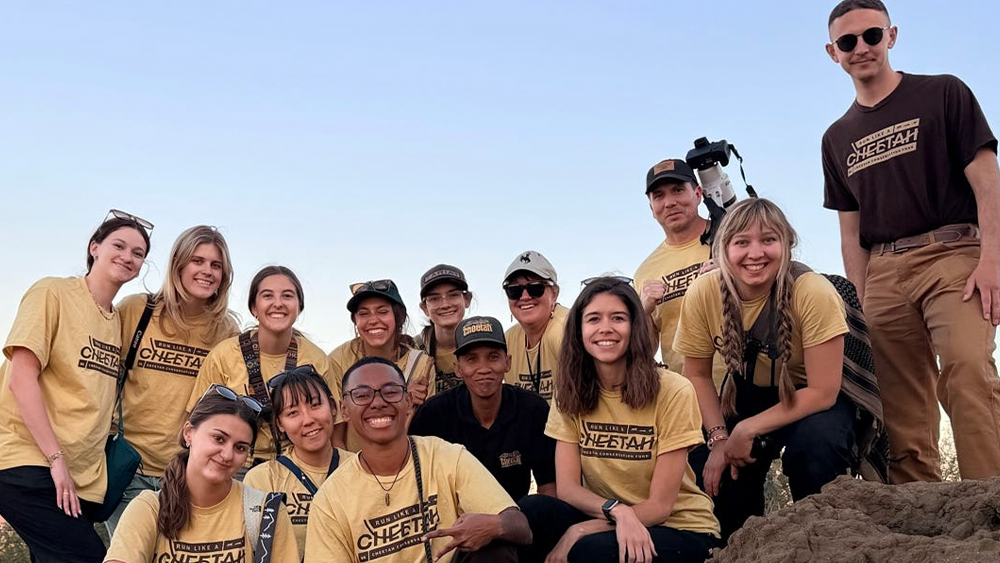
I am a communication major at the University of Wyoming, which entails taking classes that teach me how to communicate with publics and reach specific audiences. As students, we learn a lot from lectures, but coming to Cheetah Conservation Fund taught me so much about how to communicate conservation via physical application.
My background in communication has been primarily in sports. As an athlete myself, it’s where I have been able to grow my toolbelt and see what interests me in the communication world. Getting to spend two weeks at Cheetah Conservation Fund pivoted my mindset from promoting athletes to animals in need of help, which was very eye-opening because it changed how I think about content creation.
Visiting Cheetah Conservation Fund was truly a life-changing experience! One big takeaway that I learned from Dearbhaile Dhubhghaill, the social media consultant at CCF, was that successful communication means successful adaptation. Her goal is for CCF to communicate its work to the public and, in response, the public will be open to this two-way communication stream.
The main idea at CCF is that if it must rescue a cat, that is considered a failure because a success would mean that the cheetahs don’t need rescuing in the first place. Because this animal needs help, CCF is there to provide the support that the cheetah needs to survive.
Being at CCF, I truly felt that the work was impactful not only to the cheetahs but also to the communities surrounding them. For example, CCF has a greenhouse that produces locally sourced food and a Bushblok factory that recycles the plants that are overtaking the cheetah habitats and turns them into a fire-starter to be shared in Namibia and South Africa. Getting to help weed the plants and tour the Bushblok factory helped me see that there is a lot more to CCF than just cheetahs, and learning how that work can be recognized was very important to me.
One of the days that my class was at CCF, we got the opportunity to observe the team bring in a cheetah that had been trapped by a farmer. When I walked into the vet clinic to observe their initial health intake assessment, Dr. Laurie Marker, the executive director of CCF, handed me her phone and asked if I would record content for her. She had two visitors from Saudi Arabia who were working on leopard conservation, so she wanted to document the process.
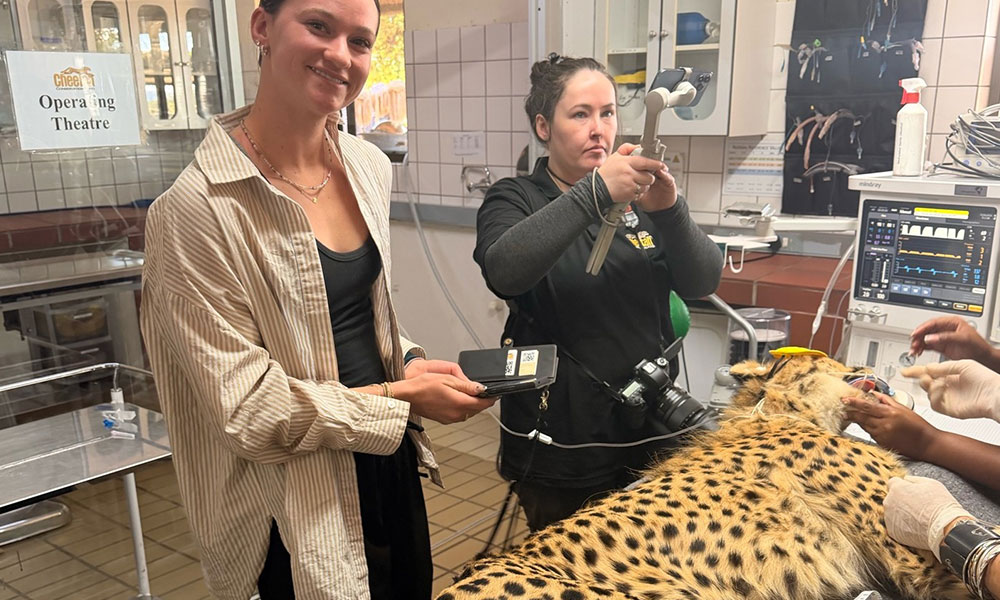
Recording helped me note some main takeaways for what conservation communication should look like. First, showing transparency is very important to tell the full story and not lead viewers to the wrong conclusion.
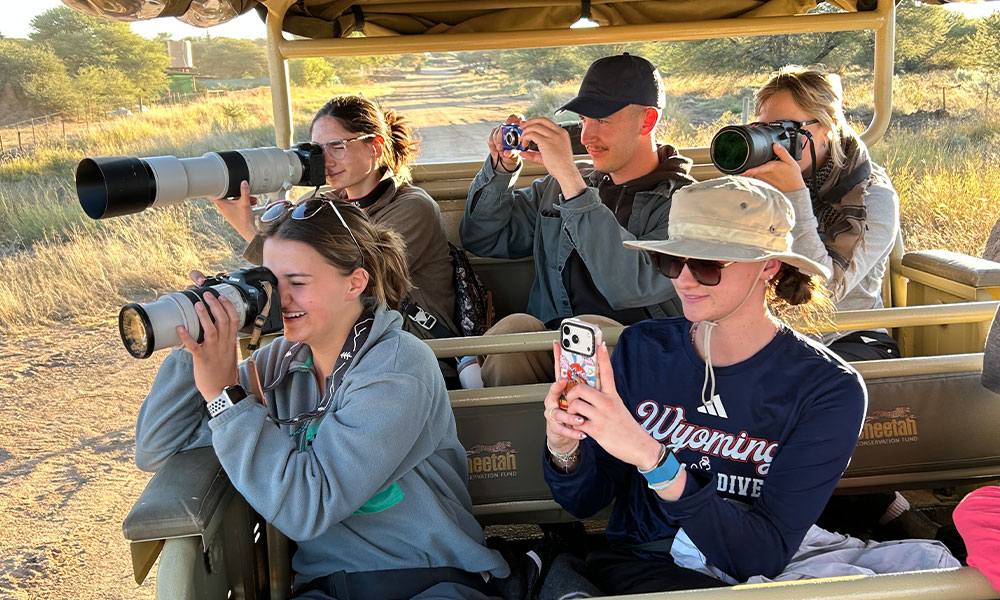
Another important note is that transparency means showing things ethically, like in photos. A big push for CCF is to photograph the cheetahs with no fences because they don’t want the perception that these animals are kept caged up. The reality is that they are they have so much land to roam that it’s not like a zoo for these cats.
Lastly, giving context is very important so that viewers get all the information they need to understand what is happening. When this new cheetah came in, the goal of documenting the process was to note what happened to him that required him to be rescued by CCF and to show that the organization was helping him return to as normal a life as possible. Showing the quality of care that he was given, that he would now be monitored and cared for as needed as he got older, and that he’d been given a second chance at CCF is an important story to share.
Showing conservation through media is about raising awareness, but it is also about being honest about the highs and the lows of this work at the same time.
By getting to observe the work that is being done at Cheetah Conservation Fund, I learned so much about what it is like to be a conservationist in Africa, and how to use tools like social media to communicate to people that we must coexist with nature, not fight over it.
I am so grateful for this experience. Getting to learn from the people at CCF gave me some very important lessons on how to be a strong communicator, which I am so thankful for.
Related Reading
-
August 17, 2026
Conservation Starts with People: Lessons from CCF Namibia