
Tupuka’s Dynasty: A Cheetah Story Written in the Wild and Decoded in the CCF Genetics Laboratory
-
- by Hafeni Hamalwa September 30, 2026
How CCF’s multi-disciplinary approach is the cornerstone of conservation and research
With Dr Rob Cook (Ecology). With thanks to CCF’s Veterinary and Animal Husbandry teams for their contributions to Tupuka’s story.
It started with a cheetah getting a little too close to a livestock kraal on our neighbour’s farm.
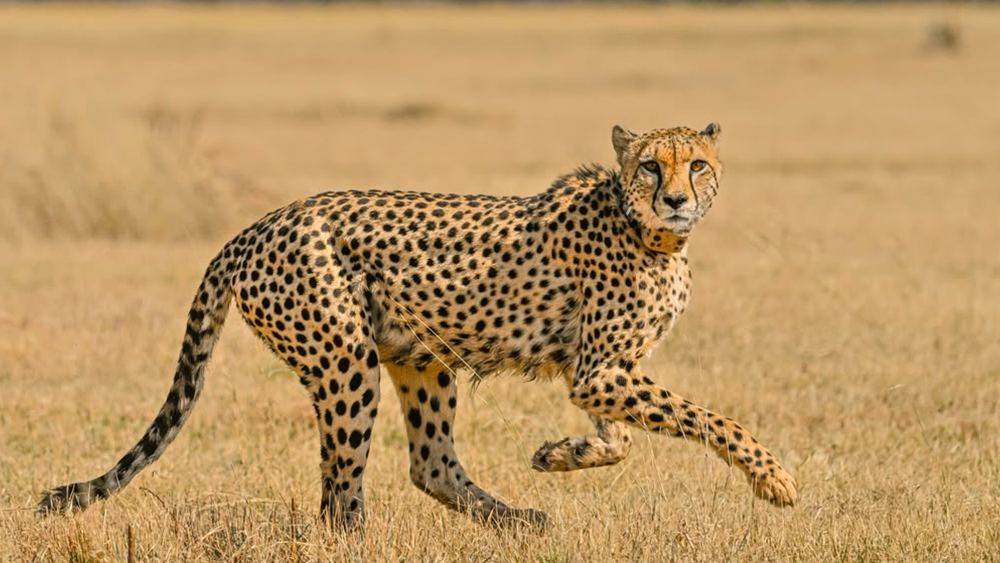
In August 2025, the Cheetah Conservation Fund’s (CCF) ecology team began noticing a male cheetah appearing on camera traps in part of our reserve and receiving reports of a lone cheetah on neighbouring farms. He was moving through the landscape as a wild cheetah should, hunting wild prey and exploring his surroundings, but his movements were bringing him increasingly close to our neighbours’ livestock kraals. For one of our neighbours, as for many farmers across Namibia, this was a concern. For our team, it was a chance to learn more about this new individual and, most importantly, to find a way for both the neighbours and the cheetah to safely share the same landscape.
Working together, our veterinary, ecology, and animal husbandry teams successfully immobilized Tupuka (named by our neighbour in honour of the cheetah’s speed, as Tupuka means “to run” in the Herero language) so that he could receive a thorough health assessment, be fitted with a GPS tracking collar, and be registered in our Early Warning System (EWS).
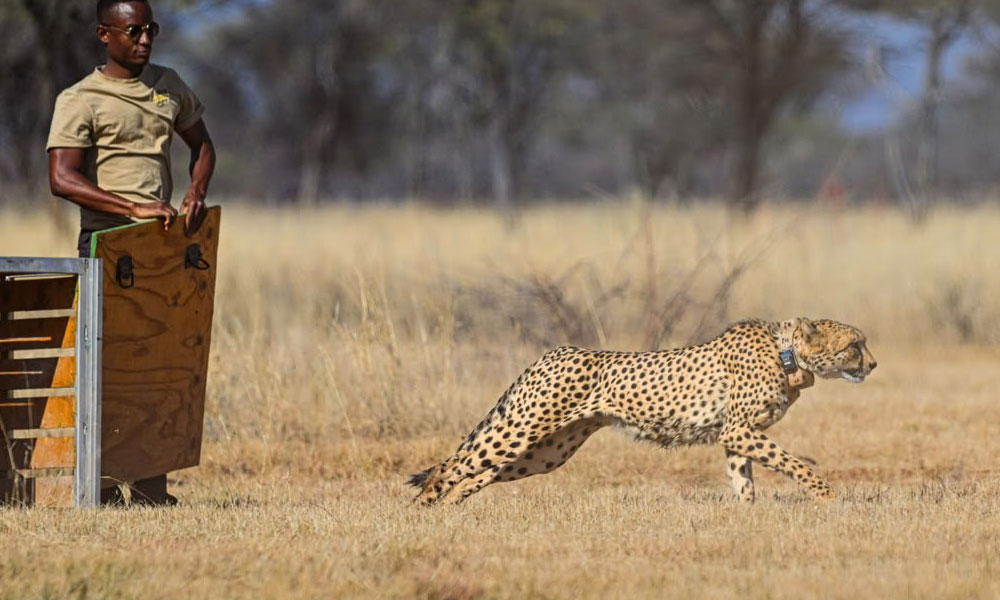
The EWS is part of CCF’s human–carnivore coexistence programme, designed to help reduce conflict. Via the EWS, the collar on Tupuka would become an important link between the individual cheetah and the people living alongside him. By monitoring his movements, our team can see where he travels and provide farmers with early warnings if he approaches areas where livestock are kept, as he had done before his capture. This programme allows farmers to be proactive in protecting their livestock when the cheetah is present and, importantly, alerts them when the cheetah has left their property. (We shared more about Tupuka’s capture, release, and early movements in a previous blog.)
Astrid and her cubs enter the story
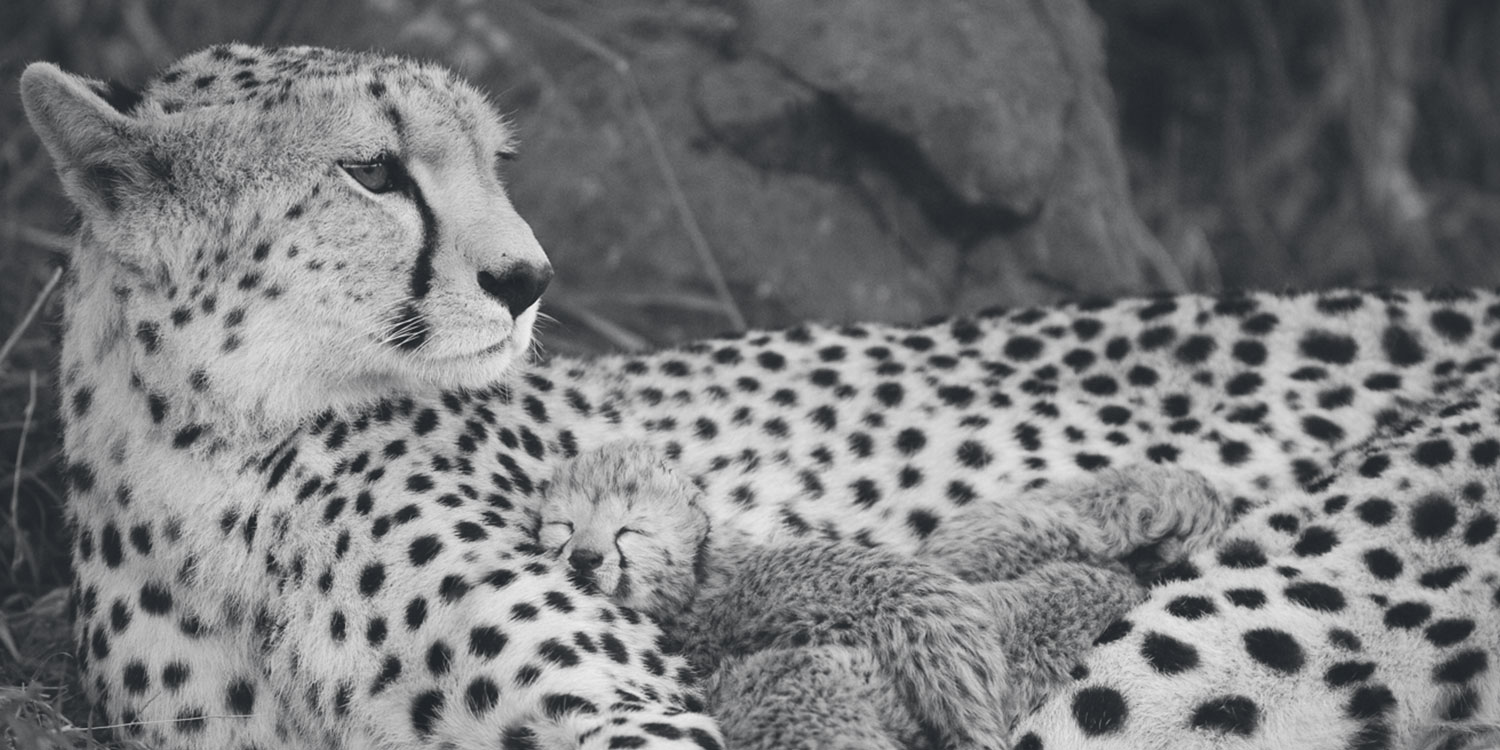
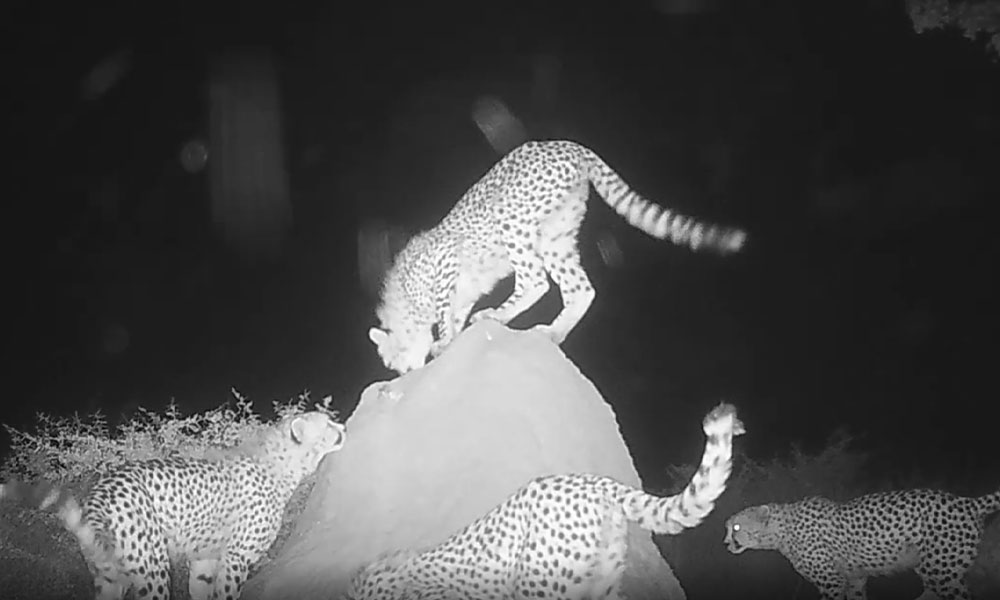
Over the past year, CCF has been aware of an adult female cheetah and her five cubs moving across the farms directly north of CCF, with occasional camera-trap detections and direct sightings reported to us. In June 2026, Astrid and her cubs were captured by a neighbouring farmer in multiple trap cages. CCF used this opportunity to bring all six cheetahs to the Centre for veterinary examinations and, importantly, to fit Astrid with a GPS collar and add her to our EWS.
Every immobilization of a wild or captive cheetah presents a valuable opportunity for our veterinary team to collect blood samples to assess their general health through haematological and biochemical analyses, as well as for DNA analysis conducted in our genetics laboratory. And suddenly, with Astrid and her cubs in the picture, we had a question:
Could Tupuka, the male cheetah we had been monitoring for months, be the father of Astrid’s five cubs?
The DNA analysis reveals
In the wild, cheetah family lives often go untold. Female cheetahs are generally solitary and travel across vast landscapes in search of food and mates, sometimes moving through areas where they encounter human communities. Camera traps can document when cheetahs visit a monitored site. If an individual is fitted with a GPS collar, we can see where a cheetah like Tupuka has travelled.
Genetic study can reveal relationships that are easily missed or impossible to observe directly in the wild. With the blood samples from Tupuka, Astrid, and her cubs, we had everything we needed to look for clues hidden in their DNA.
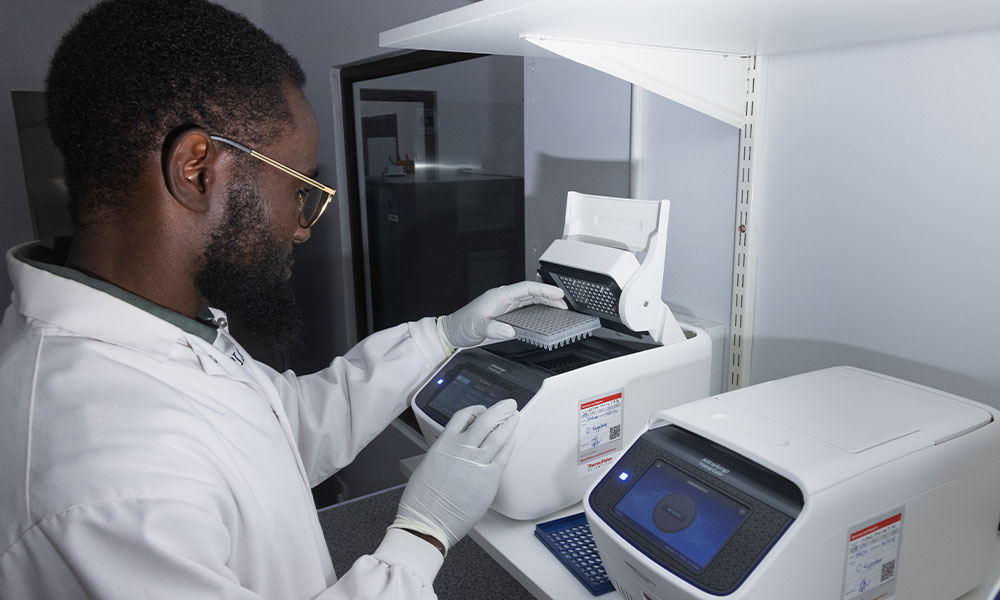
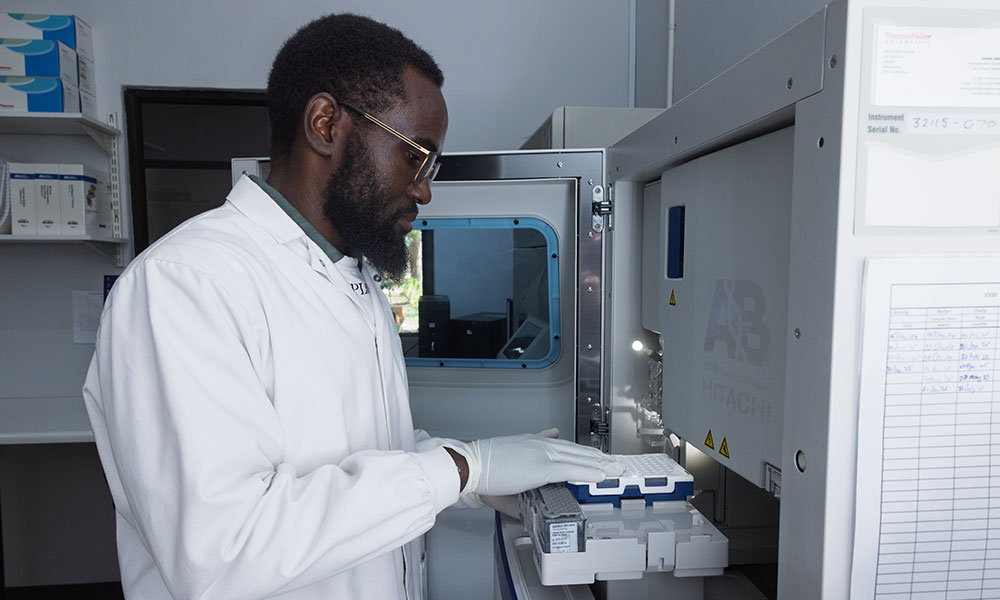
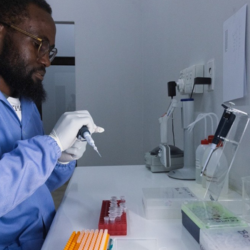
Our Namibia-based, state-of-the art genetics laboratory is equipped with an ABI 3500 genetic analyser and PCR machines. We began our investigation using microsatellite markers – the same markers used in human forensics (think CSI). This involved a series of laboratory steps, including extracting DNA, amplifying DNA from all seven cheetahs by polymerase chain reaction (PCR), and running the samples on our genetic analyser.
Once the genetic profiles were complete across all 17 markers, we compared the cubs’ profiles with those of Astrid and Tupuka. We had just watched Astrid and her cubs being released back into the wild, and were all eagerly awaiting the results. And they gave us reason to celebrate:
There were zero mismatches between the cubs and Tupuka, and his genetic profile was perfectly complemented Astrid’s profile across all five cubs at all 17 markers, strongly suggesting that Tupuka is their father.
More than one cheetah story
The genetic results revealed a connection between Tupuka and Astrid that we could not have detected through observation alone. Our ecological monitoring had already offered a glimpse of how their lives intersected.
In late May 2026, several weeks before Astrid and her five cubs were captured, they passed through Tupuka’s territory and visited the play tree that we had been monitoring since his release. Their brief visit had a remarkable effect on him. In the two weeks that followed, Tupuka dramatically increased how often he returned to the tree, while the time between his visits dropped from several days to less than a day. His usual activity pattern also changed, giving us a rare glimpse into how the presence of a female and her cubs could influence the behaviour of a territorial male.
But their story is about much more than two cheetahs. Southern Africa remains the last stronghold for wild cheetahs, many of which live outside protected areas. They share the landscape with people and livestock. This makes understanding where cheetahs move and how they interact with one another especially important.
GPS collars allow us to track their movements and help farmers use non-lethal ways to protect livestock. Genetic analysis, in turn, reveals family relationships that are usually hidden from us. Bringing ecology, veterinary care, genetics, and work with neighbouring farmers into one conservation programme is central to CCF’s multidisciplinary approach to cheetah conservation.
Related Reading
-
September 14, 2026
When the savanna burns, where do cheetahs go? -
August 3, 2026
Exploring signs of Cheetahs across the Northwest of Namibia -
February 27, 2026
In the Footsteps of the Kenyan Cheetah: A Genetic Odyssey