
A Different Kind of Foundation: Pipettes, PCR and My Journey at the Cheetah Conservation Fund
-
- by Theoline Mmila Mabelane March 28, 2026
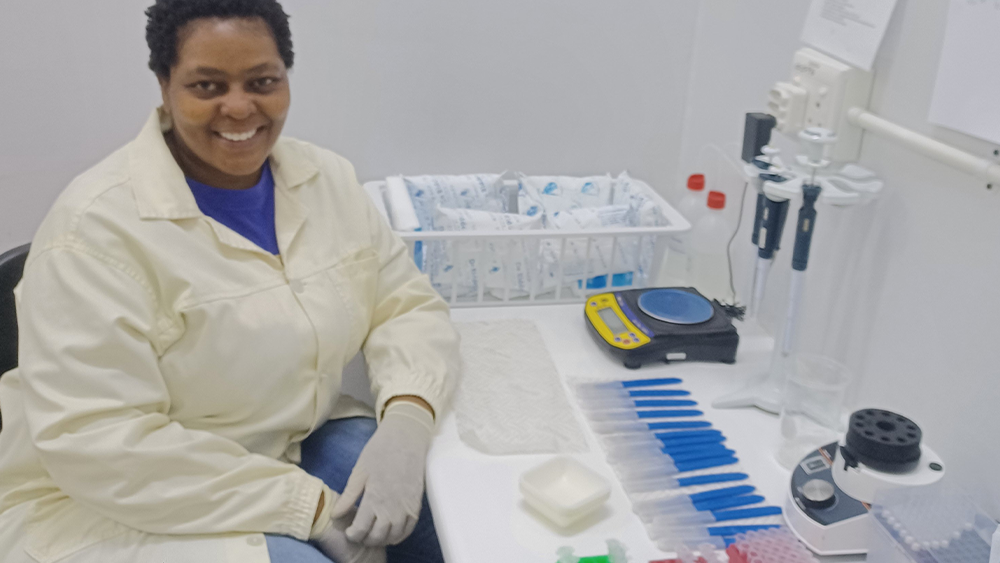
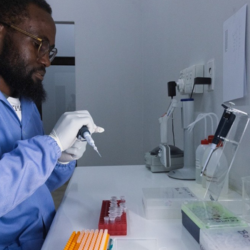
Before starting my journey in science, my career was in construction where I worked as a quantity surveyor. In that field, I learned that every strong building begins with a well-planned foundation. Today, as a third-year student at the University of Namibia completing my internship at the Cheetah Conservation Fund (CCF), I find myself building a very different kind of foundation. Instead of calculating steel and cement quantities, I now measure microliters with pipettes, prepare DNA samples, and learn techniques such as PCR in a genetics laboratory. The tools are different, but the principle remains the same: precision, patience, and attention to detail are essential for building something meaningful. For me, that foundation is the beginning of my career in science.
Working in the genetics laboratory quickly became the most exciting part of my internship. The lab plays an important role in conservation research by helping scientists understand the genetics of the Cheetah and other wildlife. One of the tasks I was involved in was assisting with extracting DNA from scat samples. Scat samples often contain substances that interfere with PCR, so learning how these inhibitors are removed was an important part of the experience.
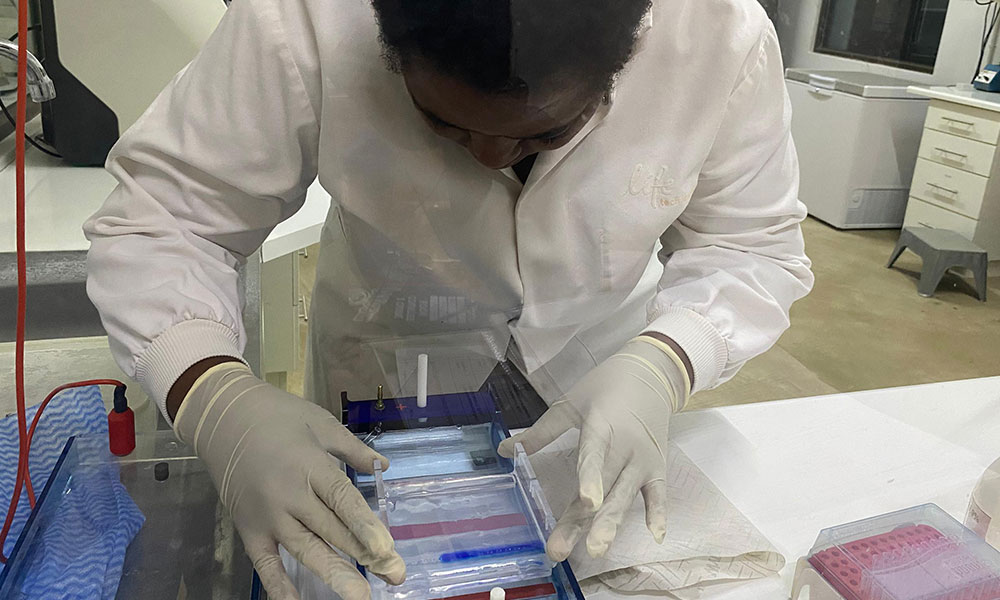
After DNA extraction I assisted with PCR setup and fragment analysis preparation. This involved preparing PCR reactions for multiple samples and pipetting very small volumes of DNA template into reaction tubes. After the PCR reactions were prepared, I assisted with running the thermal cycler and preparing the amplified DNA for fragment analysis. This included adding form amide with a LIZ size standard to the PCR products before they were run on the genetic analyser.
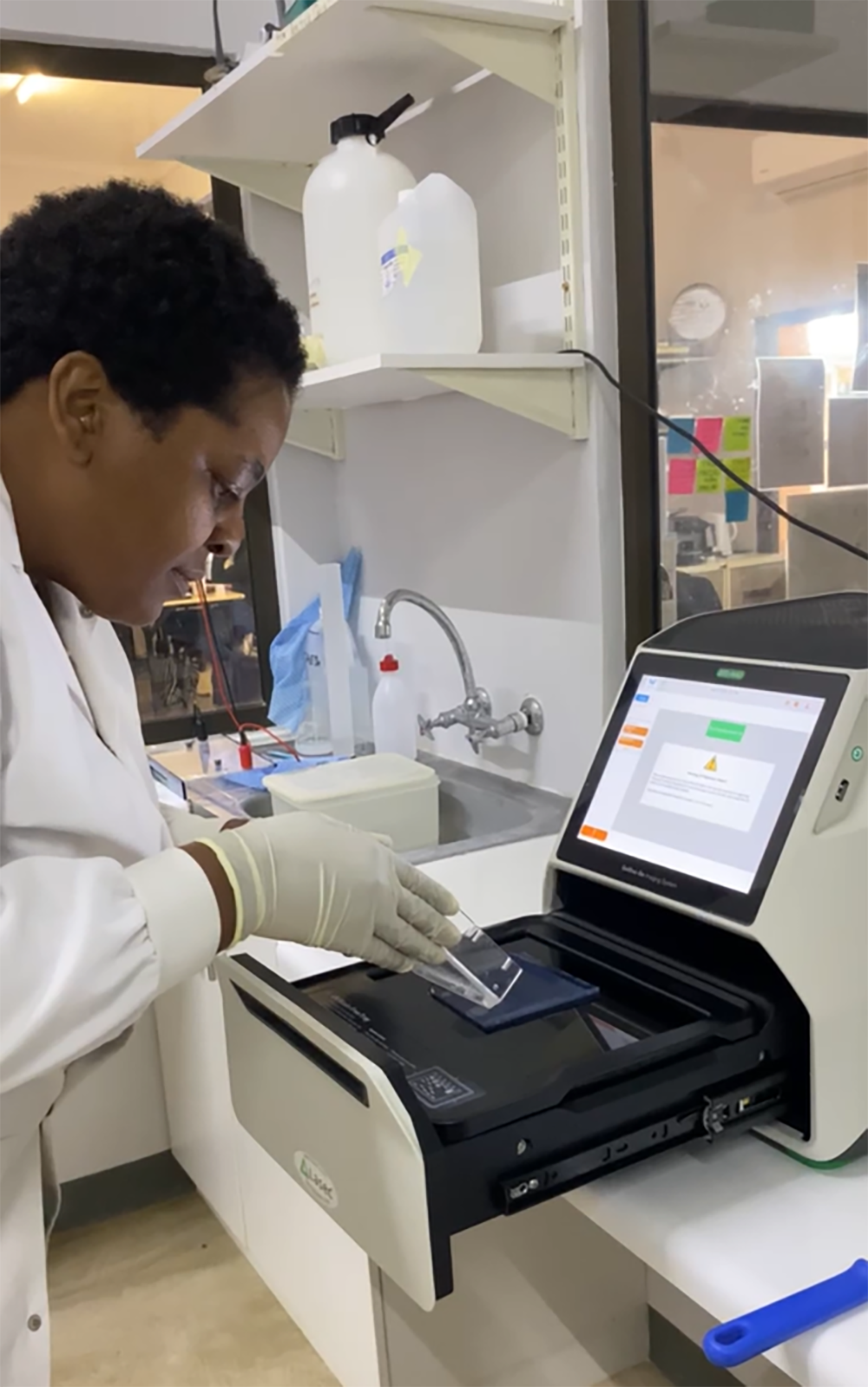
I was also fortunate to get the opportunity to prepare an agarose gel for electrophoresis, which turned out to be one of the most exciting parts of working in the genetics lab. After carefully loading the DNA samples into the gel, I waited in anticipation as the run progressed. Once it was complete, we placed the gel into the imaging system to visualize the DNA bands. Seeing those bands appear on the screen felt incredibly rewarding, it was a clear confirmation that the DNA had been successfully extracted from the scat samples and was of good enough quality for further analysis.
Although the genetics laboratory was where I spent most of my time, my internship at CCF allowed me to see how many different departments work together to fulfil the organization’s mission of protecting cheetahs. Conservation is not achieved by research alone; it involves collaboration between many teams. One thing I quickly learned is that no two days are ever the same, one moment I was helping feed livestock guardian dogs (who, I must say, are very enthusiastic about mealtime), and the next I was at the Dancing Goat Creamery learning how to make soap using moulds with goat faces on them. There I also learned the process of ice-cream making with different flavours, my favourite being lime. One of my favourite moments with the dogs was getting the chance to walk Lotus, one of the Anatolian Shepherd dogs, from the centre along the path to Lightfoot Camp. What started off as a simple walk quickly turned into a bit of an adventure. On the way back, Lotus decided he was in no rush at all and kept stopping to rest under every patch of tree shade he could find, clearly enjoying the walk far more than the idea of returning. It became a mix of gentle encouragement and patience, but we eventually made it back. The moment we arrived, Lotus headed straight for the water bucket without hesitation, as if he had just completed a marathon. I absolutely loved spending time with these dogs, they are not only hardworking but also incredibly friendly and surprisingly cuddly, which made the experience even more enjoyable. Of course, not every moment went perfectly, I once forgot to lock the gate while feeding the dogs and one of them, April, made a quick escape. Luckily, Simone (one of my colleagues) managed to find and bring him back safely, which was a big relief!
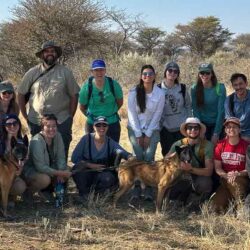
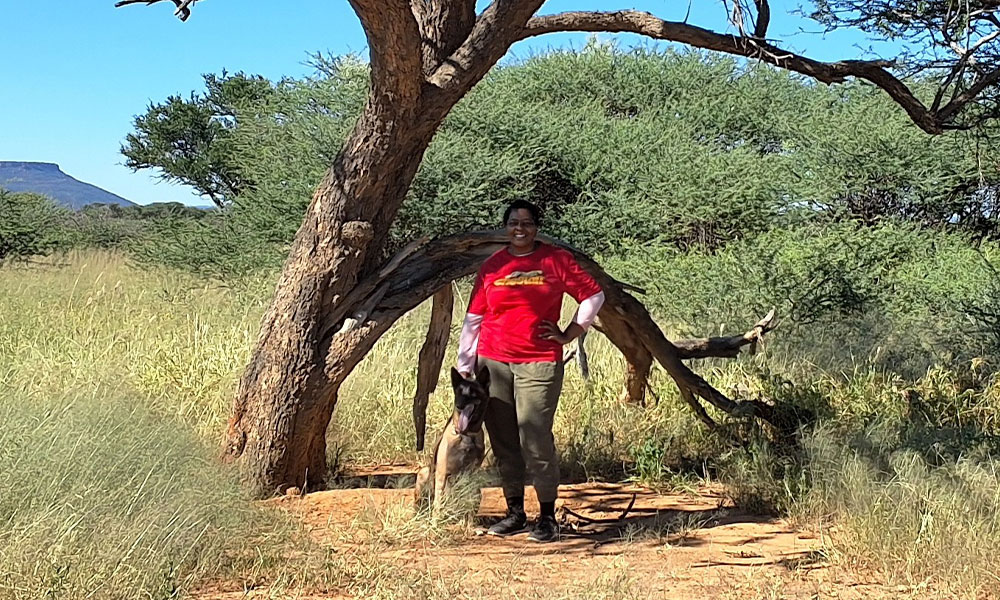
I also got to learn about scat detection dog training, which was both interesting and impressive. Watching how the Belgian malinois dogs are trained to locate cheetah scat showed me just how important they are in conservation work. What stood out to me most was how this connects to the lab, those same samples are later used for DNA analysis, helping with both individual identification and species identification, and linking fieldwork directly to genetics.
I had the chance to train and play with the two dogs named Enyakwa (meaning “the brave one”) and Gamena (“to protect”), and it quickly became clear that they each had their own personalities. Gamena, in particular, was more independent and seemed to pick up immediately that I was new, so she took it upon herself to test just how serious I was, especially when I was the one holding the ball. Commands suddenly became “optional” in her eyes. It didn’t take long for me to realise that I had to be more assertive, keeping my tone and facial expression firm if I wanted to be taken seriously. Even then, I’m not entirely convinced she wasn’t still in charge. Let’s just say, Enyakwa and Gamena trained me just as much as I was trying to train them. But overall, it was such a fun and memorable experience getting to work with them.
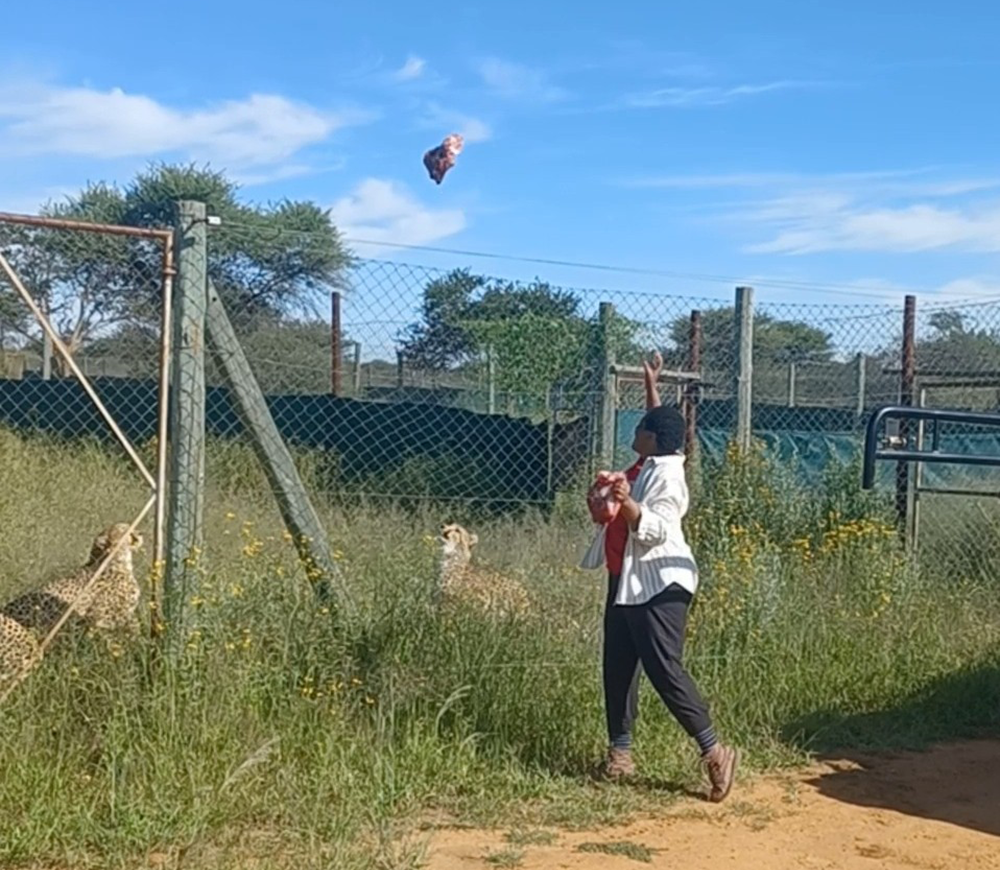
This connection between fieldwork and science became even clearer when I joined the ecology team for a seasonal game count, which gave me a completely different perspective outside the lab. Swapping pipettes for binoculars, I got to see how wildlife is monitored in the field. This experience, together with taking part in cheetah husbandry activities where I helped feed the Cheetah, showed me how closely their health and behaviour are monitored. One of my favourite moments was feeding time, where I had the chance to throw a large piece of meat over the fence to the cheetahs and the wild dogs. Watching the wild dog sprint alongside the van in anticipation was both impressive and slightly intimidating, and the speed at which they grabbed the meat once it was thrown was unbelievable. It was exciting, a little nerve-wrecking, and definitely unforgettable. I also learned that cheetahs are surprisingly clean animals and prefer not to eat meat that has fallen into the sand—something I did not expect. Overall, there is something both exciting and humbling about feeding the fastest land animal. Seeing these animals up close made the work I was doing in the genetics laboratory feel much more real and meaningful.
One particularly inspiring moment during my internship was having the opportunity to see Dr. Laurie Marker, the founder of the CCF, working alongside the veterinary team during a cheetah sperm collection procedure. Watching the collaboration between the veterinary and genetics teams during this process was fascinating. What made it even more inspiring was seeing her dedication in action, she was gentle with the cheetahs and took the time to engage with all of us, explaining what she was doing throughout the procedure. It also made me realize that the work does not end with the collection itself, there is a lot that happens afterwards in the genetics laboratory. After collection, the samples are carefully evaluated by the genetics team, where factors such as motility, pH, volume, and overall sperm condition are assessed. Being involved in the entire process gave me a deeper appreciation of how much precision and care goes into preserving genetic material, and how different scientific disciplines come together in conservation work.
And just when I thought I had seen it all, CCF had more to teach me, I was also scheduled to assisting the veterinary team during their daily checks on the dairy goats, which showed me just how many different aspects are involved in animal care and conservation. I observed the vet nurse treating goats that were limping or had diarrhoea, something that, while not the most glamorous, really highlighted the importance of consistent health monitoring. One thing I quickly learned at CCF is that learning is not limited to where you are scheduled. One day, I found myself wandering into the vet clinic out of curiosity, only to discover the team treating a pangolin that had unfortunately been electrocuted by an electric fence. It was my first time ever seeing a pangolin, and I was honestly amazed, its scales looked even more incredible up close, almost like armour. What surprised me the most was how small its face is; when they were administering the anaesthesia, the mask practically covered its entire face. I decided to stay and learn as much as I could, and it turned out to be one of those unexpected but memorable moments. It also showed me that the CCF clinic is not just for the Cheetah, but plays an important role in the conservation of other endangered species as well.
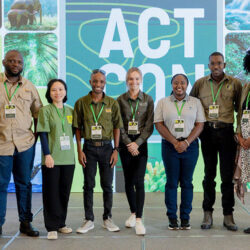
Life at CCF was not only about work; it was also about the people. I would sometimes join in on volleyball games, along with movie nights and relaxed card games that were all in good fun. Every evening we gathered at Hotspot for dinner, where good food was matched with even better conversations. These simple moments brought us closer as interns and made the whole experience feel like a small, welcoming community.
Looking back, my internship at CCF has been more than just a learning experience; it has marked the beginning of a new chapter in my life. For me, the genetics laboratory is the perfect place to start my career in science, combining precision, analysis, and meaningful research. Working with the genetics team (Hafeni, Tresia, Valencia, Lapaka and Tinotenda), as well as the veterinary, ecology, and other departments, has greatly contributed to my growth as a future scientist. They have also strengthened my motivation to continue pursuing my studies and, hopefully, one day work toward a medical degree.
Related Reading
-
February 27, 2026
In the Footsteps of the Kenyan Cheetah: A Genetic Odyssey -
August 27, 2025
Sniffing Out Stories with the Scat Detection Dog Team