
Connecting Women in STEM: Reflections from OWSD Namibia 2025 conference
-

- by Tresia Shihepo November 21, 2025
Science in Africa is steadily growing, with more women stepping into the field and shaping the research landscape. Yet, in developing countries like Namibia, opportunities for Science Technology Engineering and Mathematics (STEM) students and graduates to engage with professionals and gain real-world exposure remain limited. For me this opportunity arose when I joined the Cheetah Conservation Fund for an internship in 2023. It is the only dedicated conservation genetics laboratory in Namibia and it gave me the possibility to gain hands-on laboratory experience and receive mentorship from experienced researchers.
The 2025 Organisation for Women in Science for the Developing World (OWSD) Namibian Chapter Conference aimed to change that by creating a platform for women in STEM to share ideas, build networks, and inspire one another.
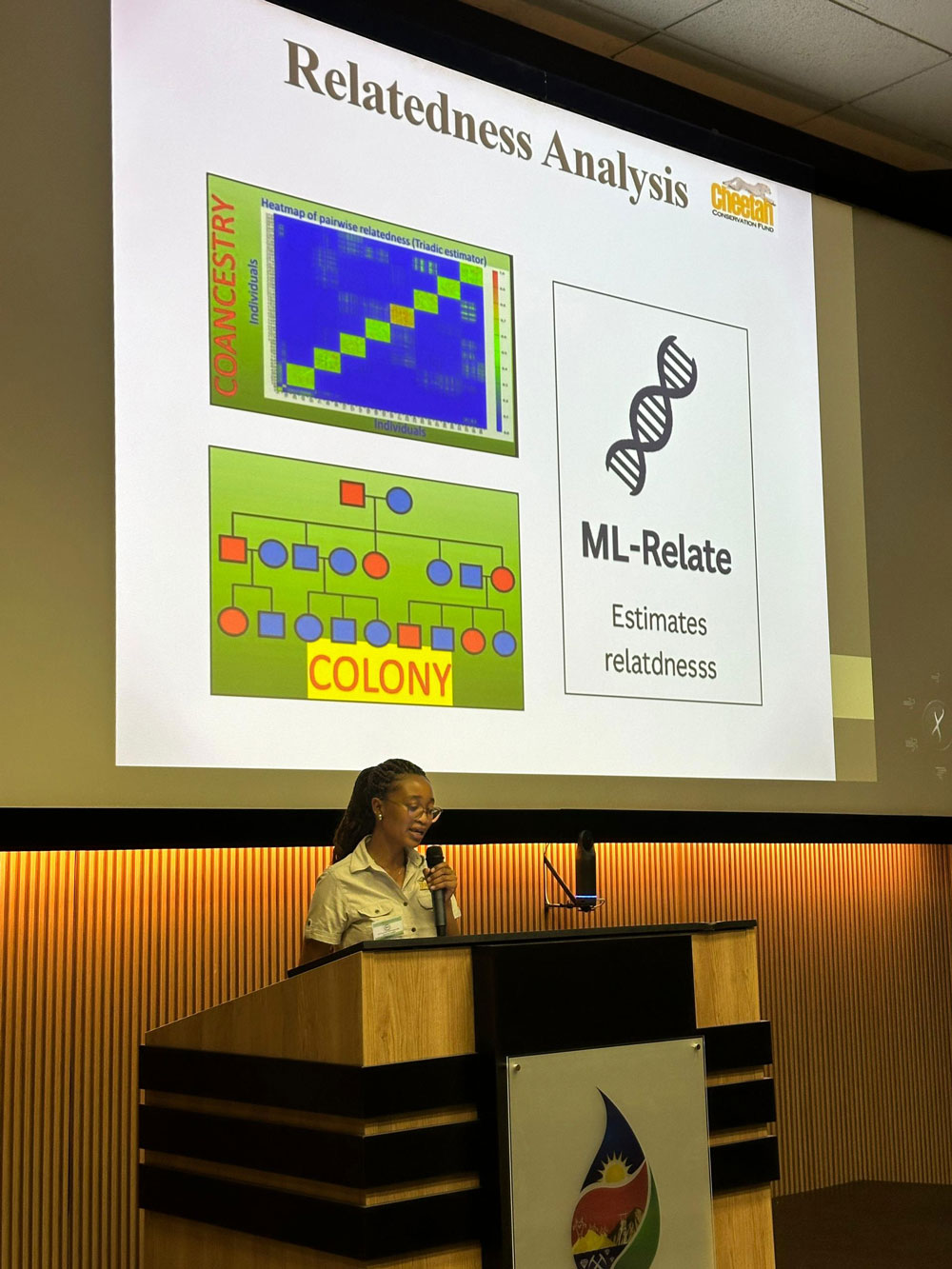
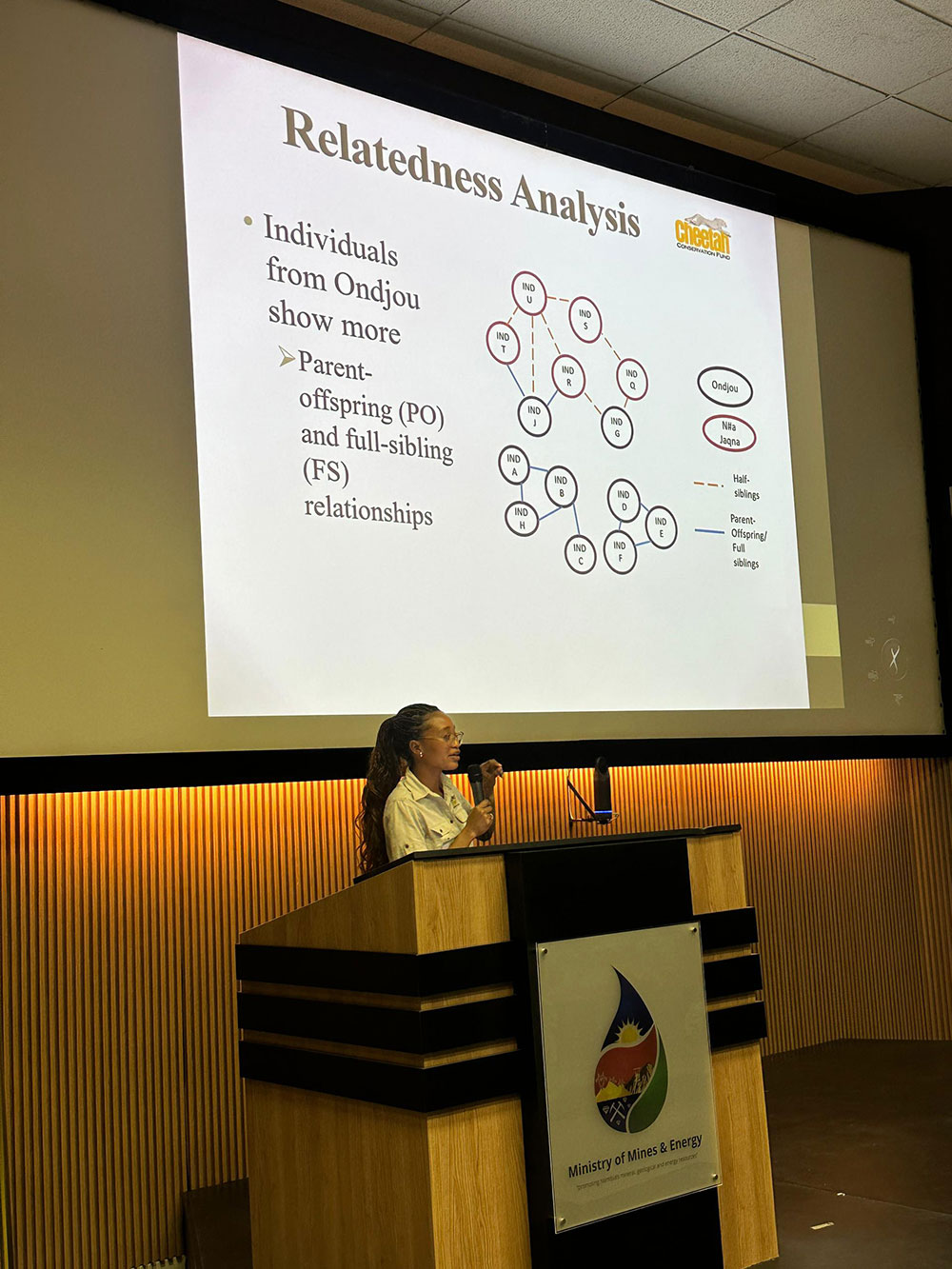
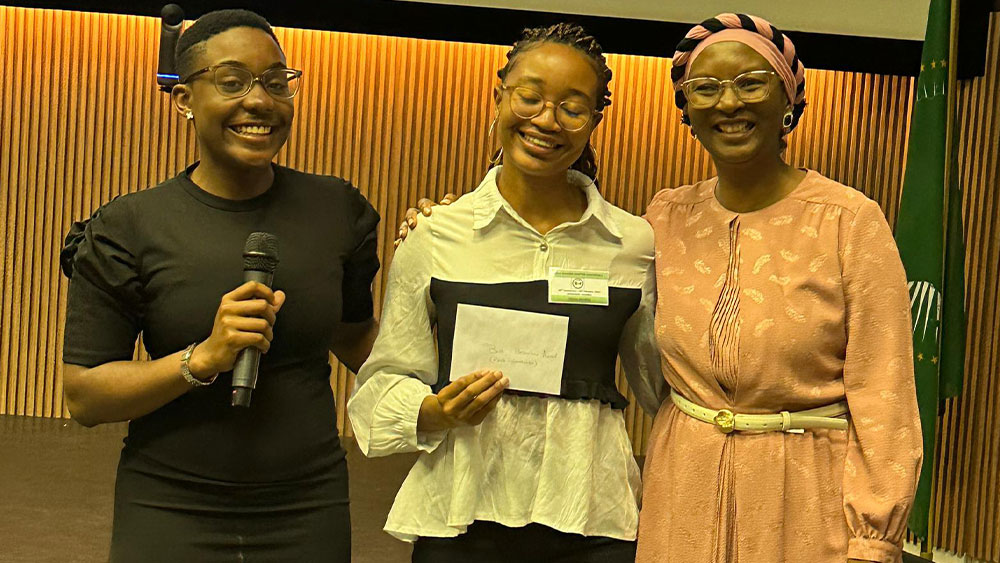
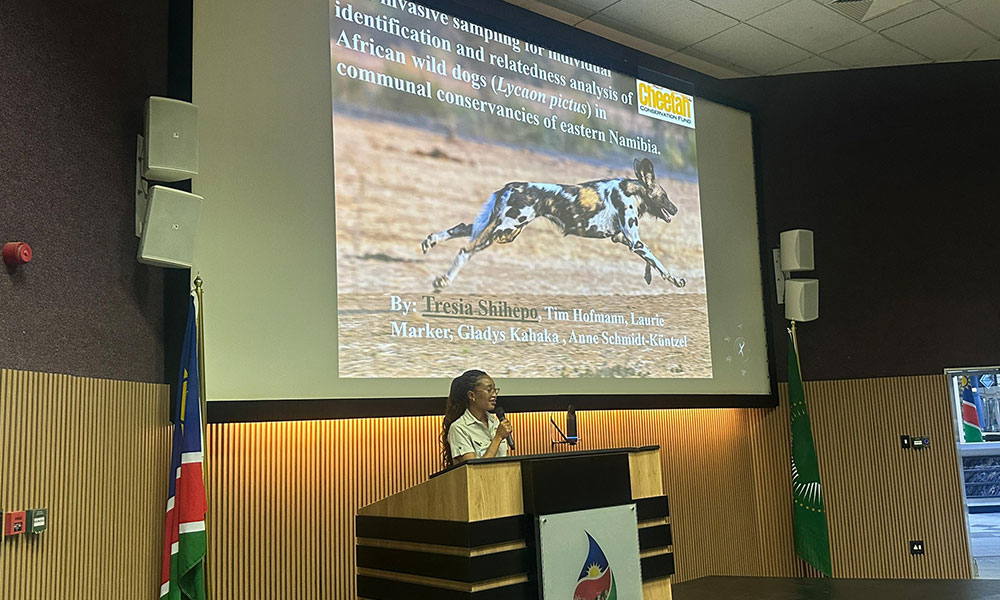
Caption: Tresia Shihepo during her award-winning presentation at the Conference for Women in Science; Windhoek, October 2025.
Hosted at the Ministry of Mines and Energy auditorium, the two-day conference brought together women from across disciplines to share their research, strengthen collaborations, and explore how technology and innovation can drive progress in STEM. I attended the conference alongside my fellow MSc students from CCF, Valencia Shipapo and Lapaka Petrus, who presented their projects on human-wildlife conflict which are funded by the Darwin Initiative. We had the opportunity to present our research alongside many other women doing remarkable work.
The first day opened with warm introductions from key figures, including Dr. Anna Nguno, president of the Geological Society of Namibia, and Hon. Sanet Steenkamp, speaking on behalf of the Ministry of Education, Arts, and Culture. The programme featured a vibrant mix of presentations spanning food science, medicine, animal science, engineering, and conservation, each a reflection of how diverse and impactful women-led research in Namibia truly is.
One presentation that particularly stood out to me was by a fellow postgraduate student developing treatments for antibiotic-resistant bacteria using extracts from traditional medicinal plants found in northern Namibia. It was a powerful reminder of how science and traditional knowledge can intersect to solve real-world problems
I had the honour of sharing a segment of my own MSc research, which examines the genetic relatedness of African wild dogs in Namibia’s eastern communal conservancies. This work is made possible through the wild dog scat samples collected by CCF’s scat detection dog team and is supported by funding from the German Postcode Lottery and CCF. During the Q&A session, it became clear just how new the field of conservation genetics is in Namibia; many participants were genuinely intrigued that we can uncover insights into animal behaviour using nothing more than a ‘piece of DNA’ from scat.
The conference ended on a humbling note when I was named Best Postgraduate Presenter. It was a meaningful moment that rewarded the late night hours spent on the project and reaffirmed the importance of our efforts to use science in guiding conservation and protecting endangered species.
Related Reading