
Reducing human-wildlife conflicts through a community-led initiative within Namibian landscapes
-

- by Dipanjan Naha June 29, 2026
Across the semiarid regions of Namibia, people, livestock, and wildlife share landscapes that is managed by the local communities. This community led approach is widely recognized as a successful model for ensuring human-wildlife coexistence, conservation of biodiversity and recognizing rights of indigenous people over sustainable natural resource management. Communal conservancies cover 20 percent of the total geographical area of this country and majority of the communal land. Human-wildlife conflict (HWC) is widespread across these shared landscapes with elephants damaging water infrastructure and uprooting crops and large carnivores preying on livestock. These conflicts lead to retaliatory and lethal control of predators, threatening both human livelihoods and biodiversity. Climate change impacts such as increasing aridity, frequent droughts further threaten food and water security within these landscapes. However, coexistence is possible if innovative approaches can reduce the costs of sharing space with wildlife and improve tolerance towards wildlife.
Since Sept 2024, the Cheetah Conservation Fund has been working across 8 communal conservancies in the Omaheke, Erongo and Kunene region. This program is funded by the Darwin Initiative program and aims to implement human-wildlife coexistence models within communal areas of Namibia. Based on baseline data collected through the project and consultations with our partners such as communal conservancies, MEFT (Ministry of Environment, Forestry and Tourism, Govt. of Namibia), and EHRA we designed a toolkit to mitigate HWC within these multiuse landscapes. The toolkit is intended to address both ecological and social factors driving HWC. Trends in HWC in recent years suggest that cattle, goat and sheep kept at the kraal are vulnerable to predation by carnivores at night. While attacks on livestock are generally higher when they are unsupervised in the bush, there are regular incidents of predators sneaking near kraals and killing them. African wild dog, leopard, black-backed jackal and brown hyena accounted for the highest proportion of self-reported livestock losses in the Omaheke region (Eiseb and Omuramba Ua Mbinda) conservancies. Hence, one of the major activities undertaken was to protect livestock at the homestead and deter predator attacks.
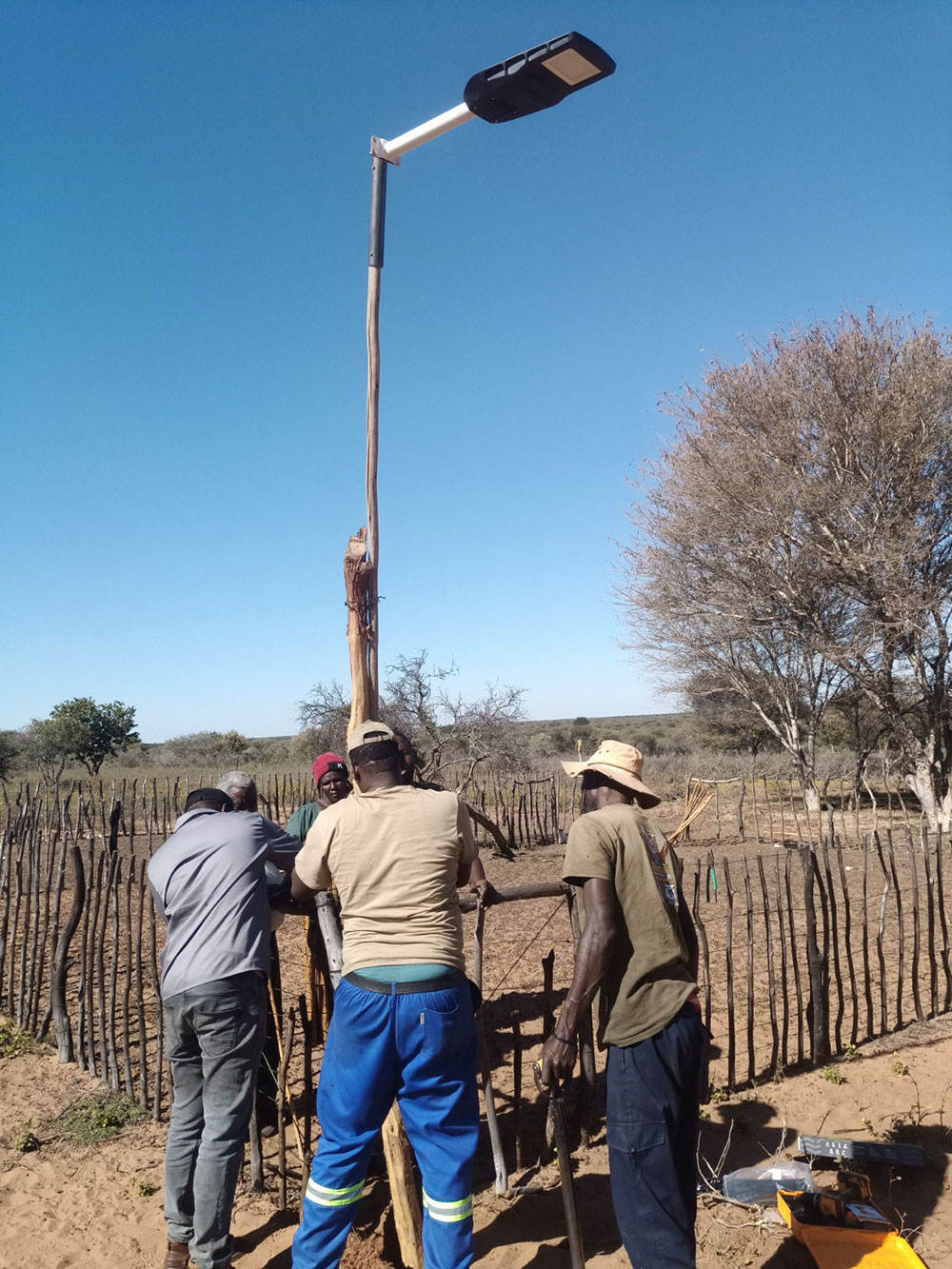
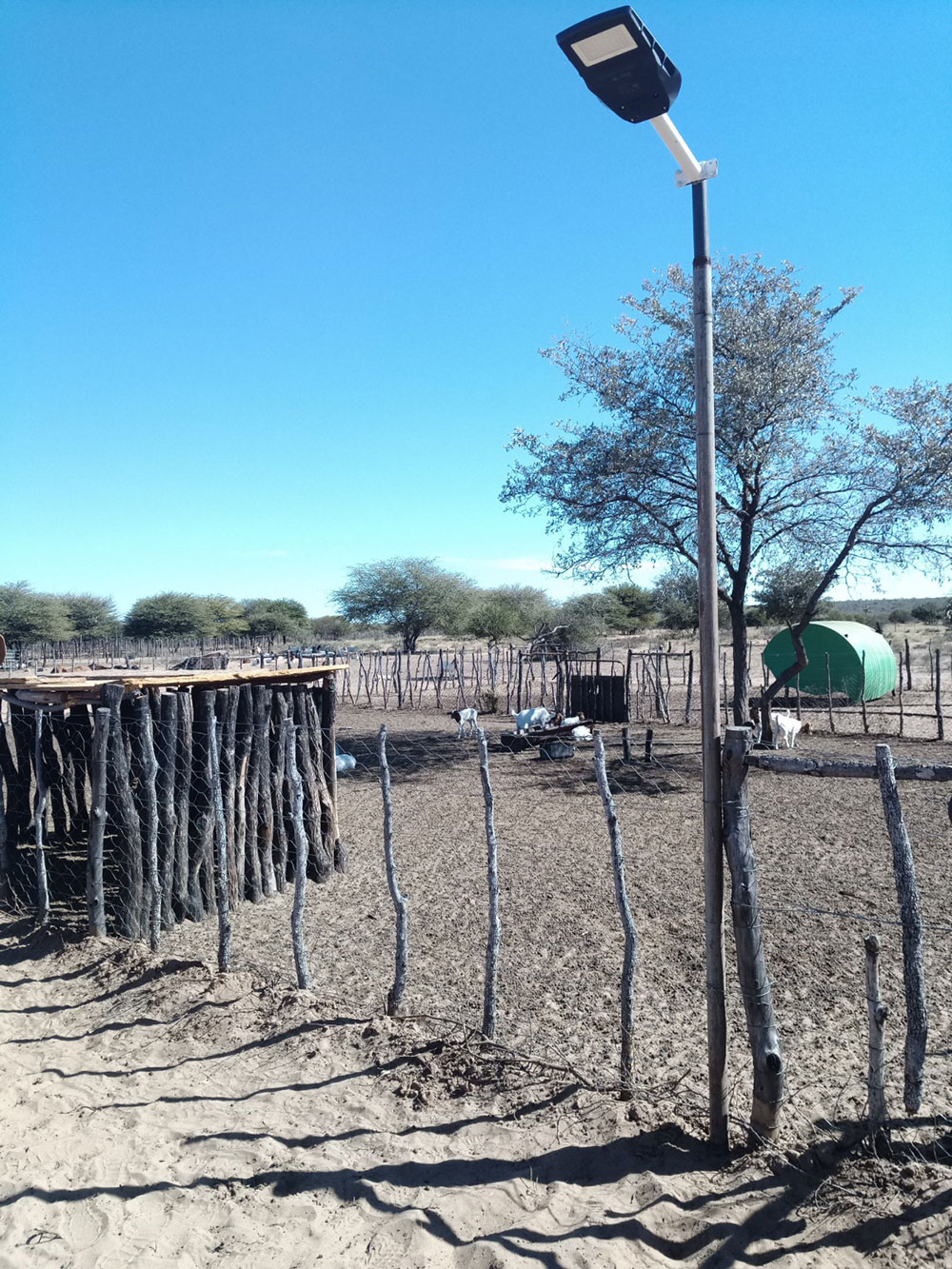
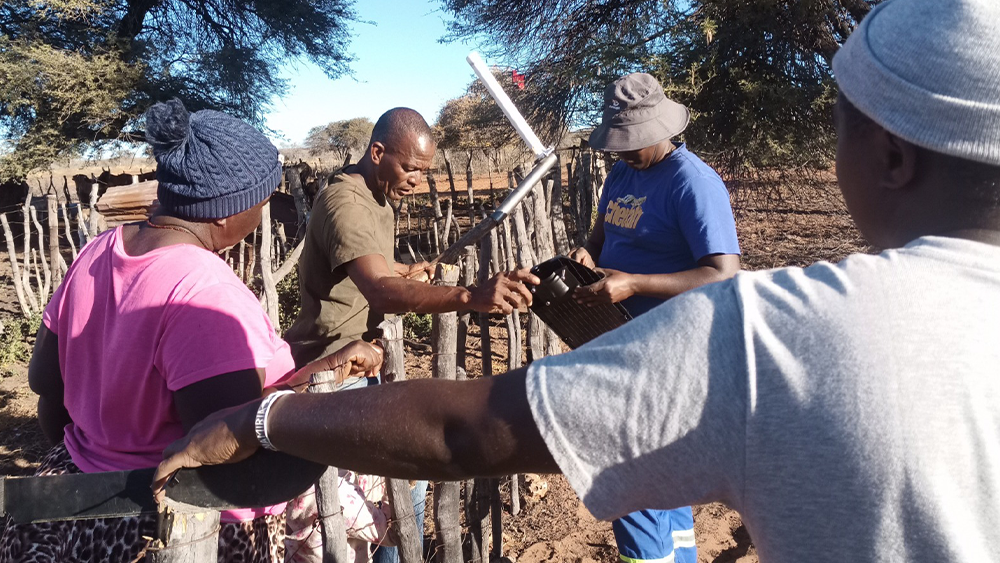
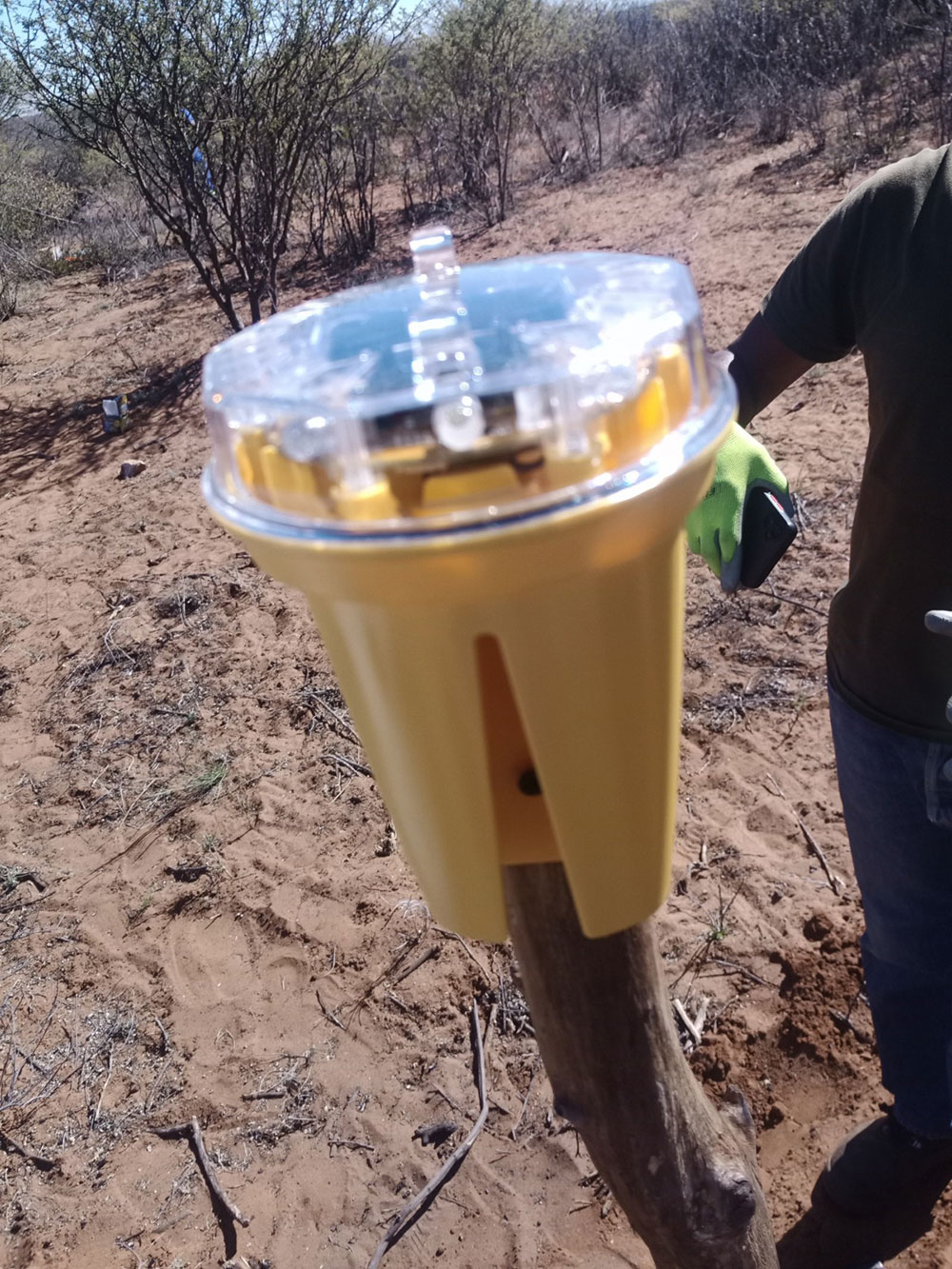
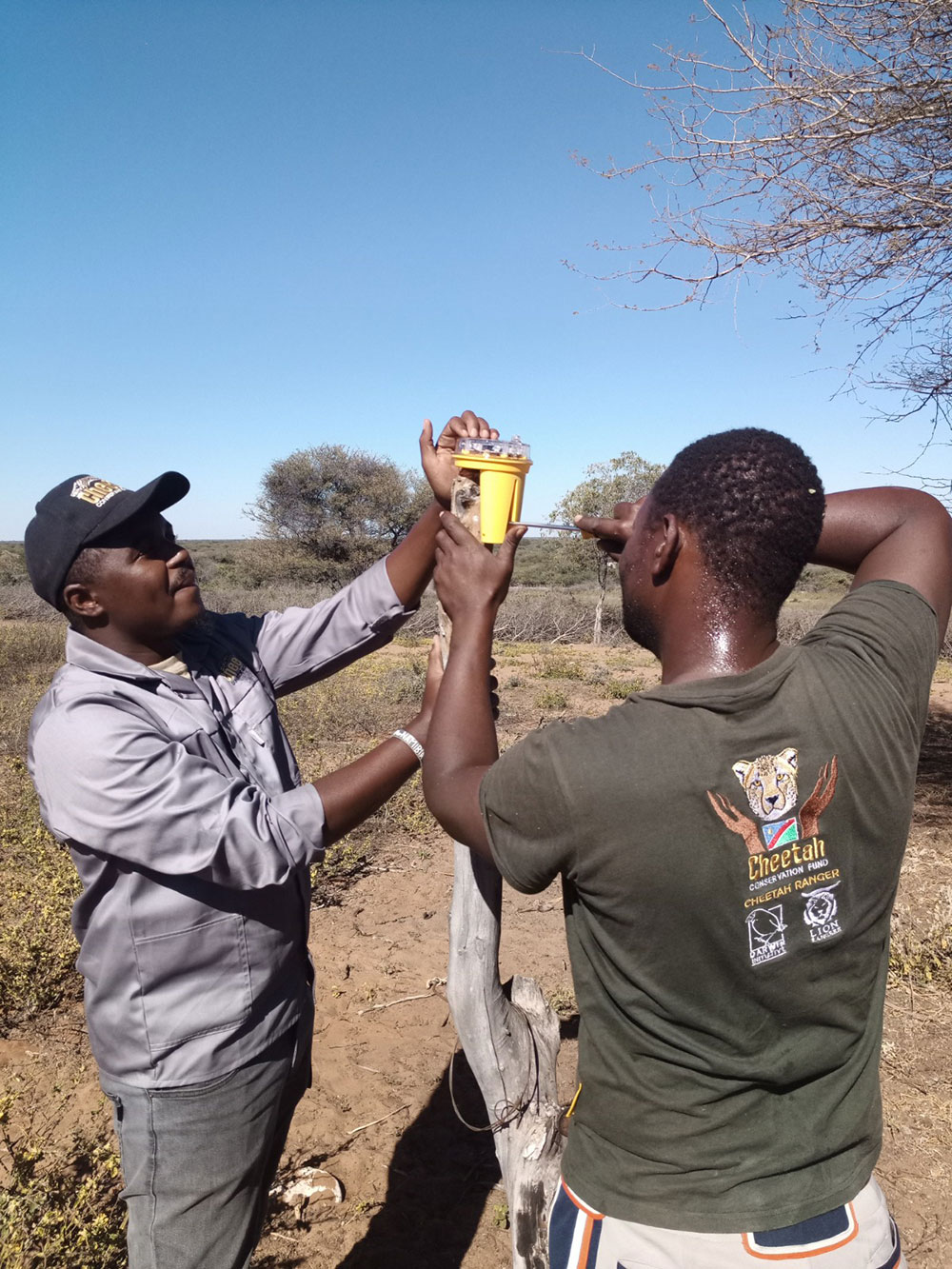
We deployed solar lights and fox lights targeting 25 households in collaboration with the Cheetah Rangers and the community members. This deployment was carried out in a randomised controlled trial and a year-long monitoring will be done to measure their effectiveness in reducing HWC. We also encouraged herders to pursue supervised grazing and herd livestock back to the kraal before dark. We have provided acoustic deterrents (Vuvuzela) to herders to scare predators from the vicinity of the kraals. We also plan to reinforce predator-proof kraals and conduct awareness programs targeting livestock farmers and the wellbeing of the local guardian dogs. The solar powered lights are intended to improve visibility around the kraal lowering the chances of predator attacks at night. The lights are automated and turn on when sunlight levels drop at sundown and temperatures indicate nightfall. The fox lights use a multi-coloured LED and emulate the movement of people patrolling at night with torches and have been successful in deterring wildlife across Africa, Asia, Europe and Americas. The toolkit will also reduce the psychological distress for communities living near wildlife. While long term measures should aim to provide tangible benefits to communities, short term deterrents can be highly effective in reducing the costs of human-wildlife coexistence. By the end of our monitoring period, we will have a robust evidence base regarding the effectiveness of our toolkit as a conflict mitigation tool which can be scaled across Africa and beyond.
Darwin Initiative
This project is generously supported by the Darwin Initiative — UK Government funding for biodiversity conservation and poverty reduction.
Related Reading
-
May 18, 2026
Building Conservation Success Through Social Science -
October 14, 2025
Cheetahs Were Born to Run