
One Health in Action: University of Hargeisa Visits CCF Somaliland
-
- by Dr. Ashley Marshall October 7, 2026
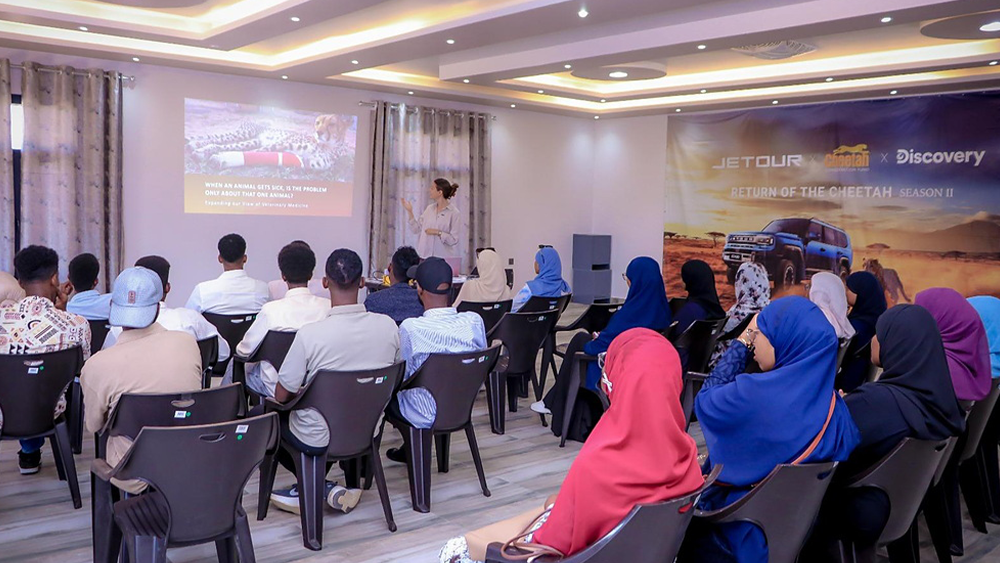
Last week, CCF Somaliland welcomed a group of students from the University of Hargeisa to the sanctuary for the first time, as part of the university’s summer training series bridging veterinary education and professional practice. CCF has taught at the university before, but this was the first time students came to us. The 24 students, split equally between veterinary medicine and environmental science with one recent graduate in human medicine, made for a group that embodied One Health before the day even began.
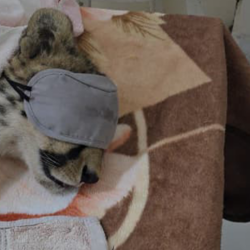
One Health is the idea that human, animal, and environmental health are deeply connected, and that protecting one depends on caring for all three. The lecture, taught by our current resident veterinarian, then turned to CCF’s own work, using the example of Delphina, one of our non-releasable cheetahs recovering from surgery in the clinic, to reflect on the question of the day: Is treating an animal only about helping that one individual, or does the impact ripple out further, into the wider population, the ecosystem, even the community around it?
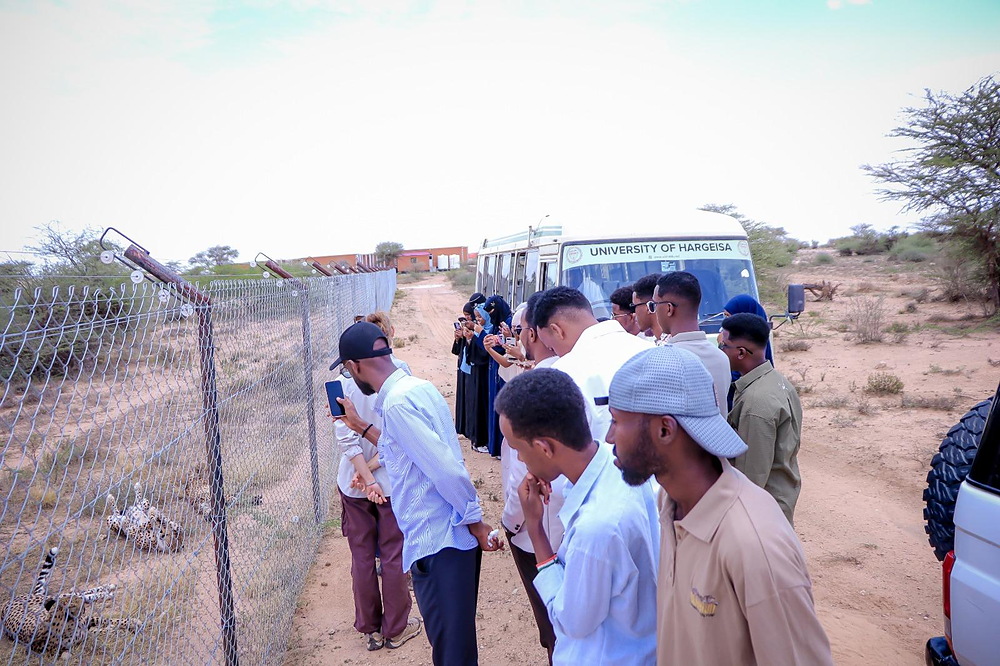
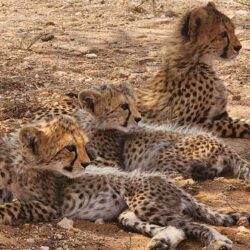
To help answer this question the group then worked through a veterinary case study on confiscated cheetah cubs presenting with diarrhea. The potential causes of diarrhea in cubs include nutritional challenges and infectious diseases including viral, bacterial, parasitic, and protozoal pathogens like coccidia. Students built this differential list out together, each discipline contributing a piece the others hadn’t considered. The richest discussion came from tracing which diseases move across the human-wildlife-domestic animal interface, passing between cheetahs, domestic cats and dogs, livestock, and the people who share that landscape.
That line of thinking led to a harder question, when a student asked what diseases are circulating in the local goat population that feeds the sanctuary and what risk does this pose to the cheetahs. The honest answer is that nobody fully knows. Livestock disease in Somaliland has been barely studied, and CCF has started working to close that gap, for the cheetahs, goats, and community alike.
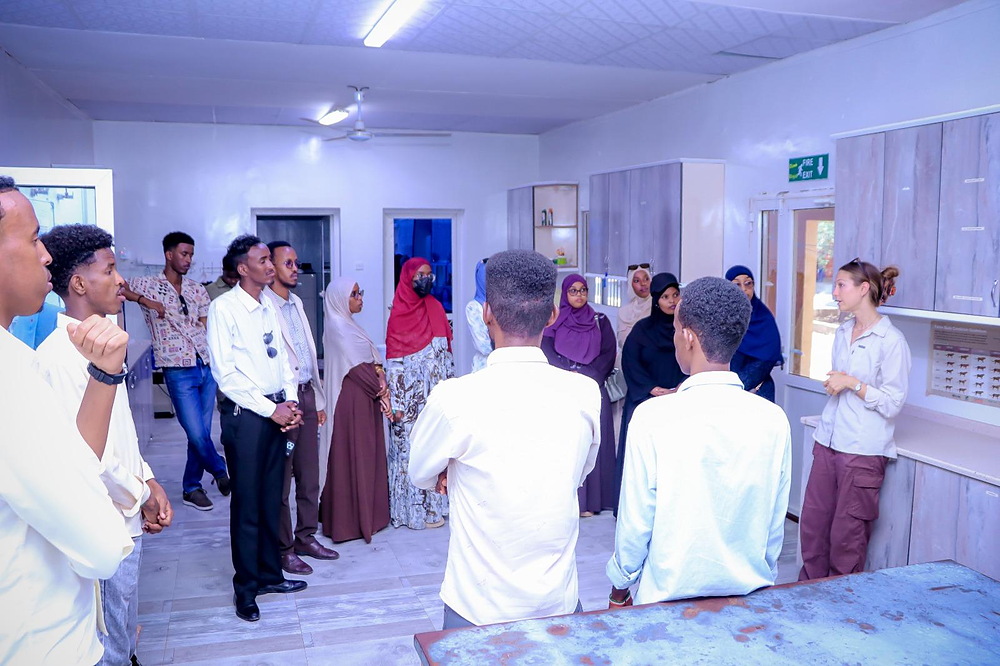
The day closed with a tour of the sanctuary grounds. Students met the newest confiscated cubs, watched several resident cheetahs in their bush enclosures, and moved through CCF’s diagnostic laboratory and hospital treatment room. Along the way, our head keeper walked them through cheetah behavior and husbandry, from group dynamics in the wild to how diet and feeding schedules work at the sanctuary. Last of all, the students got to meet Delphina, the cheetah they had seen in their lecture earlier that morning, and the day’s opening question came back into play. By then, perspectives had shifted.
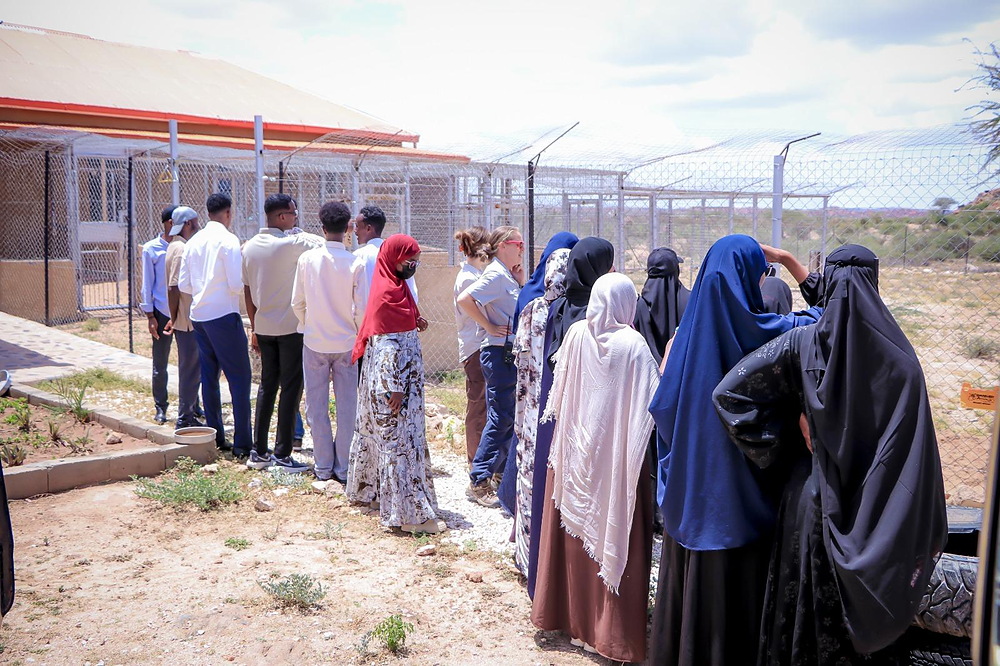
Treating one cheetah builds the knowledge we need to care for the wider global cheetah population and eventually re-wild animals back into it. That work ripples outward. Predators, like the cheetah, keep an ecosystem healthy. A healthy ecosystem means healthy animals and healthy people too. Today, every cheetah matters more given how small the global population has become. Each one is also its own individual, with a distinct personality and quirks, but we should also always have the bigger picture in mind. Treating one animal is part of a process that keeps an entire ecosystem, and the community around it, healthy and balanced. That’s One Health in theory.
One Health in action looks like collaboration, across disciplines, institutions, and languages. This visit was organized by Dr. Abdisalan, a local veterinarian, and University of Hargeisa alumnus now supporting the vet school’s research department to coordinate the summer series. Before this, he had little exposure to conservation, and the visit left him with a clearer sense of why biodiversity matters across every health sector. He came to see conservation as less about keeping land untouched, and more about sustainably balancing the needs of the people and animals that depend on it.
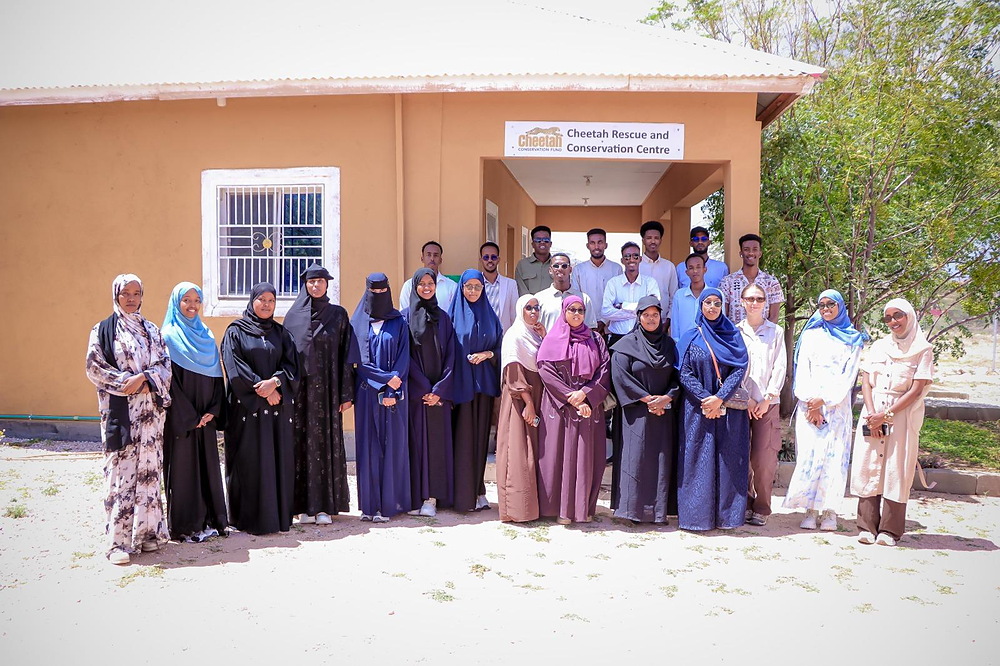
Dr. Ahmed, a local veterinarian, teacher, and keeper at CCF, supported the visit by translating the more complex ideas into Somali and called the visit one of the most encouraging parts of his week. In his conversations with students, he was struck by how many hadn’t previously considered that wildlife play a significant role in the concept of One Health. Several asked him how to get more involved, from internships and research to gaining experience with cheetahs. “Engaging local students to help their own community is critical right now,” Ahmed said. “We have to bring the community in if we want to help the cheetahs and stop the pet trade.” He also pointed to the sanctuary’s new education center, now up and running, as proof the investment in local education is paying off.
The developing partnership between CCF and the University of Hargesia helps make our work sustainable. Bringing students onto the sanctuary grounds, into the lab and treatment room does more to build the next generation of conservation-minded professionals than a lecture ever could. Visits like this one are a clear illustration of why CCF leans heavily on community engagement. Somaliland’s future veterinarians, environmental scientists, and a physician spent the day learning why conservation medicine depends on cross-disciplinary work. More importantly, they left the sanctuary asking how to do more of it.
Related Reading
-
February 13, 2026
When Enforcement Increases, Survivability Must Follow -
July 18, 2025
Every Cub Matters: A Lifetime of Fighting for Cheetahs