
What’s at Stake for Cheetahs at CITES AC34
-
- by Dr. Shira Yashphe July 15, 2026
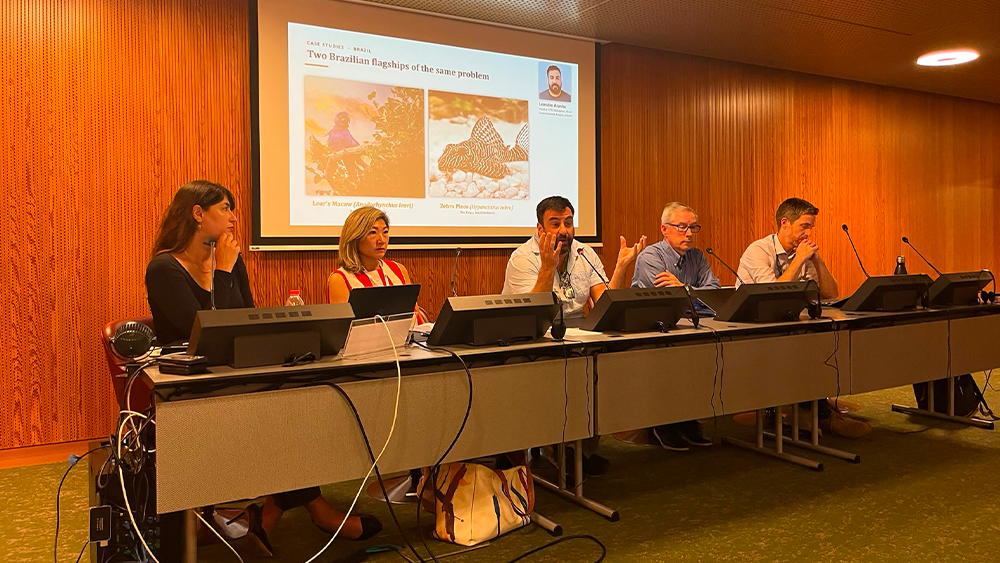
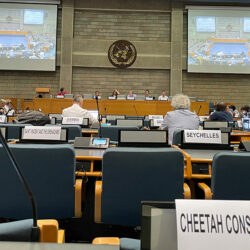
Nearly 500 people are converging on Geneva this week for the 34th meeting of the CITES Animals Committee (AC34), running 13–17 July. Delegates from 73 governments and representatives of 79 observer organizations will spend four days working through a packed technical agenda covering species as varied as deep-water sharks, big cats, vultures, corals, eels, and amphibians.
The meeting picks up where CoP20 left off. Parties walked away from Samarkand last November with a heavy to-do list before CoP21 in 2028: three new Resolutions, more than 350 Decisions, and 76 freshly listed species to fold into implementation. None of that happens without the scientific groundwork – population assessments, trade data analysis, and NDF recommendations are what turn a CoP decision into something enforceable at a border.
Dr Amir Hamidy, who directs Indonesia’s CITES Scientific Authority at the National Research and Innovation Agency (BRIN), is expected to take over as Committee Chair – the first time someone from the Asia region has held the position.
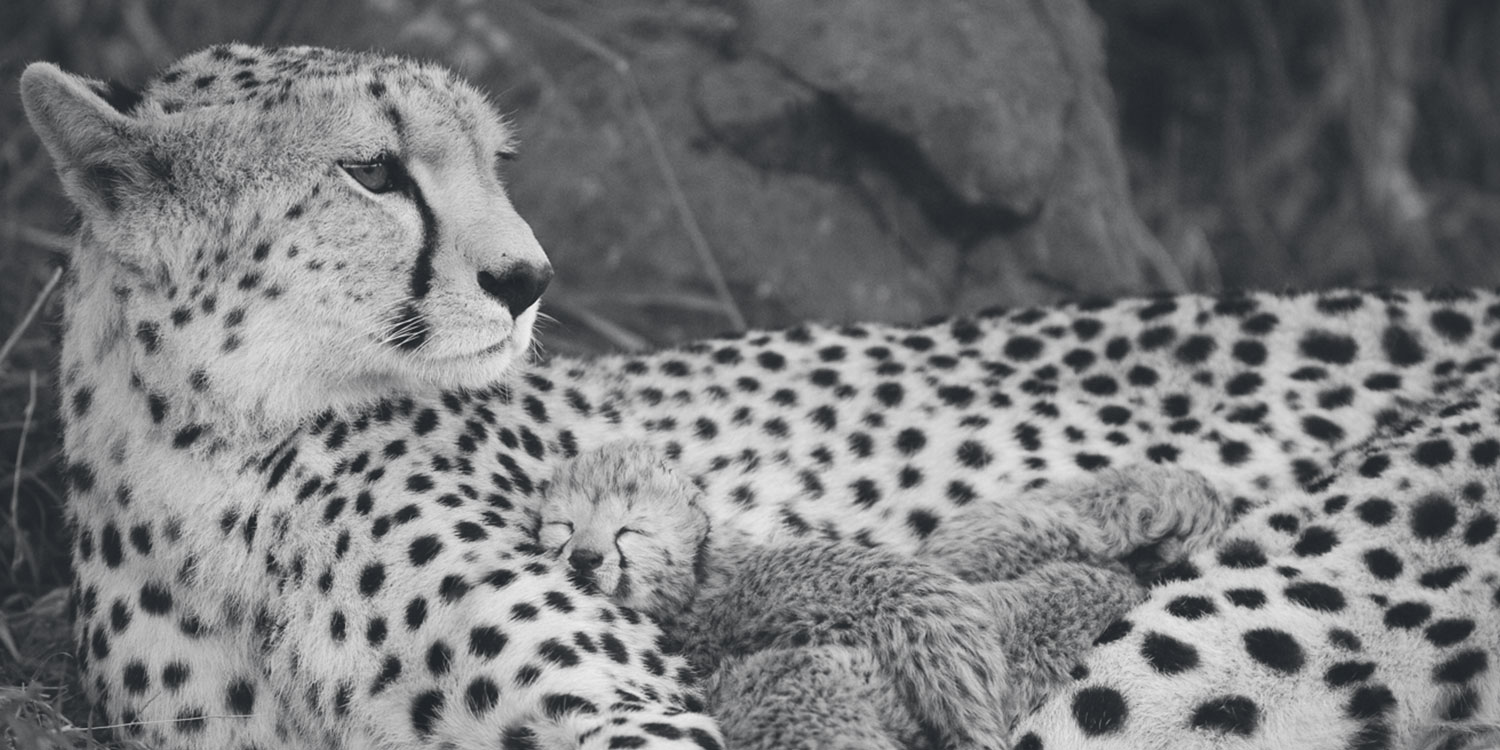
For the Cheetah Conservation Fund, a few agenda items carry particular weight. AC34 will bring the first substantive Animals Committee review of the Joint CITES-CMS African Carnivores Initiative (ACI) since it was embedded in Resolution Conf. 13.3 at CoP20 – the primary channel through which cheetah, lion, leopard, and African wild dog are carried into the Committee’s intersessional work. Saiga antelope also has a dedicated agenda item; while not an obvious priority on paper, saiga recovery underpins the prey base needed for any future Asiatic cheetah reintroduction work in Central Asia.
Marine species still make up a large share of the agenda, alongside a review of the Resolution on marking live specimens to see whether identification and marking methods need an update to include new chip technology.
Alongside the formal sessions, the Cheetah Conservation Fund is hosting a side event on Tuesday, 14 July at 12:15pm in Geneva to spotlight a different kind of gap: verification failures in the trade of captive-bred specimens. The event will look at how weaknesses ranging from Legal Acquisition Findings to import/export permit issuance let questionable specimens move through channels meant to be reserved for legitimate captive breeding.
The entire meeting was livestreamed on the CITES YouTube channel.
The week closes on 17 July with a joint session between the Animals and Plants Committees, taking on cross-cutting issues like how CITES applies to fungi, feedback on the NDF Guidance, and how to strengthen the permanent committees’ work, including the ongoing country-wide Review of Significant Trade.
Related Reading
-
December 16, 2023
Across Borders and Beyond: Charting CCF’s Global Conservation Efforts