
Saving the Cheetah, Saving the Drylands
Aug 17 - 28, 2026
- Location: Ulaanbaatar, Mongolia
- Venue: IUCN Pavilion
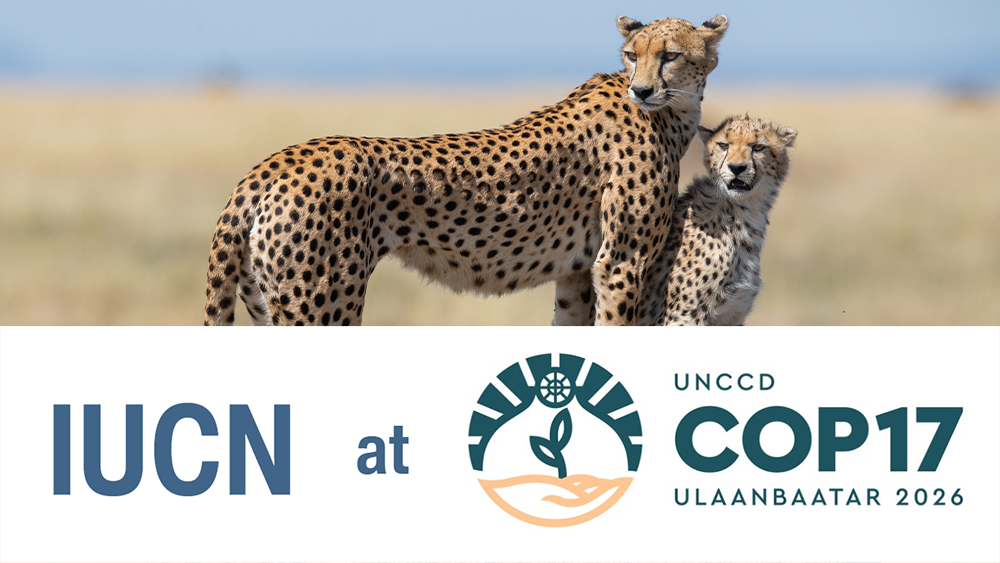
A species-led strategy for desertification resilience. Cheetah conservation is dryland conservation — protect the cheetah and you protect the entire system it ranges across.
Convened by Cheetah Conservation Fund and The Living Desert Zoo & Gardens.
During the International Year of Rangelands & Pastoralists.
Theme: Restoring Land. Restoring Hope.
THE CASE
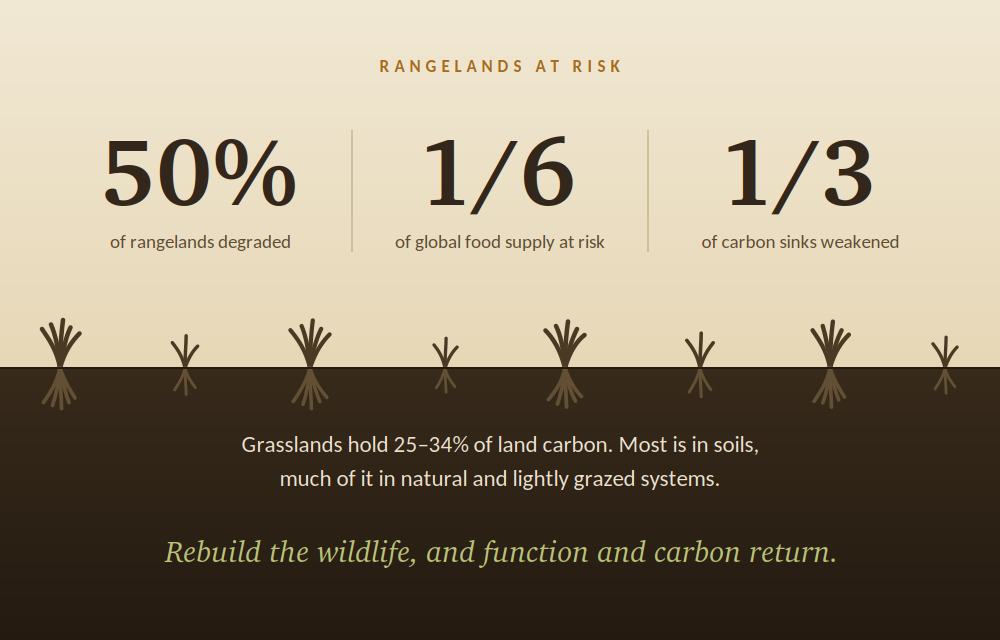
Rangelands cover more than half of Earth’s land — and they’re in decline
They feed people, store carbon and hold water. Yet a hidden driver of their collapse is wildlife lost below functional thresholds: large herbivores and predators shaped these lands for millennia, and when they’re removed, the system unravels.
WHY THE CHEETAH
Five returns from one predator
The cheetah is the first large carnivore to disappear when habitat fragments. Its presence signals intact food webs, connected habitat, and resilient soils and water — and about 80% of cheetahs live outside protected areas, on the working rangelands UNCCD is restoring.
Balance the land
Keeps herbivores in check — protecting vegetation, soil health, carbon & biodiversity.
Protect the whole system
One species safeguards a landscape’s water, carbon & drought resilience.
Signal connectivity
Big-cat corridors reveal — and overlap with — healthy pastoral rangelands.
Mobilise finance
A charismatic flagship draws tourism revenue & political will to restoration.
Cultural & aesthetic value
For the people who share these lands, a living emblem of healthy country.
THE MULTIPLIER
One action, three global goals
Every CCF activity in cheetah landscapes maps onto a UNCCD priority, a CBD / Global Biodiversity Framework target, and a UNFCCC climate goal.
| CCF Activity | UNCCD Priority | CBD / GBF Target | UNFCCC Goal |
|---|---|---|---|
| Rangeland & habitat restoration | Land Degradation Neutrality; drought resilience | T2 restore 30% degraded · T11 nature’s services | Nature-based adaptation (Paris Agreement) |
| Restore wildlife & food webs | Recover dryland function & productivity | T4 recover species · T1 spatial planning | Protect & enhance soil + vegetation carbon sinks |
| Corridor & connectivity | Integrated land-use planning | T1·T3 connectivity in the 30×30 network | Landscape carbon integrity as climate shifts |
| Predator-friendly farming | Sustainable land management; pastoral livelihoods | T10 sustainable rangelands · T5 safe wildlife use | Cut emissions from retaliatory clearing |
| Conservancies & CBNRM | Community governance; tenure security | T22·T3 Indigenous & local stewardship | Locally led adaptation & climate finance |
| Rural enterprise (Bushblok®) | Reduce overgrazing; diversify incomes | T15 sustainable production · T9 benefits from wild species | Low-carbon biogenic fuel; less firewood reliance |
| Soil carbon monitoring | Track productivity & carbon vs. baselines | T21 data for decisions | MRV, transparency & national reporting |
UNCCD | CBD | UNFCCC — three conventions, one action
FIELD-PROVEN
Solutions we’ve developed
SOLUTION 1
Future Farmers of Africa — 80–100% fewer livestock losses
- Predator-friendly farming — spoor & kill ID
- Guarding dogs & donkeys — full-time defence
- Smart herd management & synchronised calving
- 24/7 hotline & early-warning GPS collars
SOLUTION 2
Bushblok® — Restoration you can monetize
- Harvest invasive thornbush (FSC-certified)
- Bushblok® fuel & green charcoal
- Grass returns; biochar locks soil carbon
- Monitored recovery → carbon credits
SOLUTION 3
Conservancies & CBNRM — Coexistence that pays
- Local governance — committees & leaders
- Shared enclosures & coexistence toolkit
- Community monitors — conservation as livelihood
- Scales coexistence from farm to landscape
Coexistence toolkit — guarding dogs & donkeys | 24/7 Farmer–Carnivore Hotline | GPS geofence early-warning | Future Farmers of Africa | Bushblok® restoration
JOIN US AT COP17
https://iucn.org/events/large-event/iucn-unccd-cop17
The side event
Saving the Cheetah, Saving the Drylands
A species-led strategy for desertification resilience
Saving the Cheetah, Saving the Drylands
A species-led strategy for desertification resilience
| Date | 19 August 2026 |
|---|---|
| Time | 3:30 – 4:30 PM |
| Where | IUCN Pavilion, Ulaanbaatar |
| Format | 45-min panel + 15-min Q&A · all delegates welcome |
Speakers
- Dr. Laurie Marker · Founder & CEO, Cheetah Conservation Fund
- Dr. James Danoff-Burg · VP Conservation, The Living Desert Zoo & Gardens
- Global Rewilding Alliance · Rangelands Working Group
OUR CALL TO UNCCD PARTIES
Recognise wildlife indicators in Land Degradation Neutrality
Invest in coexistence on the working rangelands where ~80% of cheetahs — and their pastoralist neighbours — actually live. One action, delivering across UNCCD, CBD and UNFCCC.
Cheetah Conservation Fund | The Living Desert Zoo & Gardens | Global Rewilding Alliance
Otjiwarongo, Namibia | cheetah.org
Figures from the CCF concept note, the “Cheetahs = Living Rangelands” handout, and the IUCN Green Status of Species assessment (2025)