International Cat Day: The Rescue and Release of Astrid and her Cheetah Cubs
-
- by Zilá Motta 7 August 2026
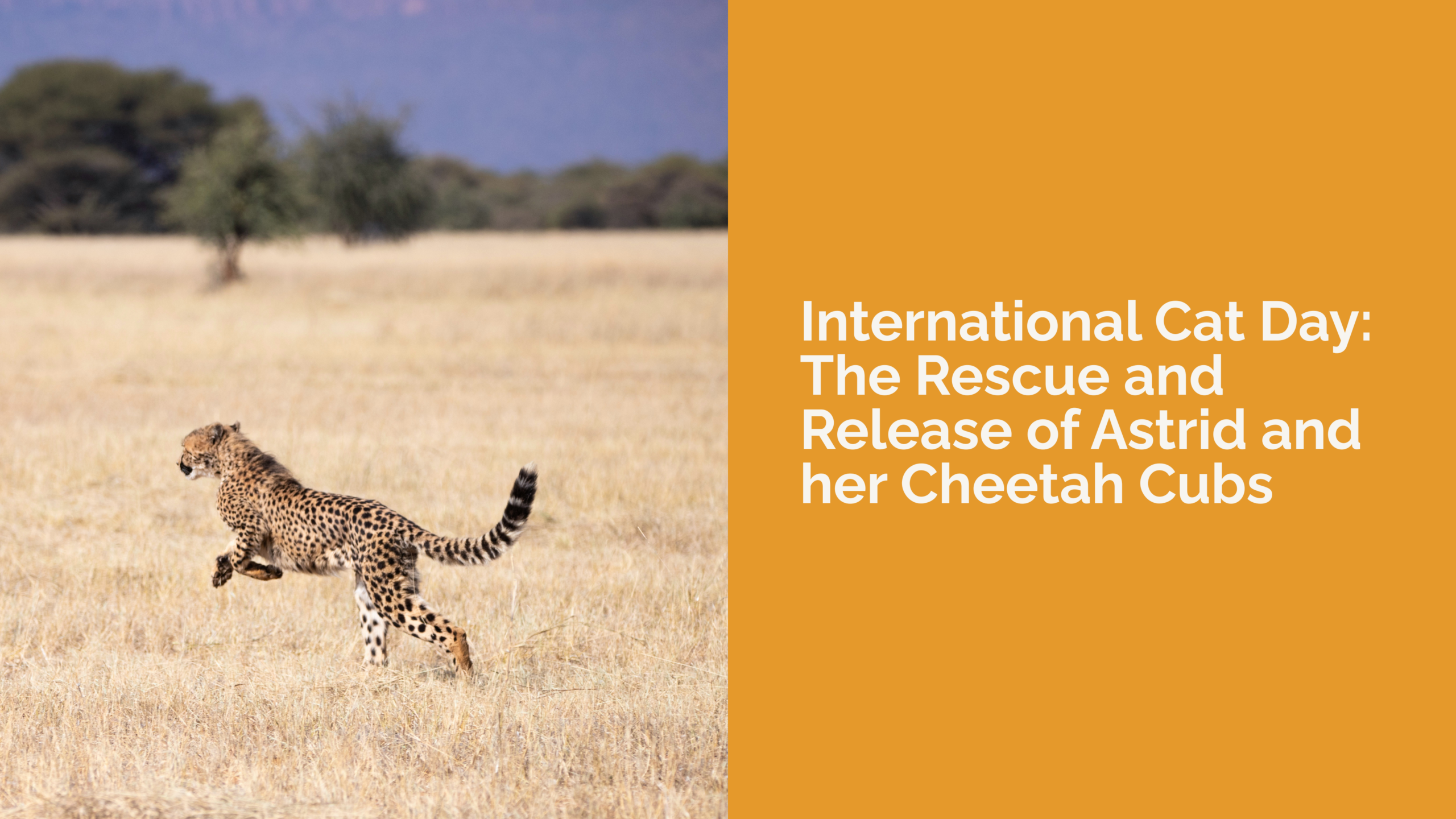
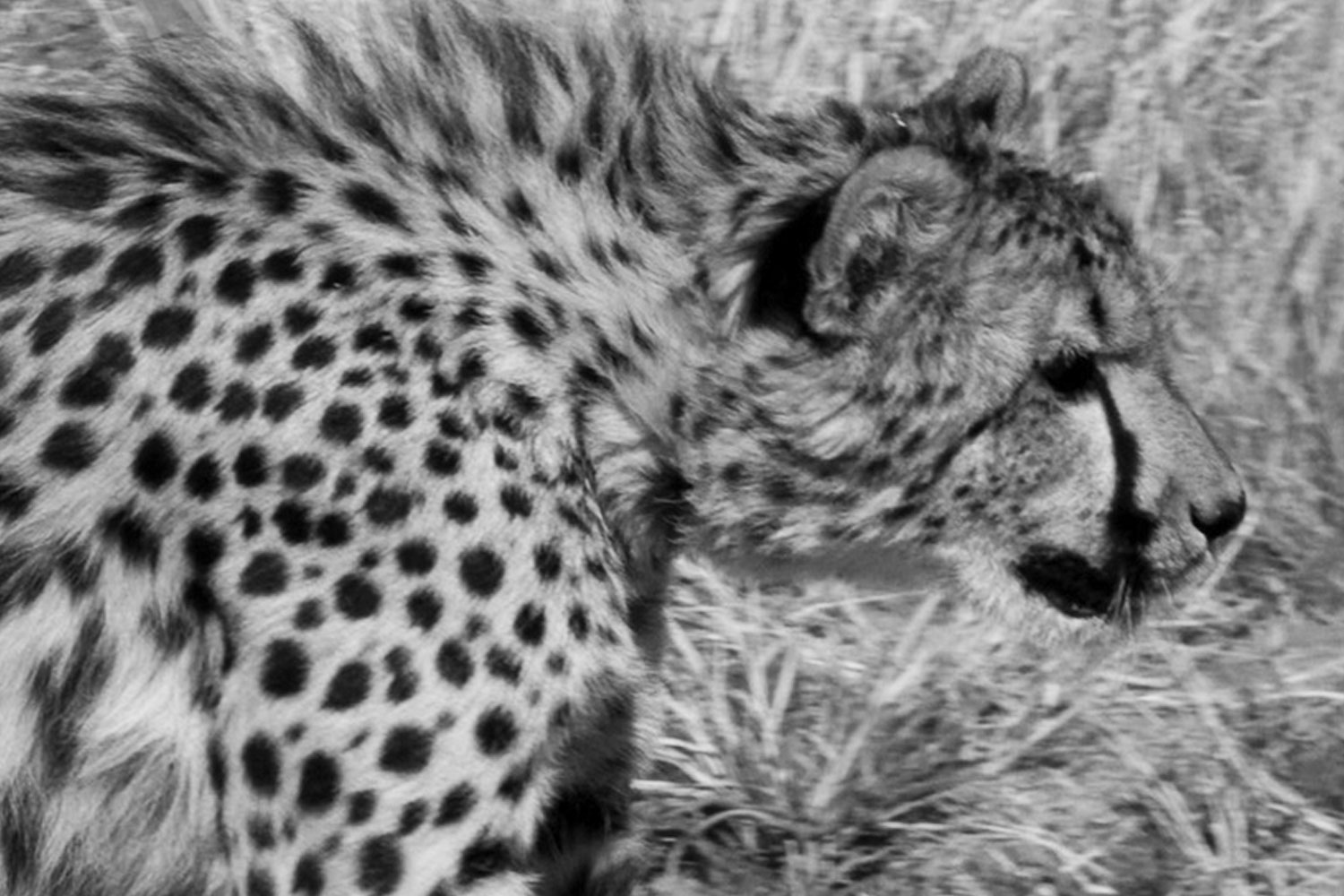
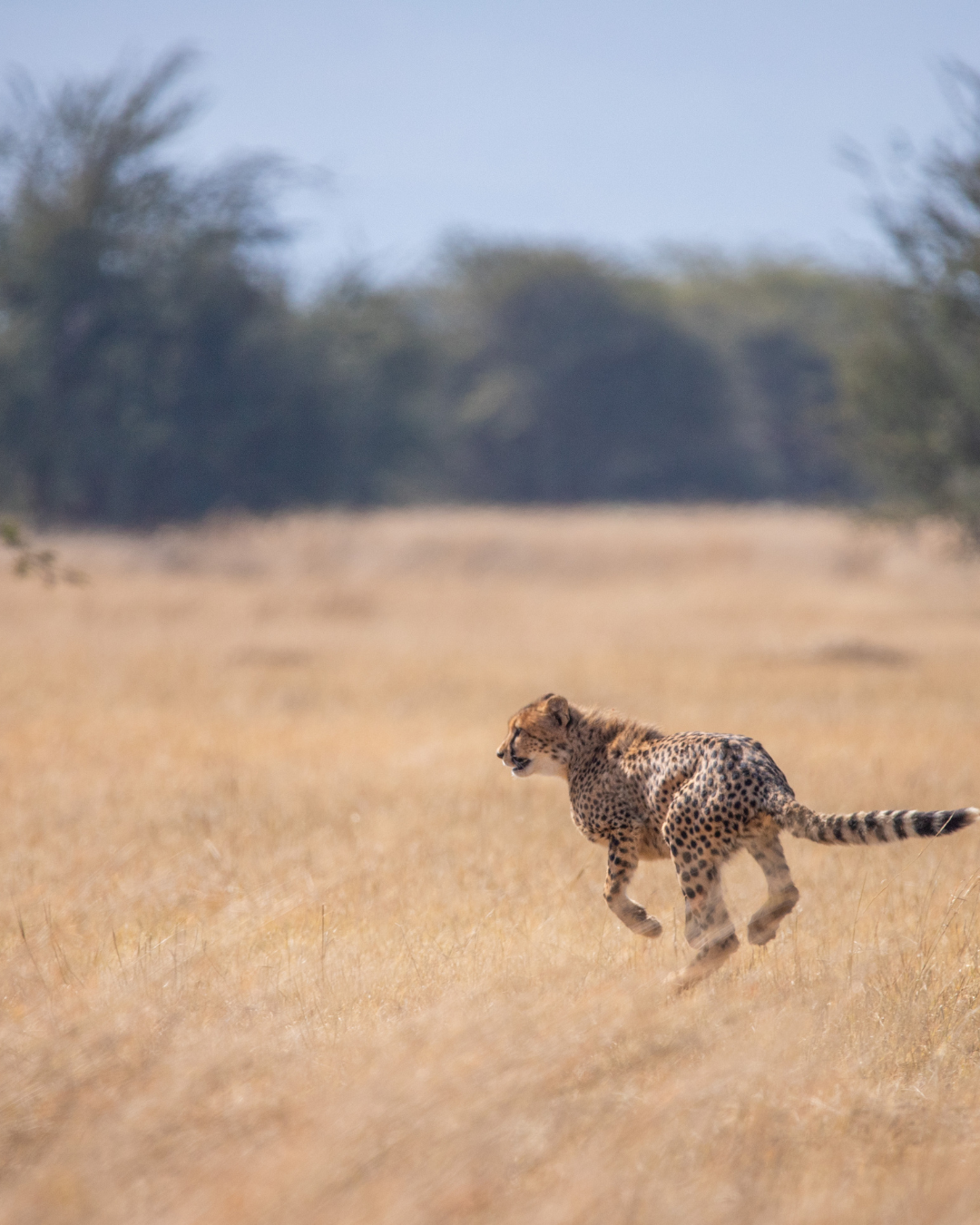
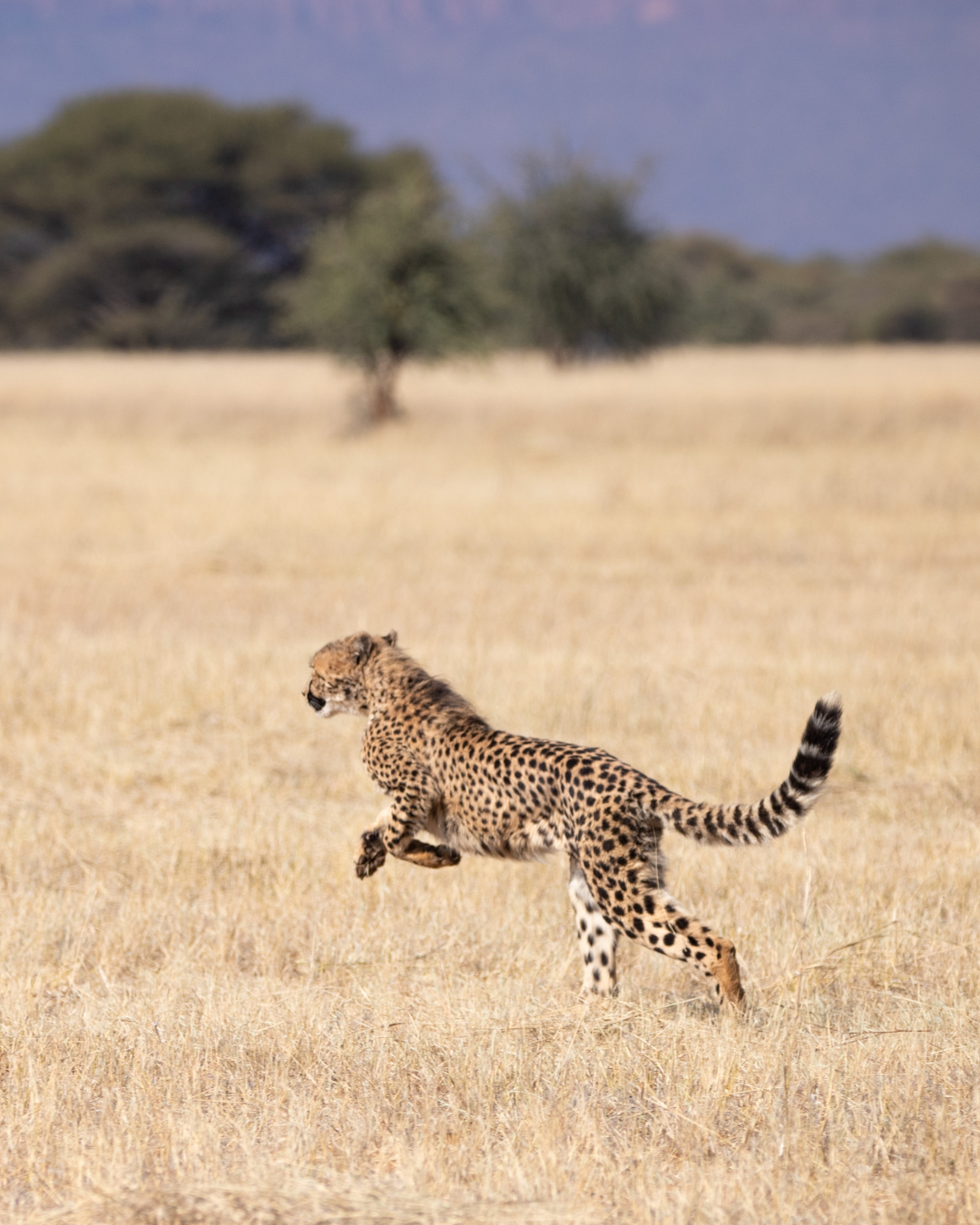
On this International Cat Day, we want to share with you a very special story of a female cheetah and her five cubs were returned to the wild in Namibia last month (July 2026), following an extensive two-week rescue mission and veterinary response coordinated by Cheetah Conservation Fund (CCF) and Namibia’s Ministry of Environment, Forestry and Tourism (MEFT).
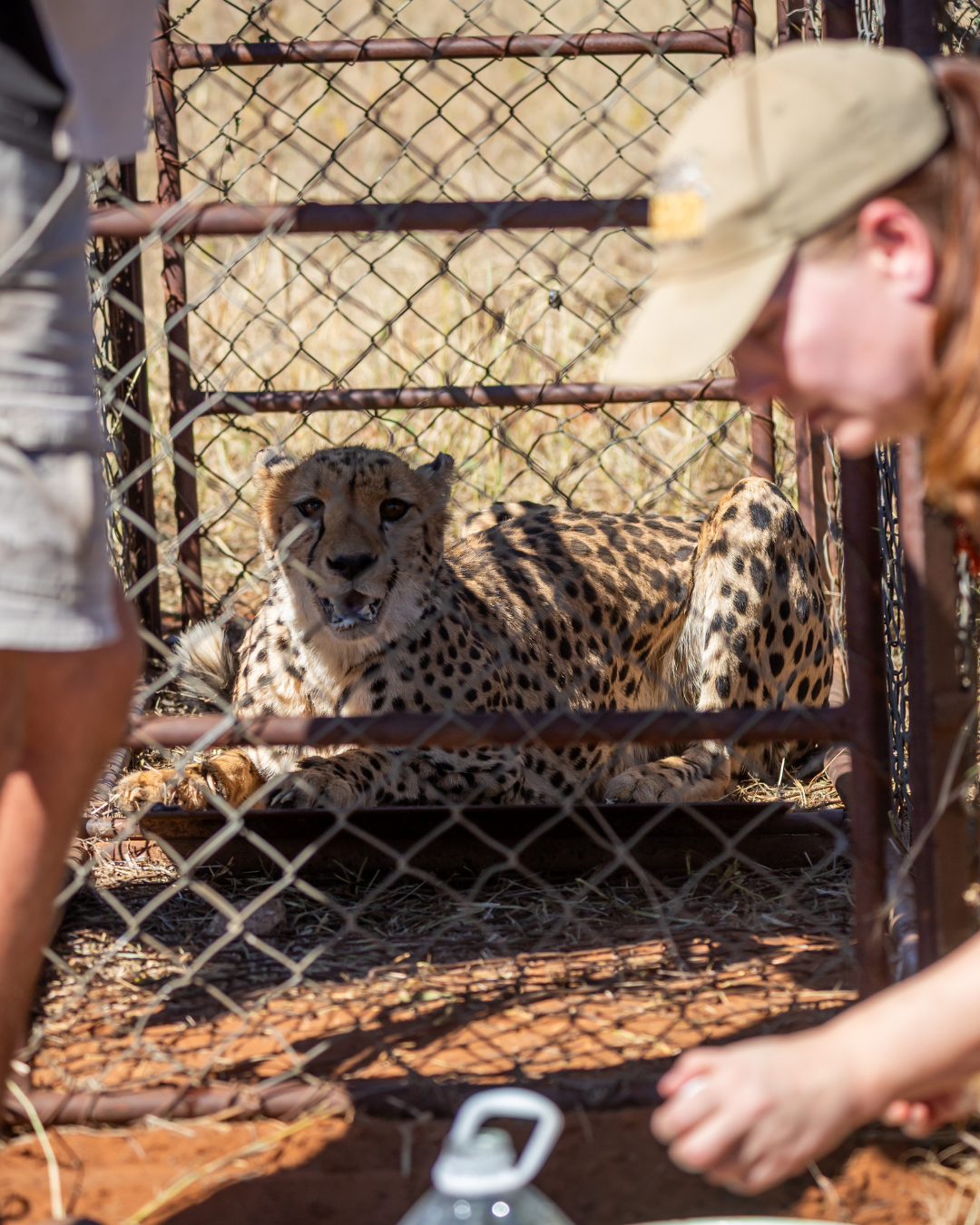
The rescue began when a farmer contacted CCF about a year-old cheetah cub caught in a trap. The young cat was relocated to CCF for care. Just two days later, another cub was caught. CCF responded and reunited the two siblings — but after the second rescue, staff realised there were other members of the same family still out there. Working with the farmer over several days, the team captured the mother and three more cubs. Finally, all six cheetahs were together again.
Keeping the family together was the priority from the start, and not only for sentimental reasons. Cubs under sixteen months old need an adult with them to stand a real chance in the wild — at roughly a year old, these five were still learning to hunt from their mother. Reuniting them was the difference between a rescue and a release.
A broken tooth, a seven-hour drive
During the initial evaluation, the team found another challenge. The mother — named Astrid — had a broken canine that needed specialist treatment before she could go back.
A cheetah’s teeth are its livelihood. Age, dentition and overall condition are among the first things assessed when a cat comes into CCF’s care, because they determine whether that animal can still bring down prey. So Astrid was driven seven hours to Rhino Park Veterinary Clinic in Windhoek, to the nearest veterinary dentist, for the procedure that would allow her to hunt again.
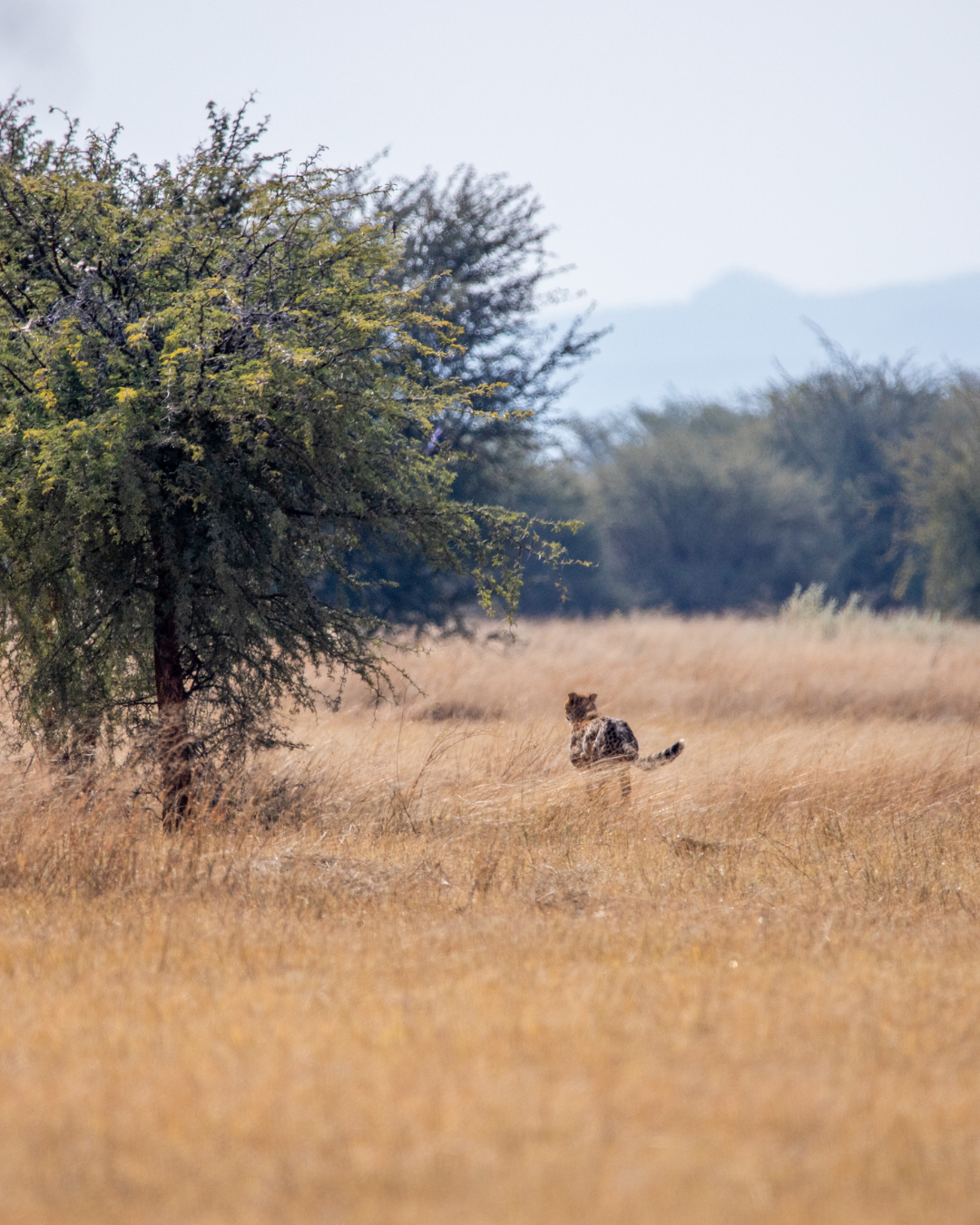
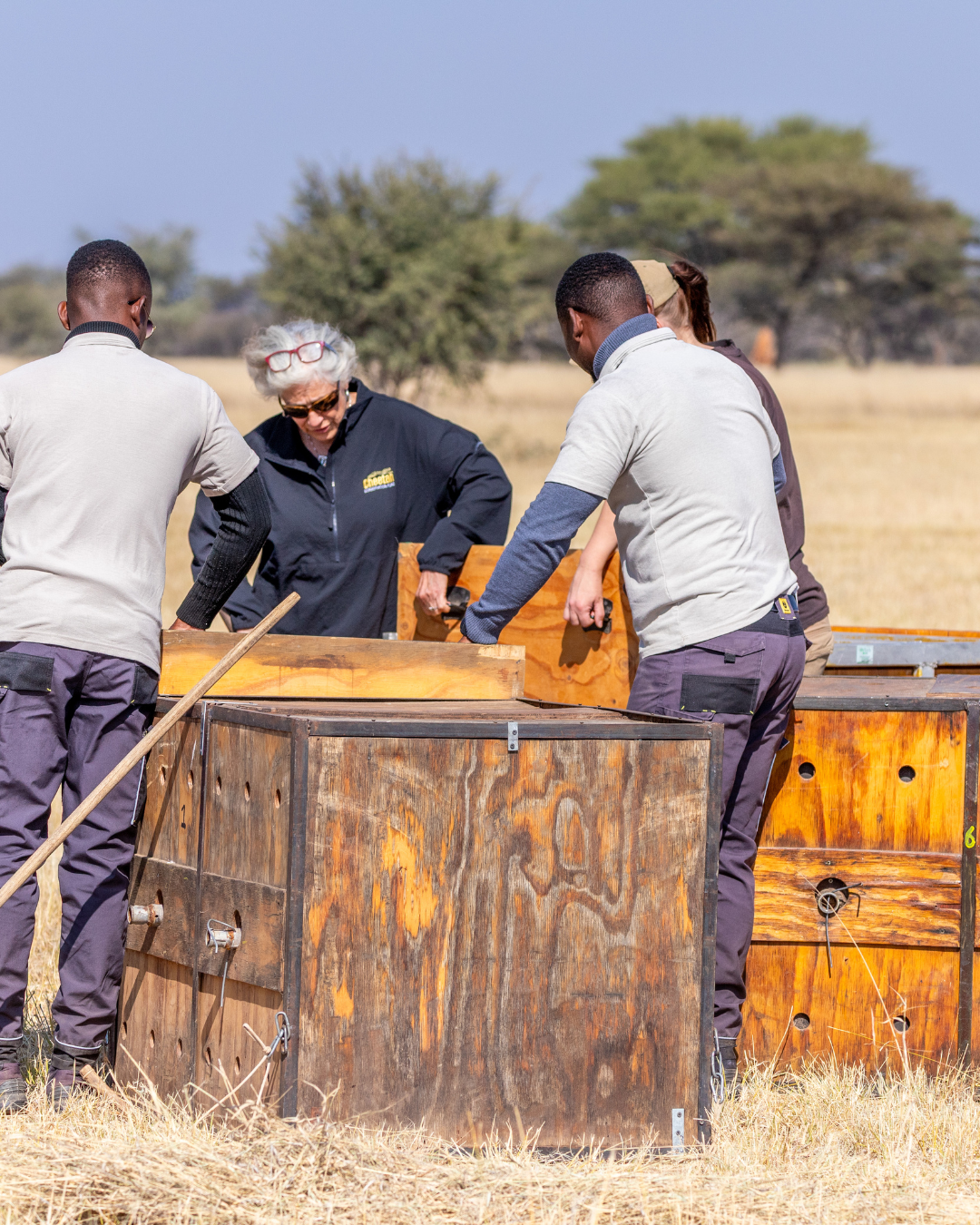
Once she had recovered, the family was prepared for release. A final health check was carried out, Astrid was fitted with a satellite tracking collar so staff could follow her movements remotely, and all six cheetahs went back to the wild together.
Astrid’s story is not unusual. Tupuka — trapped, collared and released earlier this year — is another of many. The calls come in regularly: a farmer has a cheetah in a cage, and CCF’s team responds, checks the animal over, marks it, and sends it home. In most cases these are cats that already have every skill they need to survive. Our job is simply to make sure nothing is standing in their way.
Why are cheetahs caught in the first place?
Farmland captures usually happen at so-called “playtrees” — the scent-marking trees cheetahs return to again and again — along fence lines, or in the veld using live bait. Sometimes a farmer has suffered a livestock loss. Often the capture is preventative, set in anticipation of a loss rather than after one. Sometimes it is simply because cheetah activity was seen in the area.
Captures very rarely take place at a kraal, and virtually never in the same timeframe as an actual loss.
Was it even the same cheetah?
Usually not, and this is where the picture changes.
Because playtrees attract any cheetah passing through, including transient youngsters and individuals with overlapping home ranges, a capture there is indiscriminate. It doesn’t target a particular animal. Most captures also happen days or even weeks after a loss, and nine years of radio telemetry data show that cheetahs are virtually never found on the same farm from one week to the next. The one exception is a female with cubs under eight weeks old.
Add to that an average home range of 1,500 km², and the odds that the cat in the cage is the cat responsible fall away quickly. Cheetahs also rarely return to a kill, unlike leopards, which makes linking a captured cheetah to a specific loss even harder.
Cheetahs caught taking game inside game camps are treated the same way. They may cause economic losses, but they are hunting natural prey, doing precisely what cheetahs evolved to do.
What happens before a cheetah goes home
Every cheetah receives a full biomedical and health examination before release, and every animal is marked with ear tags, a transponder, or both. Wherever possible, CCF works to persuade farmers to allow the cat to be released at the site where it was caught. Where a releasable animal has already been removed from a farm, permission is sought from the farmer before release, and no cheetah is ever released onto private farmland without the landowner’s consent.
Farmers who take part receive the full details: weight, age, ear tag numbers and general release location. Their names are held in confidence, and neighbours are not notified. That confidentiality matters. It allows farmers who support cheetah conservation to take part without friction from neighbours who see things differently.
Living alongside predators
Sharing a landscape with predators is never going to be easy. But Namibian farmers demonstrate every day that it can be done. Removing a cheetah buys a farmer time — the lasting answer lies in sound livestock and wildlife management, and in the working relationships CCF builds with farming communities across the country.
Astrid and her five cubs are back where they belong. The next call is already on its way.
Learn more about how CCF decides when a cheetah can be released
Sources:
To release or not to release • Cheetah Conservation Fund. (2019). [online] Cheetah Conservation Fund. Available at: https://cheetah.org/resource-library/to-release-or-not-to-release/ [Accessed 29 July 2026].
Related Reading
-
12 October 2026
Cheetah of the Month: Meet Kelce -
4 October 2026
From CCF Intern to Wildlife Photographer: Meet Leo Kim -
16 September 2026
September Photographer of the Month: Meet Dearbhaile Ní Dhubhghaill