The Tupuka Files: Trapped, Released, Thriving
-
- by CCF Staff 15 July 2026
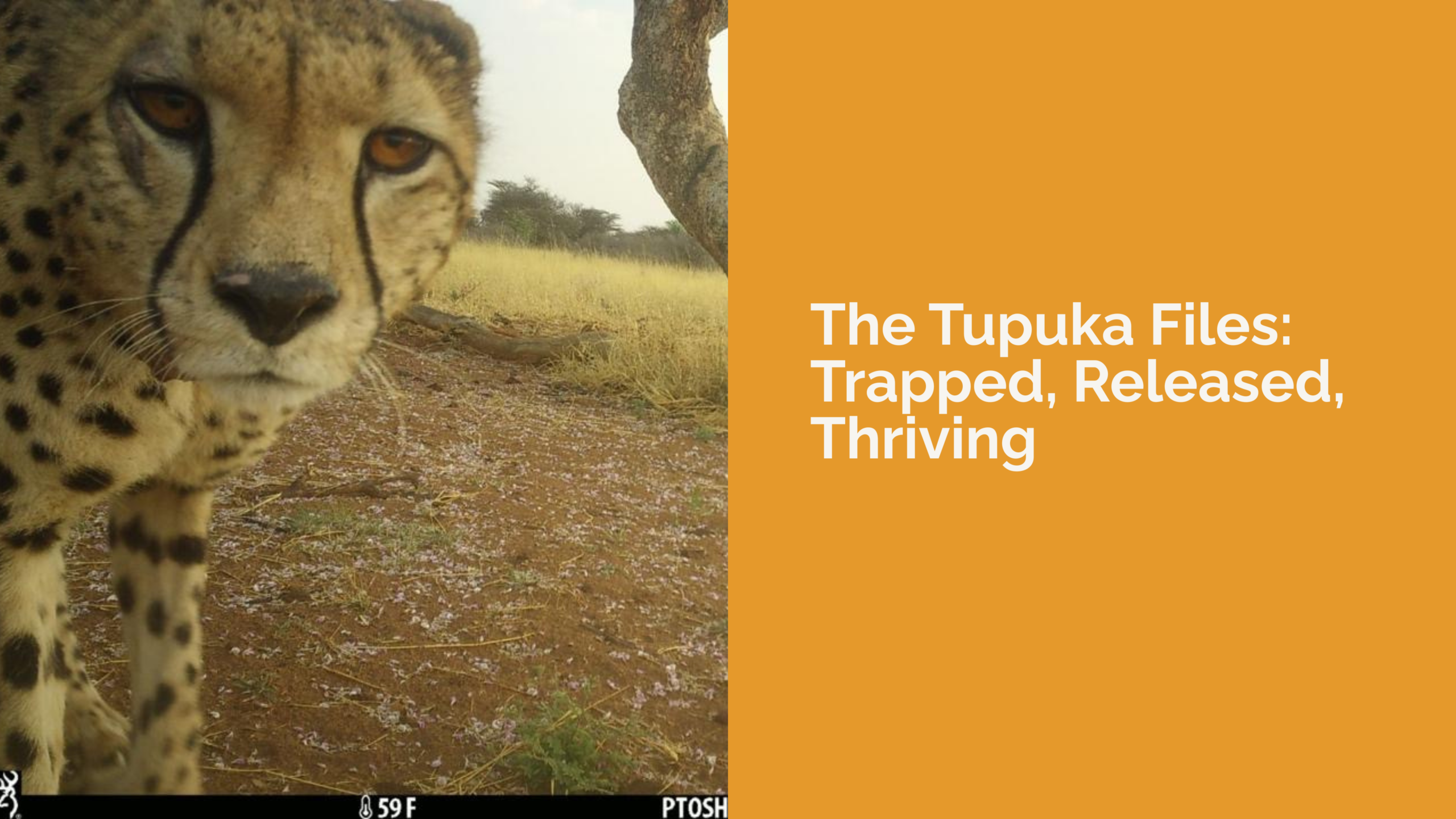
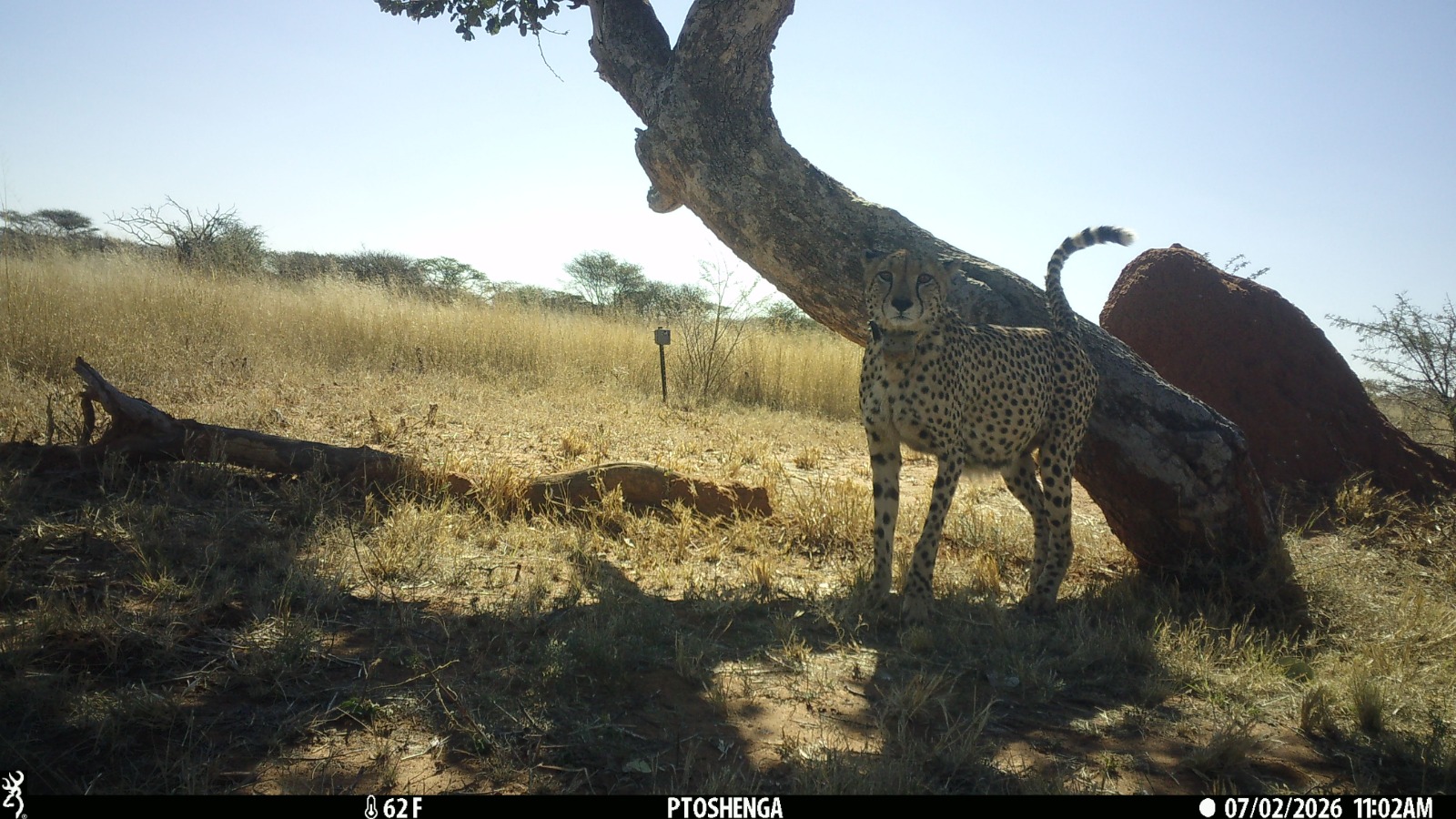
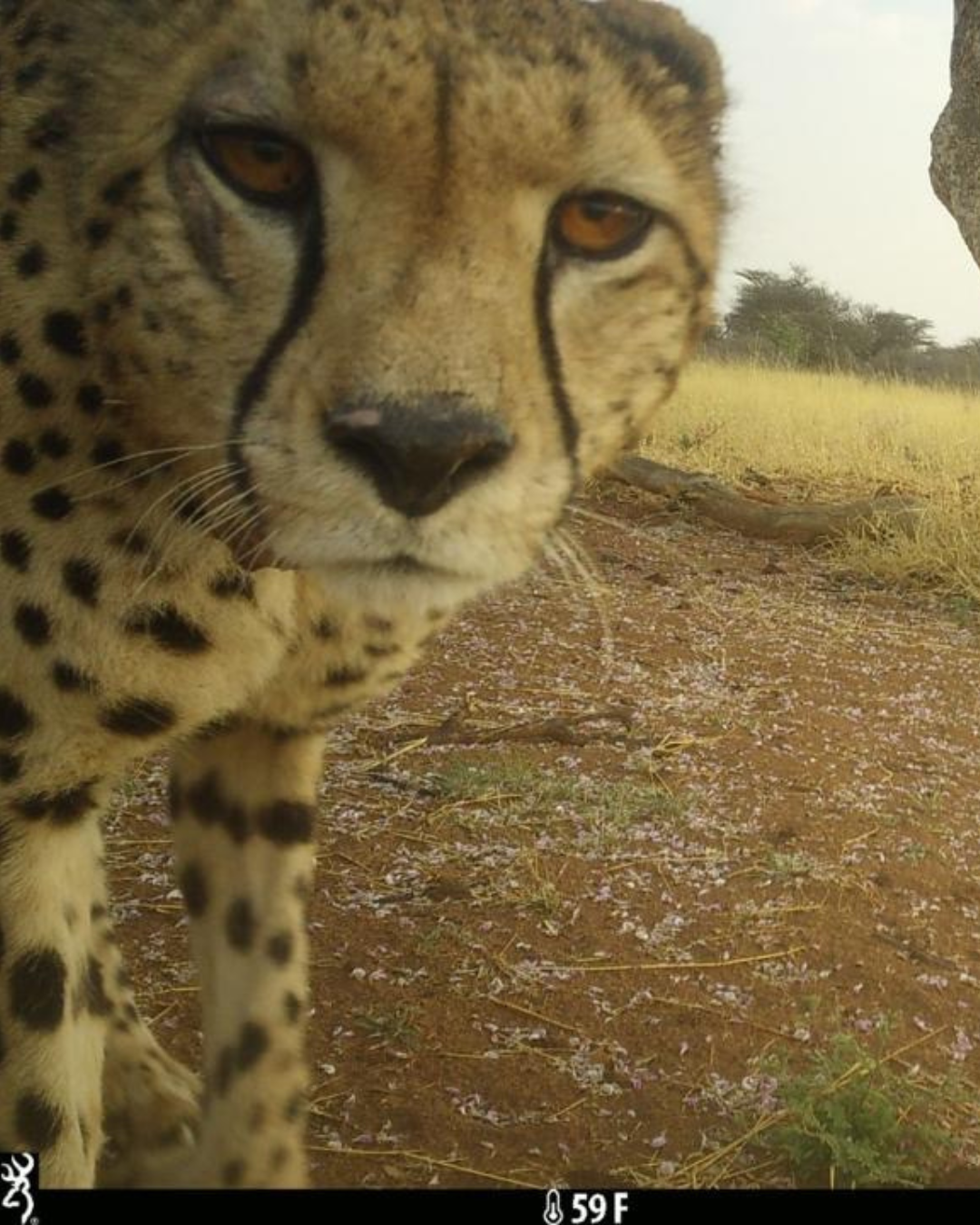
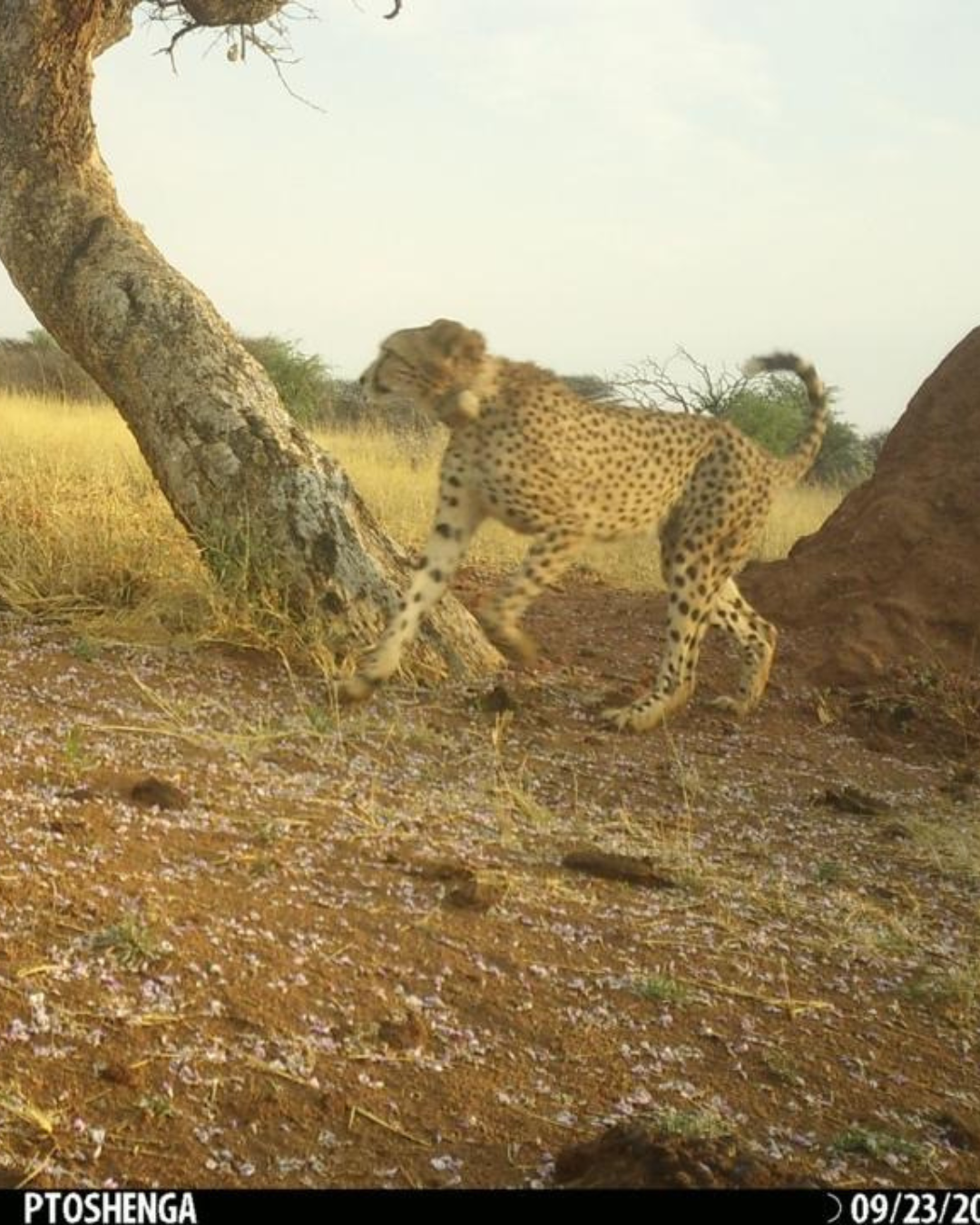
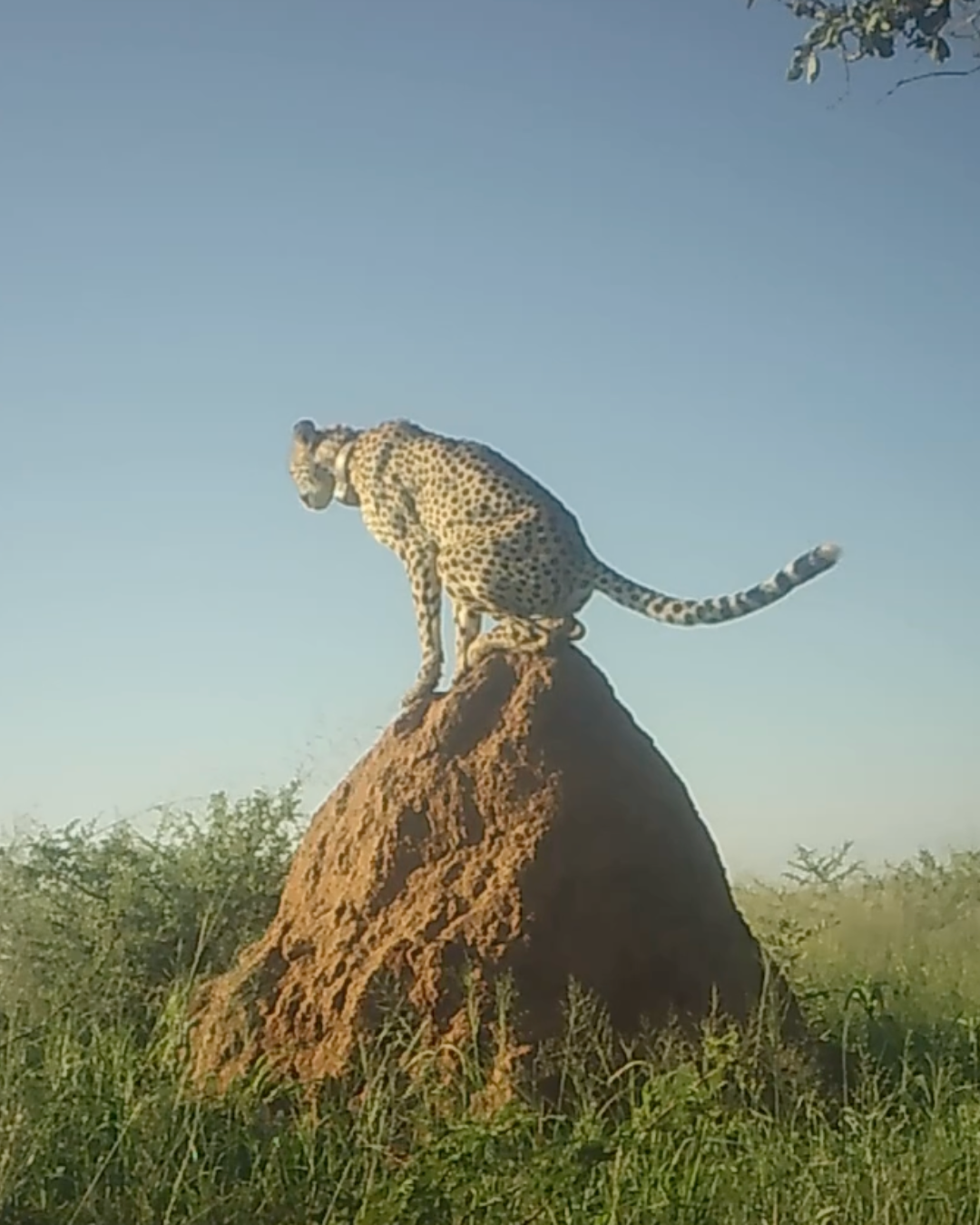
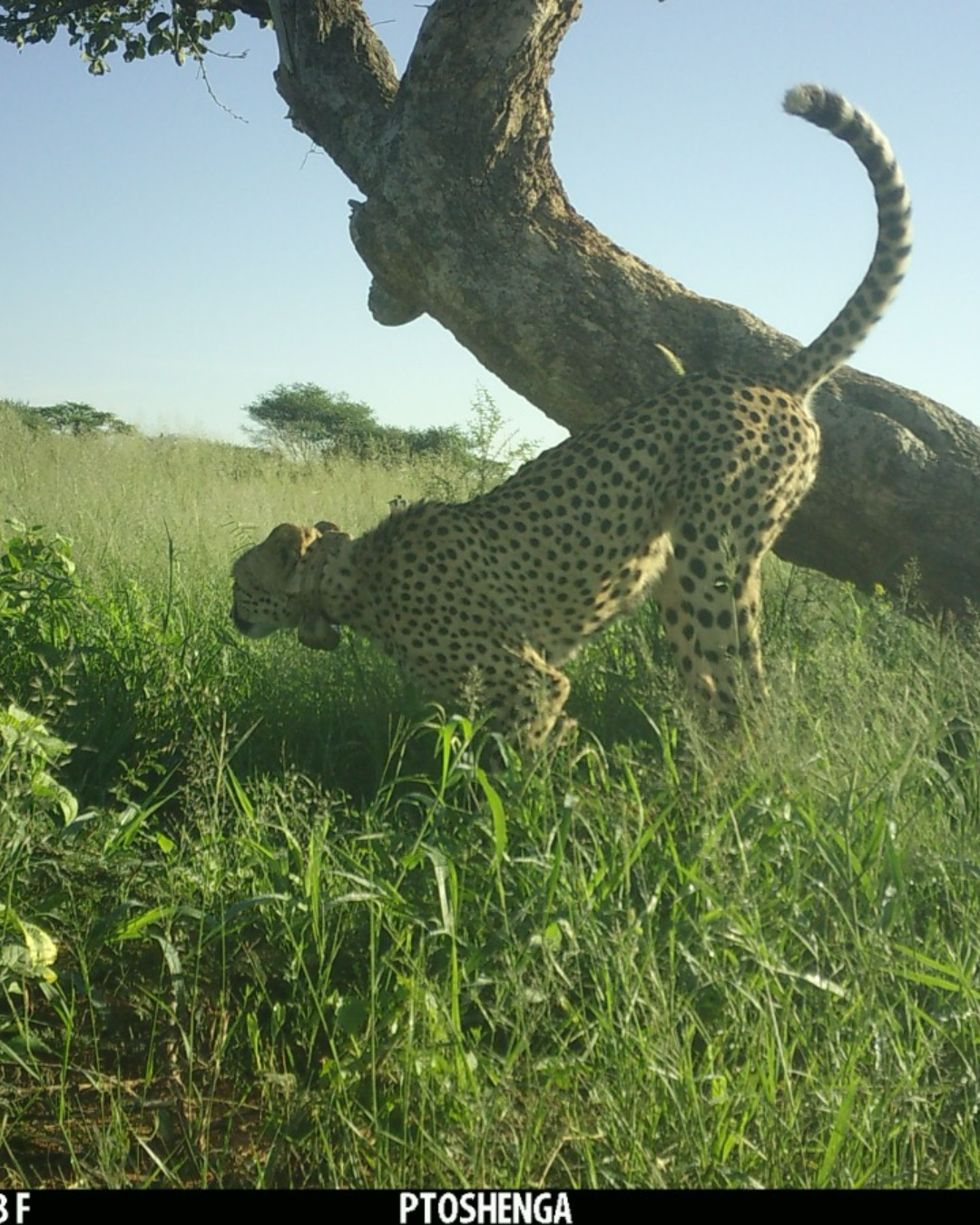
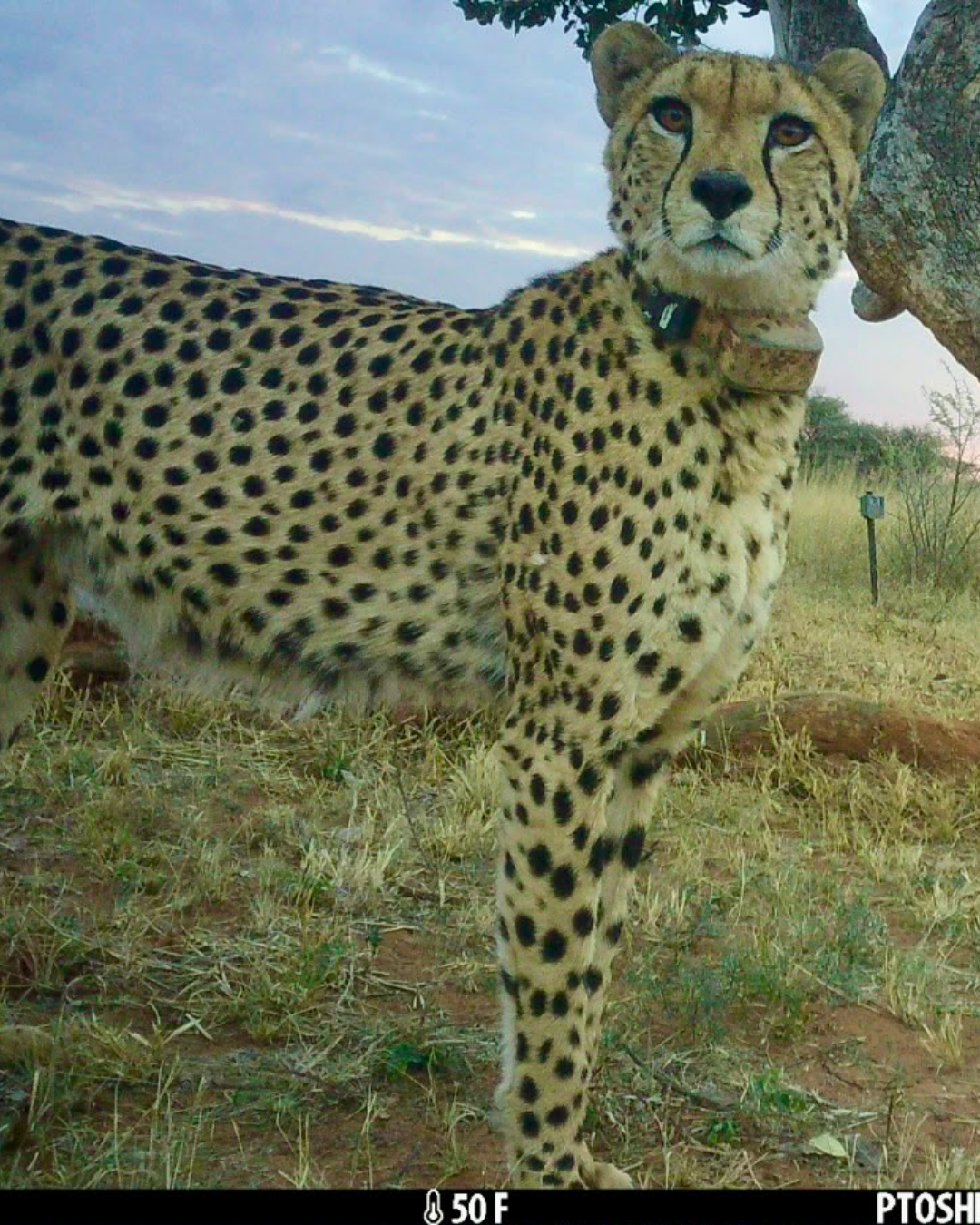
A wild male cheetah named Tupuka has become a fixture on our camera traps in Namibia. In particular, he seems to prefer a specific spot, which offers both a termite mound and a big tree.
For wild cheetahs like Tupuka, these natural features are an important part of the landscape. The cats use easily climbable trees, also known as play trees, to get a better vantage point of the landscape and to escape from potential threats on the ground.
These landscape features are also used to communicate. Cheetahs deposit their scent by marking trees and termite mounds with their urine and scat. In the wild, these important olfactory cues are used to mark territory, indicate their dominance, or advertise reproductive status.
TRACKING TUPUKA
On camera trap footage, our ecology team observed a mother cheetah and her five cubs visiting Tupuka’s favorite play tree early one morning in late May. The cats checked out Tupuka’s scat and also left their own markings. After this cheetah family stopped by the spot, staff noticed a distinct change in Tupuka’s behavior. Before the group visited, Tupuka was observed checking the spot every two to three days – and almost always at night.
However, after the female cheetah and her cubs stopped by, Tupuka began visiting the spot much more frequently. For at least a week, he stopped by daily. The timing of his visits changed too – instead of only visiting at night, he began appearing during the day. He was even observed vocalizing from the play tree in an attempt to locate the female cat.
The activity patterns of wild cheetahs like Tupuka are typically influenced by a time plan aimed at minimizing chances of encountering direct competitors – like other large predators or humans. Through the use of tools like camera traps and GPS collars, our ecology team can track the movements of wildlife in our reserve in Namibia and surrounding areas.
Heat maps are used to show where Tupuka spends most of his time, while polar clocks track the time of day he is most active. After the visit from the mother cheetah and her cubs, both of these digital tools indicated a very clear shift in Tupuka’s behavior and activity patterns, demonstrating the importance of social dynamics and territorial marking for male cheetahs.
A YEAR BACK IN THE WILD
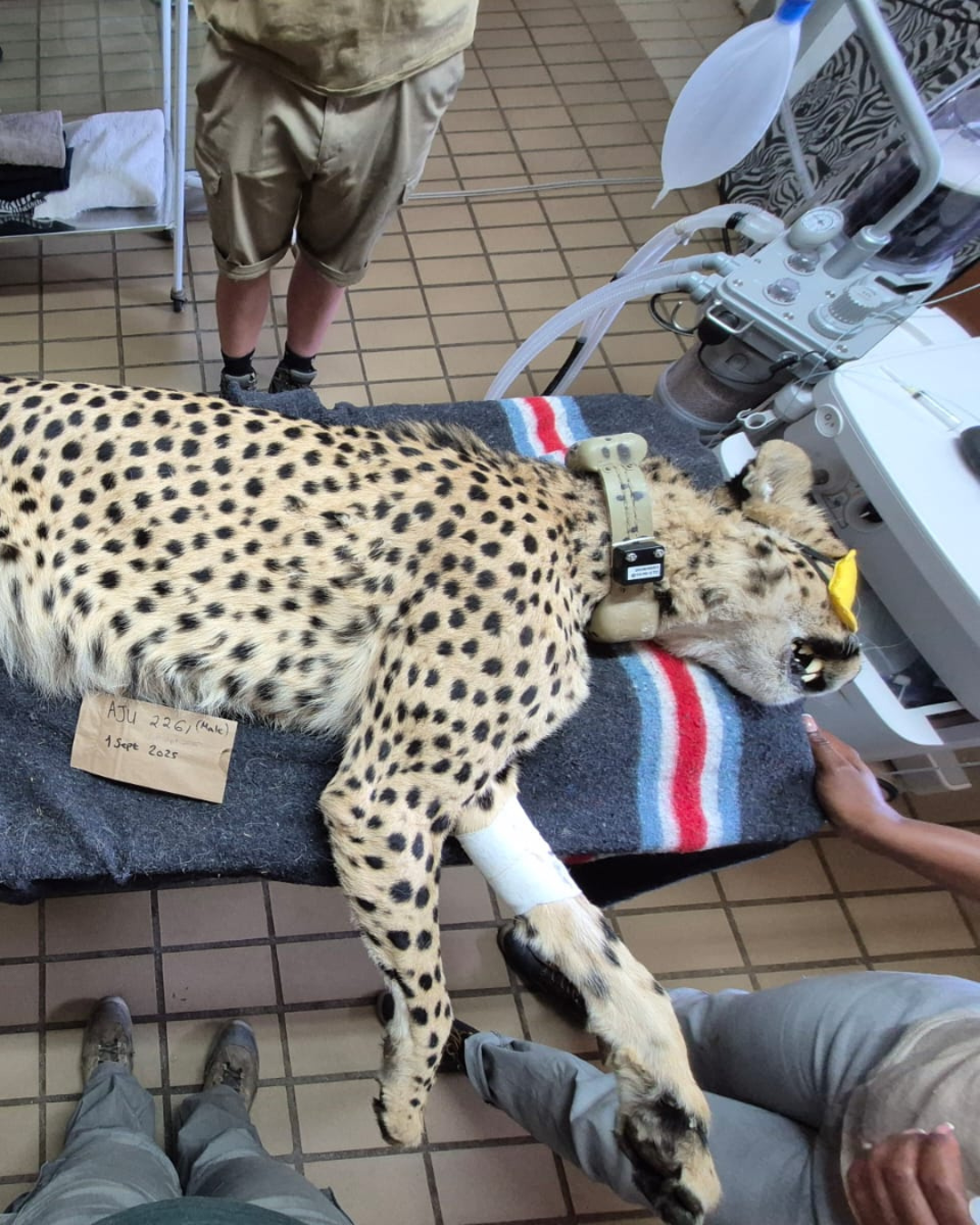
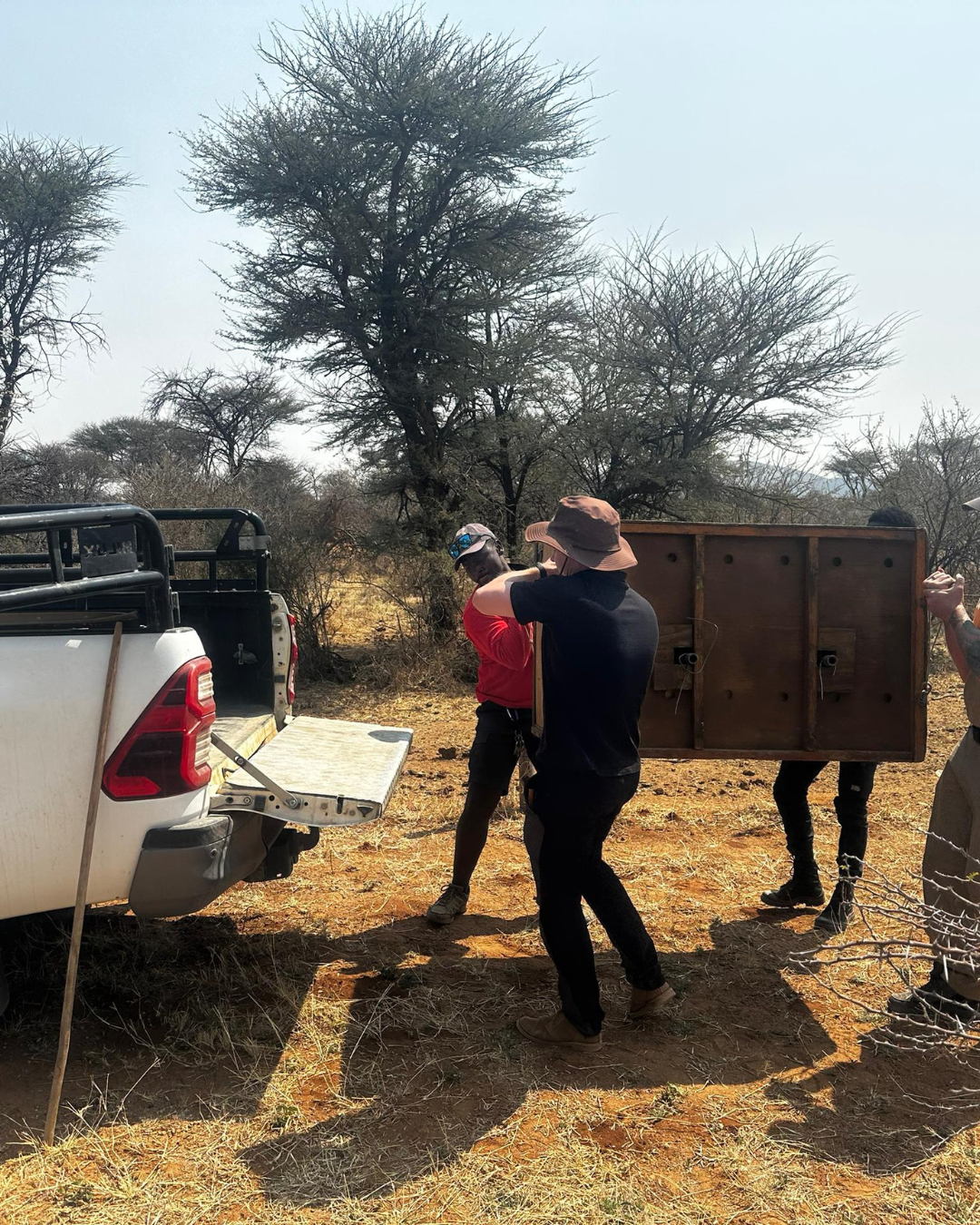
Estimated to be approximately six-years-old now, Tupuka was trapped by a farmer in late August 2025, and was successfully returned to the wild the following month. Before being released, Tupuka was given a thorough medical examination and fitted with a tracking collar as part of our Early Warning System (EWS) program.
Relying on GPS satellite collars equipped with geofencing functions, the program uses virtual fences to alert farmers when a cheetah crosses onto their land. Receiving these early warnings allow farmers to use non-lethal methods to prevent any potential threats to livestock. Between the time he was returned to the wild in September 2025 and the end of the year, Tupuka traveled across 24 farms in just under four months – a powerful indicator of the success of these conflict-prevention strategies, and his ability to coexist in landscapes shared with humans and domestic animals.
Keeping cheetahs like Tupuka in the wild is key to saving the species. In shared landscapes like Namibia’s commercial and commercial farmlands, remote monitoring technology is advancing conservation science and protecting cheetahs like Tupuka. Monitoring wild cheetahs after their release is critical for gaining a better understanding of their movement and behavior, shedding light on how these solitary and secretive cats move and interact, and helping to prevent potential conflicts before they occur.
SUPPORT CHEETAHS LIKE TUPUKA
If you want to help us keep protecting cheetahs, you can make a donation now or adopt one of our resident cheetahs. Click here to learn more.
Related Reading
-
12 October 2026
Cheetah of the Month: Meet Kelce -
4 October 2026
From CCF Intern to Wildlife Photographer: Meet Leo Kim -
16 September 2026
September Photographer of the Month: Meet Dearbhaile Ní Dhubhghaill