Guardian Donkeys: Could they help reduce human-wildlife conflict?
-
- by 3 August 2026
For decades, one of the greatest threats facing Africa’s carnivores has not been habitat loss or poaching alone. It has been conflict with people.
Across much of Namibia, livestock farming and wildlife share the same landscape. When predators kill calves, goats or sheep, the financial impact on farming families can be significant. Faced with repeated losses, many feel they have little choice but to kill the predators responsible.
Finding practical ways to protect livestock while allowing predators to survive is therefore one of conservation’s greatest challenges.
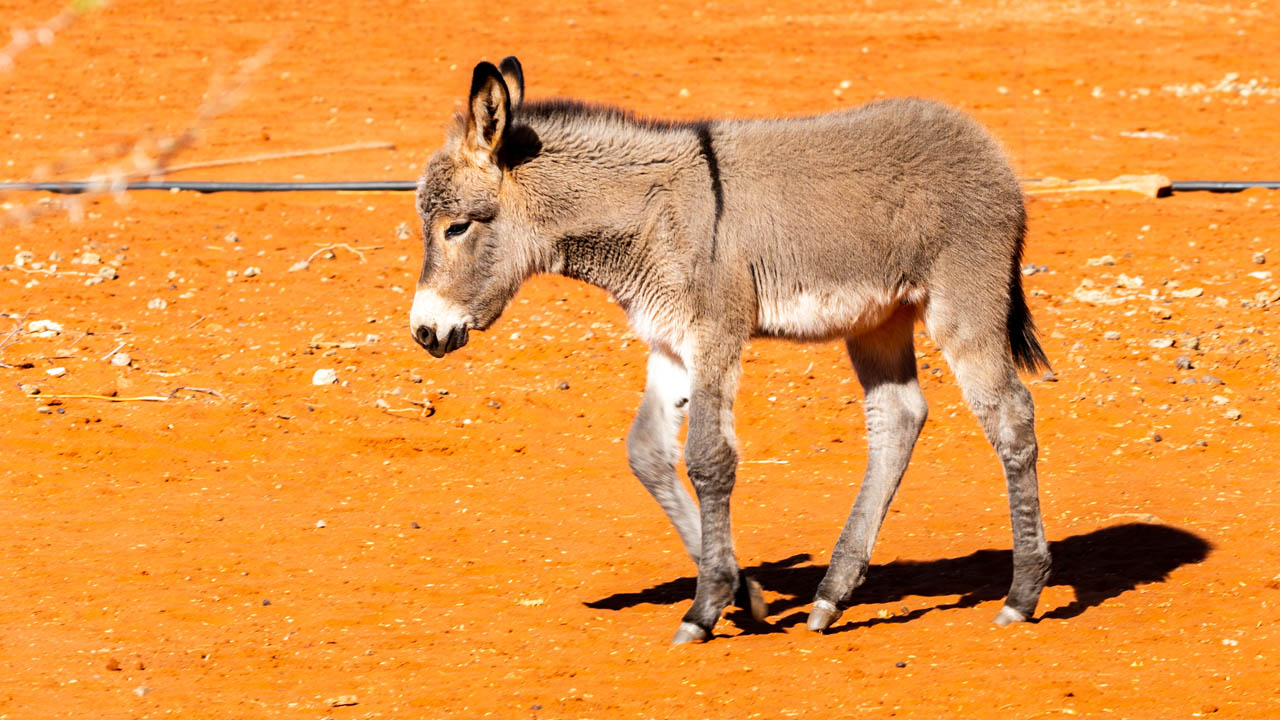
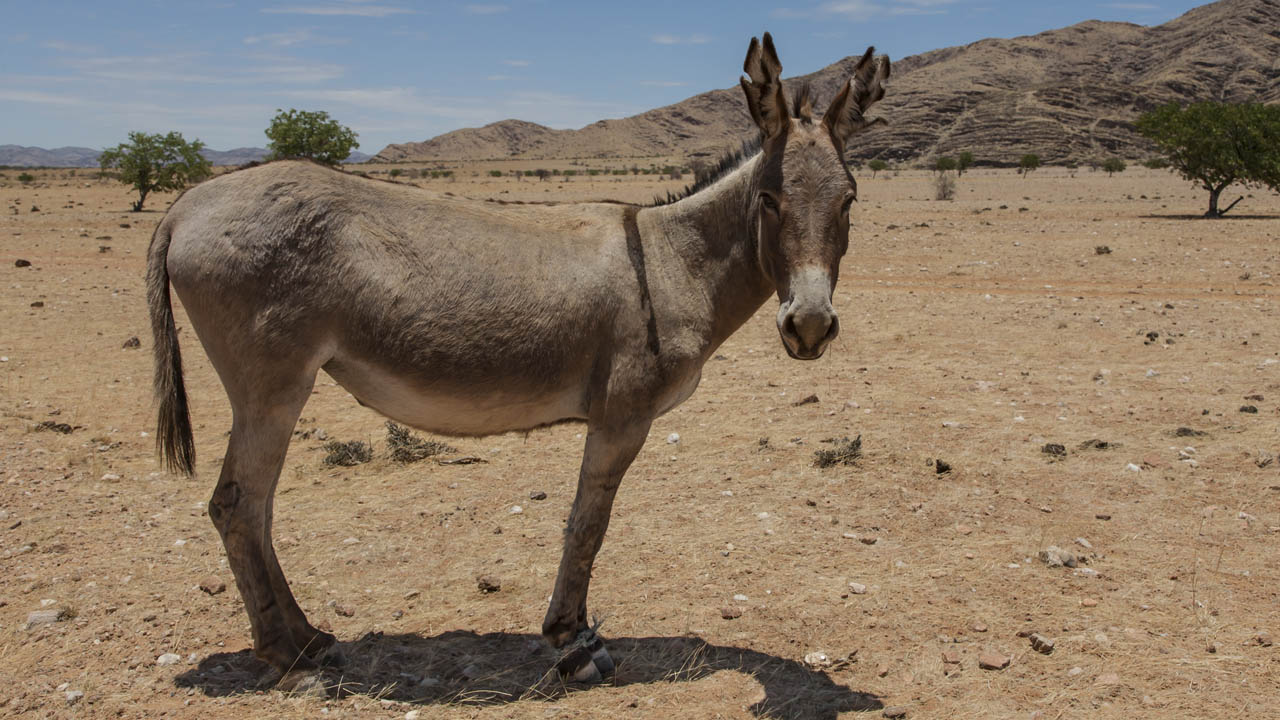
A new study, published in the European Journal of Wildlife Research by Jhala et al. (2026), has highlighted an unlikely ally in this effort: the humble donkey.
A simple idea put to the test
Guardian animals have long been used to protect livestock from predators. While livestock guarding dogs are one of the best-established and most successful methods, researchers wanted to investigate whether donkeys could also play a role in reducing livestock losses under certain farming conditions.
Over a ten-month period on commercial farmland in Namibia, researchers monitored cattle, predators and guardian donkeys using 61 camera traps across wet and dry seasons.
The study focused on three common predators:
- Leopard
- Brown hyena
- Black-backed jackal
Researchers first monitored cattle without donkeys before introducing guardian donkeys alongside vulnerable calves and comparing predator behaviour.
The results were encouraging.
While livestock losses were already relatively low, no calves were lost to predators during the period when donkeys were present.
Rather than eliminating predators from the landscape, the evidence suggests the donkeys influenced predator behaviour, making carnivores less likely to approach livestock.
Although the researchers conclude that further studies, particularly using GPS tracking, are needed to better understand exactly how donkeys deter predators, the findings suggest they could provide farmers with another valuable non-lethal conservation tool.
The right solution for the right farm
Importantly, this research is not about replacing existing conservation methods.
Every farm is different.
Livestock types vary. Landscapes vary. Predator species vary.
The most successful conservation programmes recognise that there is rarely a single solution that works everywhere.
Guardian donkeys may prove particularly effective for protecting vulnerable calves or livestock within certain farming systems. In other situations, particularly across Namibia’s vast open rangelands where livestock roam over huge distances, other approaches may be more appropriate.
The more effective, non-lethal options available to farmers, the greater the opportunity to reduce conflict while protecting wildlife.
More options mean better conservation
The new donkey study highlights an important principle at the heart of successful conservation.
Protecting wildlife is not about asking farmers to tolerate losses.
It is about providing practical, affordable solutions that work for their individual circumstances.
Guardian donkeys may become another valuable tool in that conservation toolbox, complementing existing approaches and offering additional options where they are most appropriate.
The more confidence farmers have in protecting their livestock, the less likely predators are to be killed in retaliation.
And that is good news not only for cheetahs, but for leopards, hyenas, jackals and countless other species that share these working landscapes.
Building a future where people and predators thrive together
At CCF, we know that conservation works best when it benefits both wildlife and the people living alongside it.
Whether through pioneering Livestock Guarding Dogs, improving livestock management, supporting farmers with practical advice, or embracing new research like this, every successful non-lethal solution helps build a future where people and predators can coexist.
Because protecting cheetahs doesn’t begin with the predator.
It begins by helping the people who share the land with them.
Support CCF’s Work
Every day, CCF works alongside farming communities to reduce conflict between people and wildlife through science, education and practical conservation solutions. Your support helps fund pioneering programmes like our Livestock Guarding Dog Programme, ongoing research, farmer training and community outreach, giving both people and cheetahs the opportunity to thrive together.
Together, we can create a future where livestock, livelihoods and wildlife all have a place on Namibia’s landscape.
Related Reading
-
15 October 2025
Education – Future Conservationists of Africa