World Day to Combat Drought and Desertification
-
- by Cheetah Conservation Fund June 18, 2026
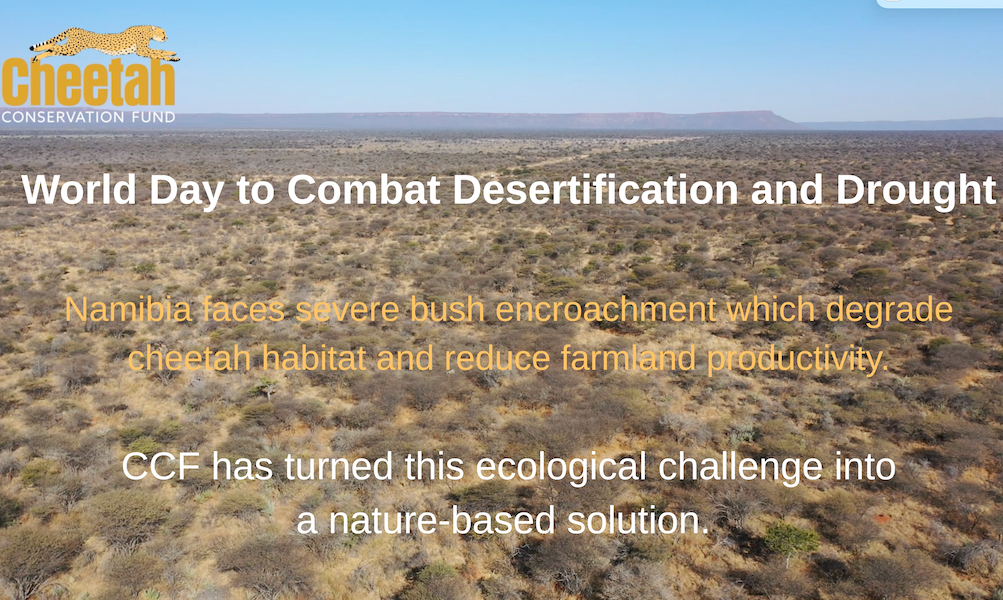
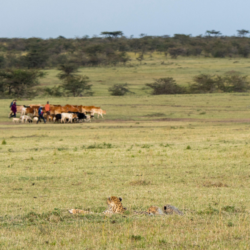
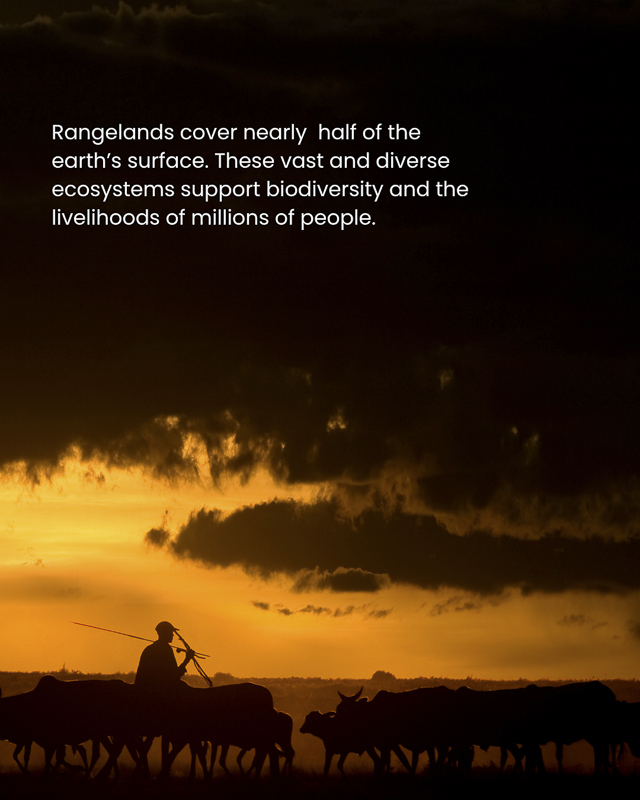
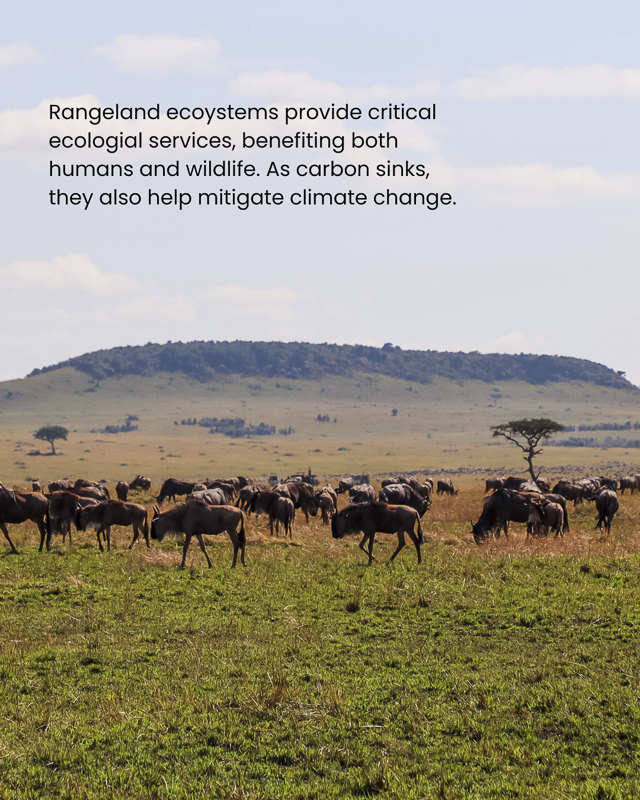
This week, we celebrated World Day to Combat Drought and Desertification – and this year, the focus is on rangelands. Rangelands cover approximately half of the earth’s surface. These diverse ecosystems – including grasslands, savannahs, wetlands, tundra, and deserts – are home to incredible species richness. Rangeland ecosystems also provide critical ecological services, benefiting both people and wildlife. Worldwide, rangeland ecosystems support the livelihoods of more than 500 million people.
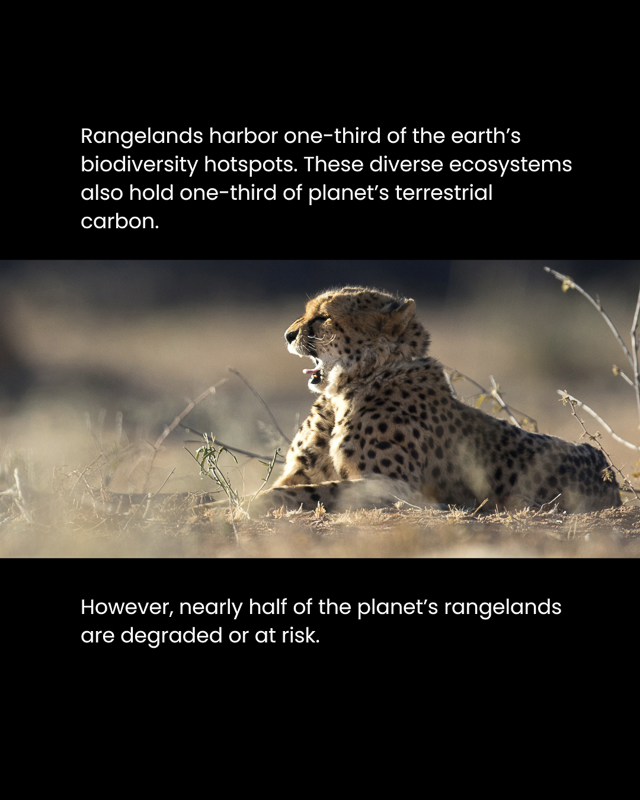
While these drylands are typically not suitable for growing standard agricultural crops, their diversity of vegetation supports domestic animals and wildlife. These vast ecosystems also help to mitigate climate change, acting as a massive carbon sink. In fact, rangelands harbour a third of the planet’s biodiversity hotspots, and contain approximately one-third of the planet’s terrestrial carbon. However, nearly half of the planet’s rangelands are degraded or at risk.
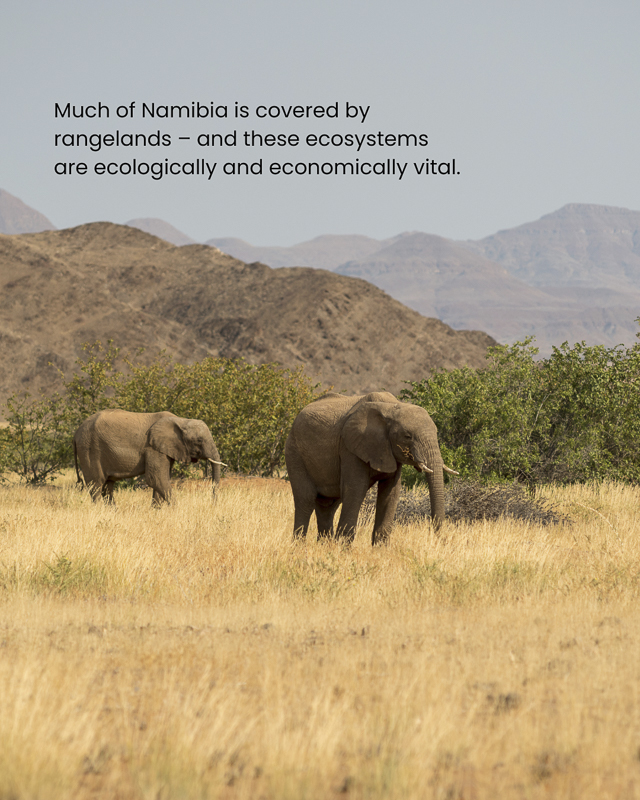
Much of Namibia is covered by rangelands – and these ecosystems are ecologically and economically vital. As one of the driest countries on earth, desertification is among Namibia’s biggest environmental challenges. Intensified by land-use changes, drought, and climate change, desertification threatens livelihoods, food security, and biodiversity. In Namibia, the over proliferation of woody shrubs – a process known as bush encroachment – is also exacerbating desertification. By squeezing out other types of vegetation, bush encroachment reduces overall biodiversity and impacts rangeland productivity. This unchecked overgrowth also swallows critical grassland habitat, altering the ecosystems cheetahs and other species rely on.
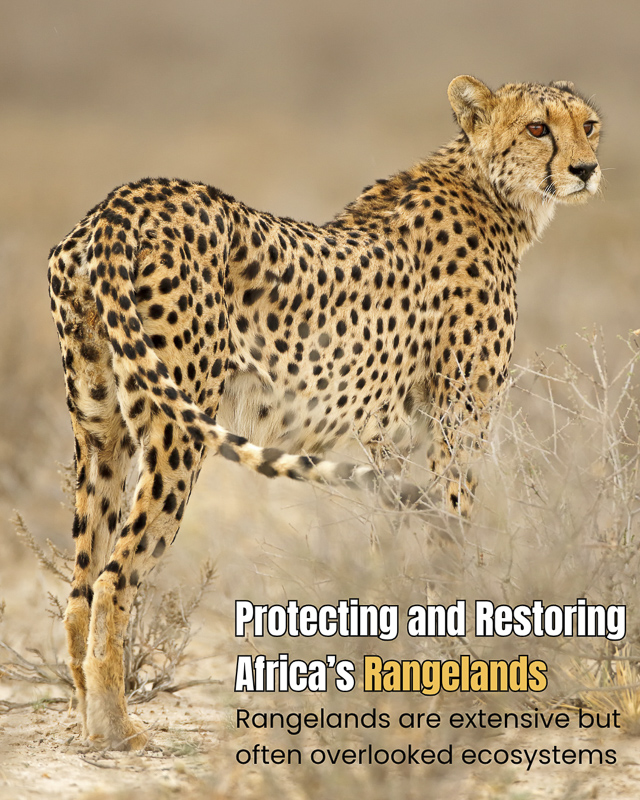
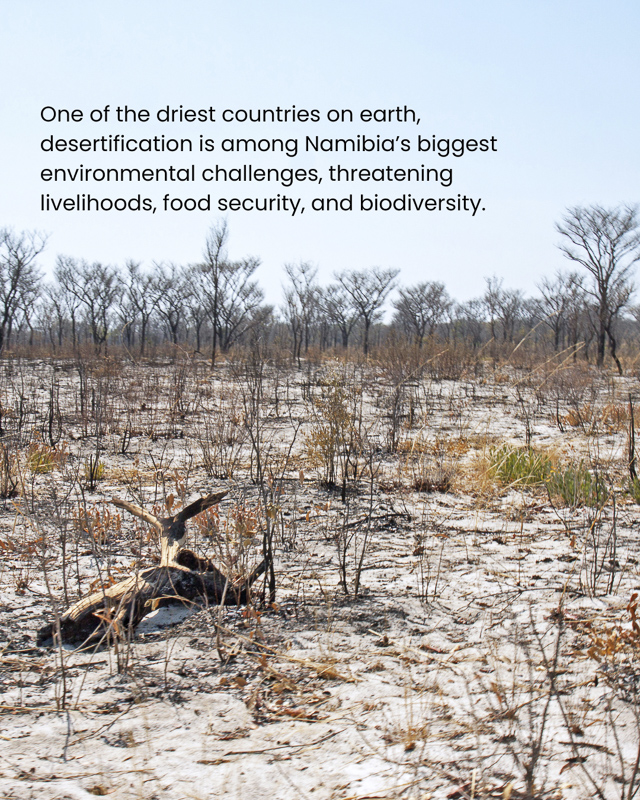
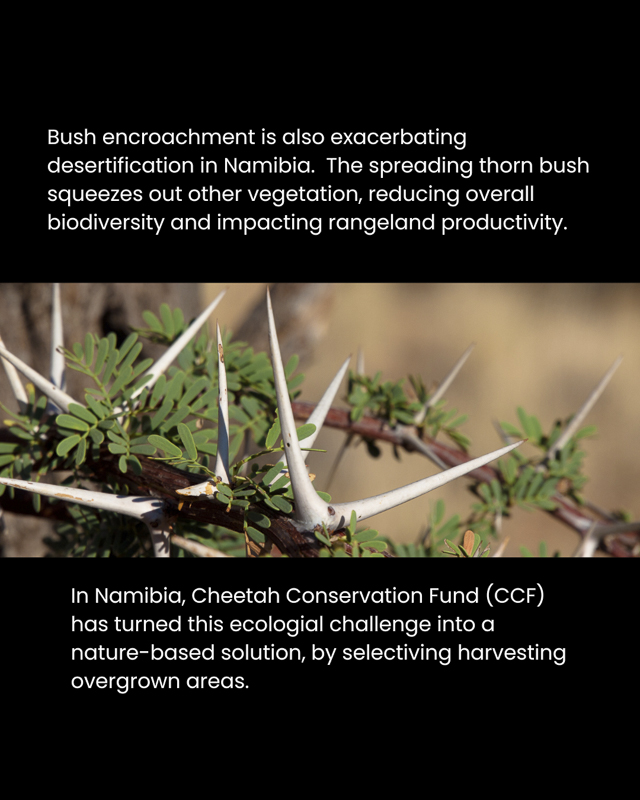
Namibia faces severe bush encroachment, especially from species like Acacia mellifera and Dichrostachys cinerea, which degrade cheetah habitat and reduce farmland productivity.
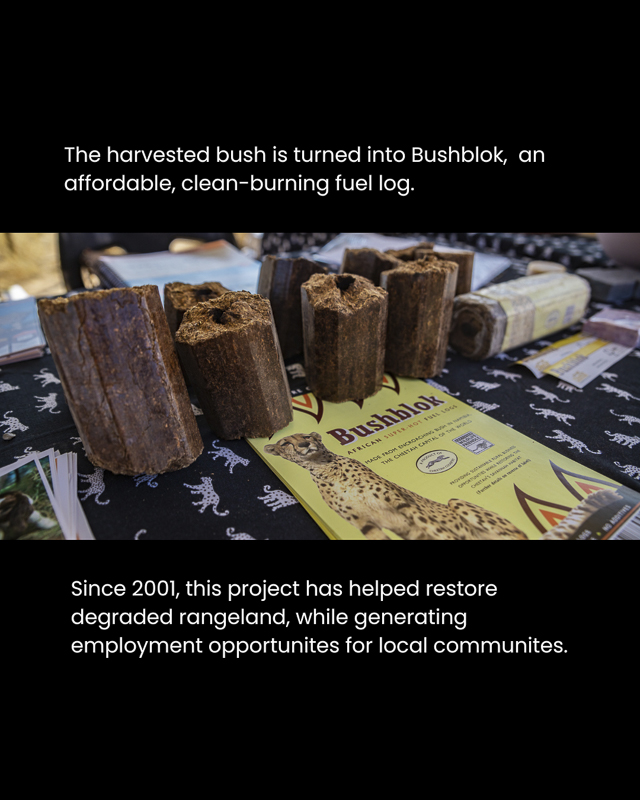
CCF turns this ecological problem into a solution by harvesting invasive thornbush to produce biomass products, particularlyBushblok®, a clean-burning, compressed fuel log.
In Namibia, Cheetah Conservation Fund (CCF) has turned this ecological challenge into a nature-based solution. CCF selectively thins overgrown areas, restoring habitat for cheetahs and other wildlife – and in the process, boosting biodiversity and improving rangeland productivity for communities. The harvested bush is turned into BushblokⓇ, an affordable, clean–burning fuel log. Since 2001, this project has restored degraded rangeland, while generating employment opportunities for local communities and reducing reliance on firewood.
More detail found here.
"Cheetah Tracks" Newsletter Sign-Up
Stay updated on the activities of Cheetah Conservation Fund in Canada, Namibia and Somaliland. We send semi-annual newsletters and info about special events and initiatives. We will not share your email address with any other organization.
Related Reading
-
August 14, 2026
The Cheetah: A Catalyst for Landscape Recovery -
March 15, 2026
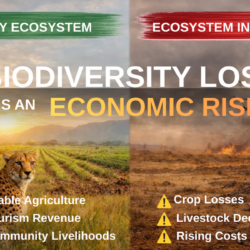
Biodiversity Loss is a Real Economic Risk