One Health One Welfare
-
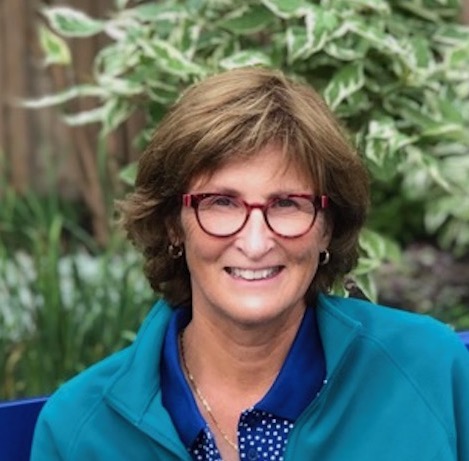
- by Carolyn R. Farquhar December 2, 2025
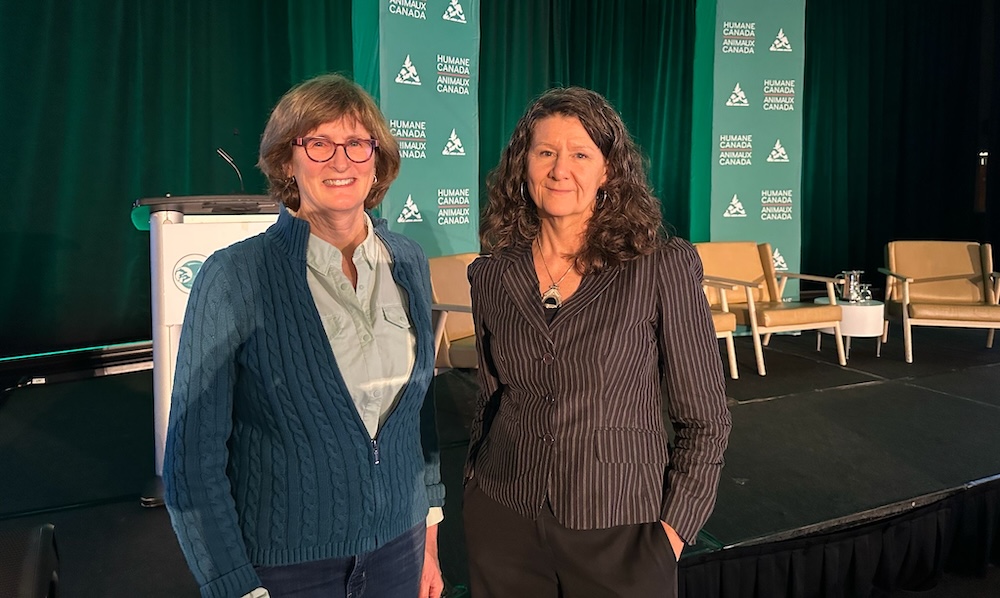
“The One Health One Welfare conference was path-breaking. It opened our minds and our hearts to the potential for a more healthy and sustainable planet, where people, animals and nature are interconnected and sustained.” says Carolyn.
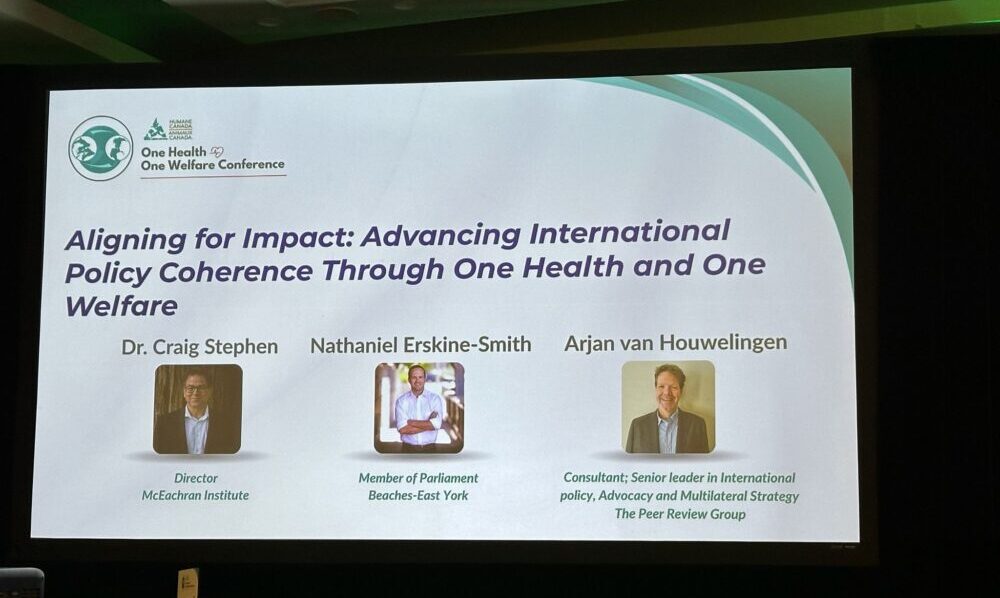
On November 26th and 27th, Ottawa, Canada was the host city for an excellent conference “One Health One Welfare” organized by Humane Canada.
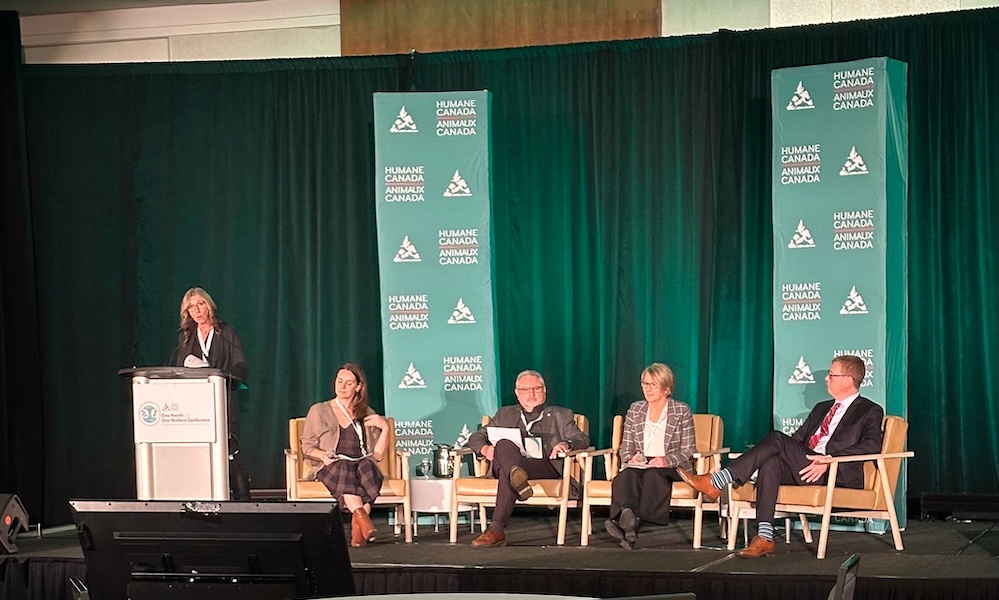
I attended the conference along with scientists, conservationists, animal welfare experts, researchers and policy specialists, as well as veterinarians, government and community leaders.
This conference was the first of its kind in Canada. The diversity of backgrounds of the conference delegates ensured wide-ranging discussions that were both thoughtful and compassionate. At the same time, speakers provided insight about the challenges and gains of pursuing One Health for our society.
Defining One Health
Our ability to protect the planet’s ecosystems and its living beings will require us to understand the interconnectedness between human health, animal health and environmental health, and that the positive outcomes for each affects the others. It uses a transdisciplinary approach to tackle problems at the intersection of people, animals, and their shared environment.
The principle of One Health has taken hold around the globe to address issues ranging from climate change and loss of biodiversity, disease prevention and response, animal protection and wildlife conservation, across disciplines and geographies.
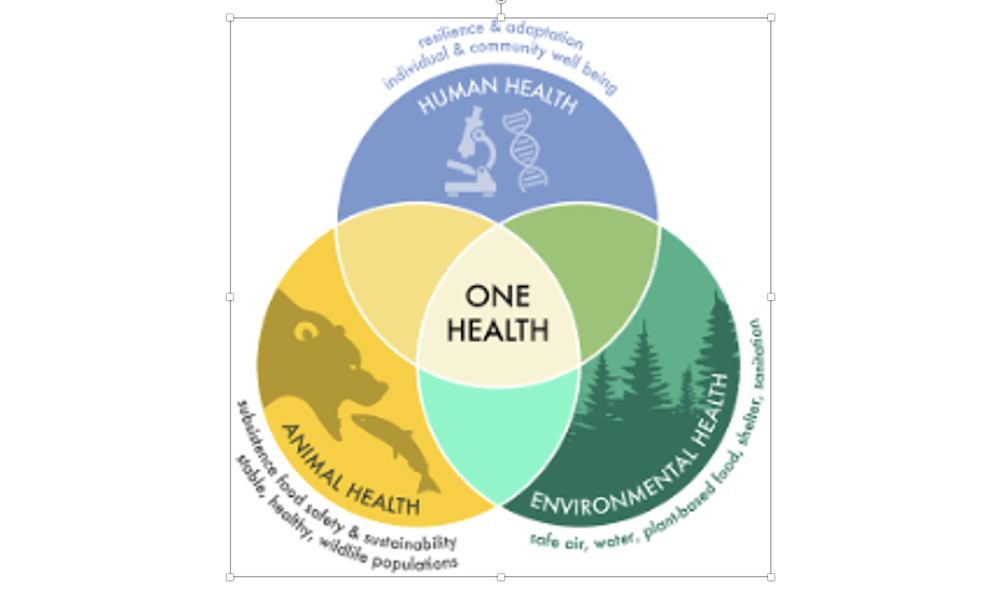
Discussions at the conference emphasized: (1) recognizing that we must value nature with the same importance that we value financial and social capital (2) working to solve issues upstream before they become more tangled and obstinate problems downstream, and (3) breaking down the organizational and professional siloes that keep us from solving problems facing our collective health.
A Global Perspective
The United Nations General Assembly recently noted the importance of One Health with its benefits to people, animals, plants and ecosystems. Further, the UN recognizes animal health and welfare contribute to the Sustainable Development Goals (SDGs).
One Health at CCF
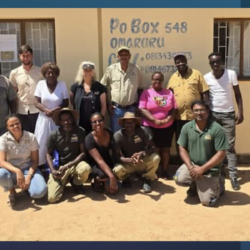
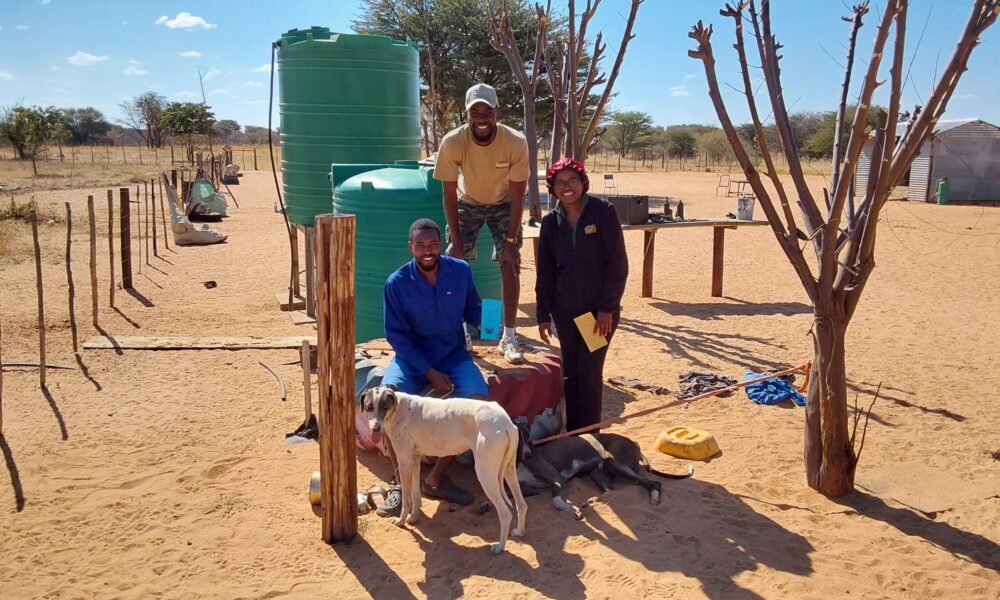
CCF’s One Health Initiative benefit both animals and humans in the Namibian communities served. The delivery of education and services to communities is done by veterinary personnel and other CCF staff with a fully equipped mobile clinic that will allows the teams to access remote areas. CCF will provide rabies vaccination clinics and provide veterinary services to those located in the Hereroland communities.
This initiative helps reduce the risk of rabies in the domestic species, collectively protecting livestock, wildlife and people from the deadly rabies virus. CCF team provides the necessary training so that others can become advocates for rabies prevention in their own communities. In addition, the CCF team can provide free/low costs spay and neuter as an added measure to help eradicate rabies.
Perspectives from the One Health Conference
Community Veterinary Outreach operates in 11 locations across Canada. Using the One Health model, veterinarians, social workers, and community leaders come together to provide vital services to animal owners often with marginal livelihoods but who are seeking veterinary care for their animal companions. Such programs recognize the vital link between domestic animals’ health and our own mental health. Access to veterinary care helps ensure better health and community well-being outcomes, by providing “Care at both ends of the leash”.
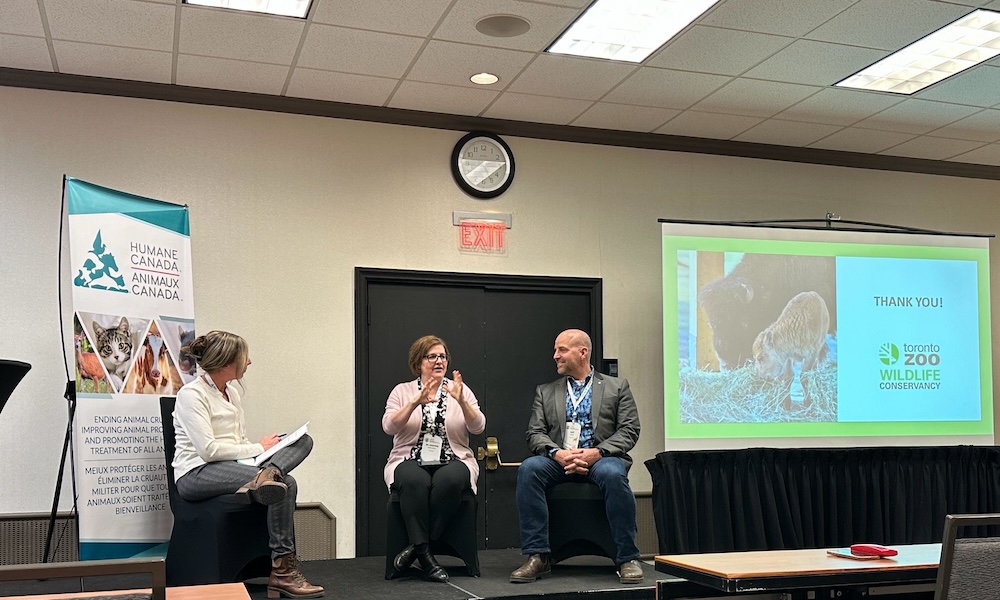
The Toronto Zoo has introduced their One Well-being program, which is a science-based approach to animal care, conservation and human connection to nature. Dr. Gabriela Mastronmonaco, Chief Science Officer and Dolf DeJong, CEO of the Toronto Zoo spoke about the Zoo’s focus on enhancing their animals’ lives through ensuring the best nutrition, environment and habitats, health and wellness, behaviour and social opportunities, and providing choice and control for the animals on a daily basis. This approach reflects the Zoo’s understanding of their own role in restoring biodiversity and their aim to inspire a sense of shared responsibility for the natural world.
Note: The Toronto Zoo has been supporting CCF’s Livestock Guarding Dog Program for the past several years.
A Way Forward
The Conference sessions offered many examples where the connections between human health and animal health can lead to positive outcomes. Several speakers underscored that protecting our natural environment is fundamental to human and animal health and welfare. Overcoming the silos – whether at the organizational, community and global level – is imperative so that we can engage all the skills and different perspectives to achieve One Health.
"Cheetah Tracks" Newsletter Sign-Up
Stay updated on the activities of Cheetah Conservation Fund in Canada, Namibia and Somaliland. We send semi-annual newsletters and info about special events and initiatives. We will not share your email address with any other organization.
Related Reading
-
February 10, 2026
CCF Launched a Cheetah Ranger Program in Namibia. -
October 24, 2025
International Climate Day – October 24